Archive
Puzzle blog
Do you love puzzles like Sudoku? Check out Melon’s Puzzles. It’s a blog with lots of puzzles, including something new to me called Slitherlink (and lots of variations). Only go there if you have lots of time. It also gives you an insider’s view into puzzle contests. Only consider that if you have asstons of time.
Sunday Links
What do an upscale nightclub for Wall Streeters and the People’s Library from #Occupy Wall Street have in common? Turns out, nothing.
Someone thinks we can cure accounting shenanigans by rotating accounting firms. I’m not convinced.
I like this story from Matt Taibbi about one of the biggest assholes in the world.
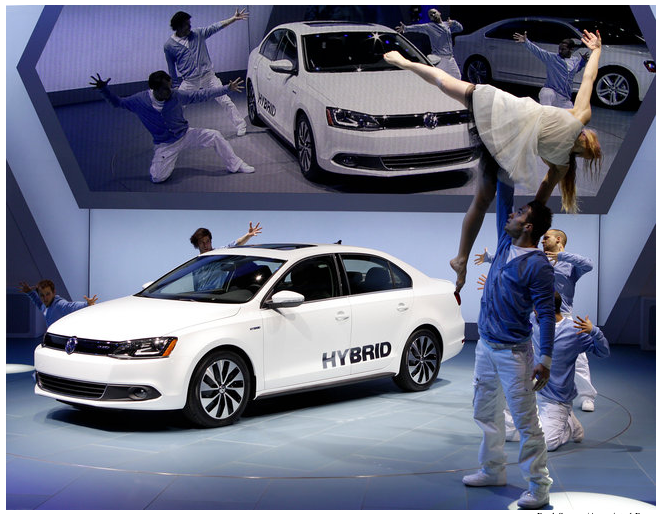
For whatever reason I can’t get enough of this picture from a recent car show:
Happy Baconmas!
Actually Baconmas is not til January 22nd but I wanted to get everyone totally psyched for it so I led with a misleading title. Sorry about that.
What is Baconmas?
Baconmas is a relatively new holiday, celebrated on January 22nd (the birthday of Sir Francis Bacon) to celebrate the sciences, with a side order of bacon.
Here’s what I love about the blog Baconmas. First of all the fun science experiments, second of all the bacon-related recipes, and third of all the fun of making up ridiculous traditions, including:
1. The Boasting Prop
Would it be that bad if we had a time set aside to acknowledge that we’ve done some pretty awesome things? I think not. So set aside some prop at your party (in my case an awesome model brain) as the Boasting X (again, the Boasting Brain in my case), and make the rule that whenever you hold it, you can announce to all around you the coolest thing you’ve done or achieved in the past 12 months, and bask in the applause.
Variations: No statute of limitations on boasting material; require everyone to boast once; allow for increasingly ridiculous fake boasts.
2. Science Book Swap
It’s a bit awkward recommending your favorite books to your friends, or asking to borrow one. We can fix this on Baconmas. Have everyone bring a book (related to some science in some way; sci-fi totally counts) that they’d recommend to others, and that they wouldn’t mind loaning to a random party guest. (Make sure everyone’s written their email or contact info on their offering.) Then when the party starts, anyone can swap books with anyone else, for as long as the party goes! At the end, most everyone should have a new and exciting book to read.
Variations: Instead of having everyone carry their books for the whole time, you could just run a round of “Rob Your Neighbor” in the middle of the party.
3. Great Moments in Science
From the discovery of phosphorus (the first official elemental discovery- a glowing residue produced from giant vats of urine) to the discovery of pulsars (Jocelyn Bell, a grad student at Cambridge, found the signals which were quickly dubbed “little green men”), the history of science is full of moments that would be really neat to re-enact for your friends. In full costume and on video, if you feel like it. (Please think carefully before re-enacting the Archimedes’ discovery of fluid displacement.)
Suggestions: In addition to the ones above:
James Young Simpson’s discovery of chloroform as anaesthesia
Marie and Pierre Curie’s discovery of radium
Louis Pasteur’s disproof of spontaneous generation
Erasto Mpemba’s discovery of the Mpemba effect in fluid cooling
Variations: Have one person read a short description of the event, then run it as a Genre Switch improv game: two people act it out ‘normal’ the first time, then take audience suggestions for different genres and act it out again in that style! Alexander Fleming’s discovery of penicillin as an antibiotic should be a lot more interesting when played as a zombie buddy-cop movie…
4. Drunk Science Lectures
Now, I wouldn’t recommend letting your friends get as drunk as the Drunk History stars, but if you’re planning to make it an alcoholic Baconmas, you can’t go wrong with having a knowledgeable friend try and give an impromptu scientific lecture in an inebriated state. And you certainly can’t go wrong by filming this, then using it as the voiceover for a “serious” science video on the topic.
Variations: Instead of having one impaired person try to explain science, you could record the results when your entire party tries to explain a concept, with each word being spoken by the next person in line (like the Whose Line is it Anyway? game Three-Headed Broadway Star– Google it for some hilarious clips).
5. Free Cookies
This one isn’t a party tradition, but a good “day of” tradition. Bake a bunch of homemade cookies, find a busy public place, and give them away for free! Watch a neverending wave of gratitude and confusion. (It goes without saying that you’d better not put anything bad in the cookies. We don’t want a bad reputation here!)
Variation: Compete to invent the best explanation when people ask you why you’re giving away free baked goods- I’ll start you off with “Because cheeseburgers don’t stay tasty nearly as long!”
This guy is just plain funny, and I love his blog. My kids and I are coming up with ideas for the big day. On the list: fun with non-Newtonian fluids.
The Waltons’ money
We have the following statistic, taken from this Reuters article written by Felix Salmon:
In 2007, according to the labor economist Sylvia Allegretto, the six Walton family members on the Forbes 400 had a net worth equal to the bottom 30 percent of all Americans.
To be precise:
The Waltons are now collectively worth about $93 billion, according to Forbes.
Ummmm… that’s obscene under any measurement. But I wouldn’t be posting about it if it ended there, because I think we had some idea how much money, Walmart makes, or at least the scale of it.
However, it doesn’t end there. For some reason people who like super income inequality keep coming back with this:
This sounds outrageous, until you stop for a second and take note of the fact that Jeffrey Goldberg, individually, has a net worth greater than the bottom 25% of all Americans.
According to the latest data we have, 24.8% of American households had zero or negative net worth — add them all together, and you get zero.
For context, Jeffrey Goldberg is the guy who pointed out how stinking rich the Waltons are, and Salmon’s point here is to show that Goldberg, by dint of not being in debt, is actually kind of relatively rich.
That’s supposed to make the Waltons’ money okay? How does it make it okay? Here’s an indication that it’s supposed to somehow make it okay:
And while it’s definitely a bad thing that one in four Americans have no net worth at all, I don’t think you can really blame Walmart for that.
I will attempt to understand: we are saying that 25% of the households in this country are either in debt or have zero asset worth. Incidentally, if you are looking for an explanation of why “social mobility” has gone down in this country, look no further than this. We are starting out with a quarter of the people below the water line.
That’s not the point though: I think part of the point is that we are supposed to imagine some of those people in that 25% are recent college graduates with great jobs who will eventually pay off their student debt. I wonder how much, as a percentage, those whippersnappers account for in that 25% of households? Not much. And it doesn’t do anything about the $93 billion statistic we saw earlier. It’s just another shocking statistic that is supposed to make us… what? Feel like those 25% of households are just too damn lazy? I’m not understanding something.
I would posit that we have two extremely depressing statistics here, and one does not make the other one okay. Taken independently, they each make me want to barf.
And just because I’m close to barfing anyway, please allow me to refer to recent this article where former hedge fund manager Andy Kessler explains to us that nobody in this country should complain about being poor since 8-year-olds now own cell phones. Here’s my favorite line of ignorance:
Medical care? Thanks to the market, you can afford a hip replacement and extracapsular cataract extraction and a defibrillator—the costs have all come down with volume. Arthroscopic, endoscopic, laparoscopic, drug-eluting stents—these are all mainstream and engineered to get you up and around in days. They wouldn’t have been invented to service only the 1%.
I’d love to see this guy in a conversation with Elizabeth Warren about the real cost of medical care for the poor.
The sin of debt (part 3)
I wrote here about the way normal people who are in debt are imbued with the stigma of immorality, whereas corporations are applauded for debt (and even for declaring bankruptcy). I admit that my second post, which contained outrageous examples of the ideas in the first post, was rather frustrated, because I had little in the way of solutions. I like to propose solutions rather than just point out problems.
First, I’ve got some good news. Namely, as described in this Wall Street Journal article, a judge has ruled that the debt collection agency harassing an elderly woman for her dead husband’s debt was indeed harassment. From the article:
The case could set a precedent across the U.S. and discourage lenders from using collectors to get money from surviving relatives on debts left behind by the deceased, according to other state-court judges.
That’s something!
Next, I’ve been discussing the language of debt with various people and we’ve come up with a plan. This language issue was the main point of my first post: the words we use make individuals feel dirty when they are indebted, but sanitizes the concept of debt for corporations (“restructuring”).
Let’s turn this around. Let’s come up with our own vocabulary to separate the issues and also to point out what brings people into debt in the first place. We’ve come up with three proposed vocabulary terms to add to the discourse:
- Poisonous debt: this is debt that comes from actually fraudulent lenders, or who lent to vulnerable people under false pretenses. Actually existing laws should be taking care of these things, but the problem is of course that people who are in massive amounts of debt typically don’t have good lawyers.
- Debt under duress: this term should refer to debt that people incur in emergency situations, like medical emergencies, divorces, or funerals. Elizabeth Warren has done a lot of work describing how many families in serious money trouble got there with exactly this kind of situational debt.
- School system debt: the school system in this country is inconsistent, which causes enormous competition for families to buy a house in a good school district, often buying houses they can’t quite afford for the sake of their childrens’ educations. This is well-documented and, for any individual, totally understandable.
What I like about the above terms is that they separate the people who take on the debt from the reasons they take on the debt. Anyone can relate to the above reasons, and when that happens, a sympathy, rather than a moral judgement, emerges. If I hear someone has taken on debt under duress, I immediately want to know if they’re ok.
They also provide a much-needed balance to the typical argument you hear against people who bristle at the idea of debt amnesty, namely the concept of free-loaders milking the system for cheap cash to spend on unnecessary trinkets and then not paying it back.
If you understand the extent to which people are in debt because of health issues, your response may be something more like, hey we should really make the health care system in this country more reasonable. In other words, it starts a much more interesting and potentially useful conversation than mere finger wagging.
A New Year’s resolution you can keep
Ladies, I know what you’re thinking. But don’t do it. If you need any more proof of the impossibility of losing weight, look no further than this New York Times article which describes it in excruciating, painful detail.
But that’s not even my angle. I’m not going to argue that you shouldn’t try to lose weight because it’s so hard. In fact, it’s possible for some people, as the article describes, as long as they are willing to think about nothing else for the rest of their life. But in fact, even if it wasn’t hard, even if it was an achievable goal, I’d still be arguing against it.
My angle is this: it’s just not interesting enough. You have better things to do than devote yourself to vanity. And plus, I’ve said it before and I’ll say it again, sexy is something you do, not something you look like.
Do you know how boring those people must be who think about food all the time? Have you ever spent time, real time, with someone who is singularly obsessed with food or exercise? I got news for you, if you haven’t, it’s insanely boring. They can only talk about their plan and how it’s going. And I’ve got news for you if you’re one of those people: you are insanely boring.
Get a hobby that involves other people, that gives you a higher sense of purpose. If you’re a lefty, join your local Occupy Wall Street group. Start writing a blog. Start a book club. Read stuff.
Do you know, I’ve heard this story, that some pollster asked a bunch of people what they’d do if they could do anything. It was left as an open question like that, if you could do anything, what would you do? And the majority of women said they’d lose weight (on average 10 pounds). WHAT?! They could have mentioned closing the income gap? Stopping wars? Improving climate change? Making sure people everywhere had access to clean water? And they chose to lose freaking 10 pounds, are you kidding me?
Actually it’s probably a myth, but it doesn’t really matter, because I believe it. And looking around at the world we live in, with all of the ridiculous assumptions of vanity and, what gets me even more riled up, time spent on crap like that, I can believe that women are typically so bombarded with self-image issues that they can’t think beyond them to bigger issues like wars and clean water and global warming. WTF, culture??
So my New Year’s resolution this year is to fight back against that crap. I’m starting today, one day early, by writing this post. Can I get a fuck yeah?!
I am officially out of the fat ladies’ closet, in full armor, ready to fight against that idea that we have any time to waste with vanity. We have way too much to do, ladies (and gentlemen), and not enough time to do it all. Let’s start now. For starters, I’m going to start to emulate a woman I read about a few years ago on Overheard in New York: “Mom, yeah, I got a Ph.D., I live in my own apartment in Manhattan, and I’ve got a fat ass. How about it?”
I am not ranting against humanity here. I think humanity can be great. But not when our culture is encouraging us to gaze at our navels. We need to actively create greatness, which we can do, but it takes thinking beyond ourselves and asking, what do I really want to do this year?
Steam queen
I’m writing today for all those people who are about to receive, or who have just received, fancy espresso machines with milk steaming functionality but who have no idea how to actually steam milk. You too can become a steam queen (or king)! A little background first.
When I wrote earlier about my friend the coffee douche, I mentioned that in high school I worked as a barista at Coffee Connection in Lexington center (Massachusetts). At the time I was considered kind of fancy (or at least I considered myself kind of fancy) because I knew the difference between a cappuccino (just foam) and a cafe au lait (foam and steamed milk). Just to be clear, there was no such thing back then as a “latte”, and the sizes were, “small”, “medium”, and “large,” and nobody used the word “barista”.
It was a pretty repetitive job, but I liked it. I liked the hustle and bustle and meeting all the strange people who would be grumpy or friendly, who would talk to me like a human or order me about. I got to know lots of people that way whom I never would have met otherwise. I enjoyed explaining the different roasts and beans, and asking people about their tastes to try to match it their coffee beans. I was a kind of coffee douchy matchmaker.
To make things more interesting for myself and the customers, I’d compute people’s bills in my head, to the penny. Massachusetts sales tax back then was 5% so it’s not as hard as it sounds (now it’s 6.25%, what a pain). As long as you can add things up in your head, and know the cutoffs for rounding that the cash register uses, then it’s a piece of cake. I did enjoy every now and then telling people that if they bought their two cappuccinos separately, instead of together, then they’d save a penny. If they asked me how I figured it out I’d say, after all it is a step function, so it stands to reason!
I also enjoyed the manual labor of it, and on a wet day, when the light grey stone floor would get filthy with mud people had tracked in, I enjoyed mopping clean it after everyone had left, listening to Allman Brothers, Tracy Chapman, and Sinead O’Connor mixed tapes really loud.
Now to the point of this post: I got really good at steaming milk. In fact I formally designated myself the Steam Queen of Coffee Connection, and as far as I know nobody has ever challenged me on that. Let me tell you the secret to awesome steamed milk. It’s essentially an interplay between fat content and temperature.
First, use really cold milk, and please don’t let it be skim. Yes, we all think you look really good in your size 2 leather pants, but if you want steamed milk with those leather pants then you should just go for lowfat and spend an extra hour at the gym or something (or whatever it is you do). Because the crucial yumminess of excellently steamed milk bubbles is, you guessed it, butter fat.
If you can go with whole milk, you won’t even need these instructions because whole milk will practically steam itself if left near a steaming apparatus. Come to think of it, steaming half and half should probably be left to small children exclusively as an ego booster.
So I hope I’ve made my point: lowfat milk, at least, and super cold. Now put it into one of those silver cans. For some reason you really do need a silver metallic can, it doesn’t work as well with ceramic cups, probably because you are less aware of the internal temperature. Fill it up between halfway and two third of the way. So, like 60% full. The process of steaming will expand it to be full.
They key is that it’s easier to make excellent bubbles when the milk is cold. So do that first: put the steaming nozzle, which is on full blast, just below the surface of the milk, as high as possible without it spitting milk out of your can. You want to create a hydrodynamical feedback loop, where the milk is rotating below and around the nozzle tip, luxuriating in its steaming process. As the milk get steamed, it expands, so be sure to lower the can to keep the nozzle just below the top.
You want small bubbles, but don’t worry about a few large bubbles, we will deal with them later. Focus on creating that feedback loop, until the expansion is done, and the can is full.
A huge mistake I commonly see is that people think they’re done at this point. You’re not done! The milk below the bubbles is still relatively cold, and nobody wants to drink a cold latte. This is the time to put the nozzle to the very bottom of the can and use your fingers on the can to determine when the milk is sufficiently hot. People are way too impatient at this stage. Wait til it’s hot (by the way, contrary to the advice you may receive from various sources, you don’t need a thermometer for this if you can use your sense of touch)!
Finally, one more thing. Take out the nozzle and let the can sit for between 30 seconds and 2 minutes next to the coffee machine, and in the meantime get the coffee cup and espresso ready. When everything is ready, pick up the can of steamed milk an inch, and drop it to the counter once, firmly. This pops the big bubbles that haven’t popped themselves, and leaves you only delicious little scrumptious bubbles for your delicious latte. Yum!
Thank you, Inside Job
The documentary Inside Job put a spotlight on conflict of interest for “experts,” specifically business school and economic professors at well-known universities. The conflict was that they’d be consulting for some firm or government, getting paid tens or hundreds of thousands of dollars, and would then write academic papers investigating the methods of that firm or government, without disclosing the payments.
Since it’s human nature to do so, these academic papers would end up supporting those methods, more often than not, even when the methods weren’t sound. I’m being intentionally generous, because the alternative is to think that they actually sell their endorsements; I’m sure that happens, but I’m guessing it isn’t always a conscious, deliberate decision.
Last Spring, the Columbia Business School changed its conflict of interest policy to address this exact problem. From the Columbia Spectator Article:
Under the new policy, Business School professors will be required to publicly disclose all outside activities—including consulting—that create or appear to create conflicts of interest.
“If there is even a potential for a conflict of interest, it should be disclosed,” Business School professor Michael Johannes said in an email. “To me, that is what the policy prescribes. That part is easy.”
The policy passed with “overwhelming” faculty support at a Tuesday faculty meeting, according to Business School Vice Dean Christopher Mayer, who chaired the committee that crafted the policy.
The new policy mandates that faculty members publish up-to-date curricula vitae, including a section on outside activities, on their Columbia webpages. In this section, they will be required to list outside organizations to which they have provided paid or unpaid services during the past five years, and which they think creates the appearance of a conflict of interest.
Good for them!
Next up: the Harvard Business School. I don’t think they yet have a comparable policy. When you google for “Harvard Business School conflict of interest” you get lots of links to HBS papers written about conflict of interest, for other people. Interesting.
I don’t understand what the reasoning could be that they are stalling. Is there some reason Harvard Business School professors wouldn’t want to disclose their outside consulting gigs? I mean, we already know about them advising Gaddafi back in 2006, so that can’t be it. Just in case you missed that, here’s an excerpt from the Harvard Crimson article from last Spring:
But Harvard professors have focused on the political conclusions of the report, which, among a set of recommendations, indicated that Libya was a functioning democracy and heralded the country’s system of local political gatherings as “a meaningful forum for Libyan citizens to participate directly in law-making.”
The report was a product of Monitor’s work consulting for Gaddafi from 2006 to 2008. The Libyan government—headed by Gaddafi, who has ruled since a 1969 military coup—hired consultants from Monitor Group to provide policy recommendations, economic advice, and several other services.
The consulting group carries a distinct Harvard flavor. On its website, the company touts the Harvard ties of several of its founders and current leaders.
I’m wondering if this would have happened if there already was a conflict of interest policy, like Columbia’s, in place. And I’m focusing on Harvard because if both Harvard and Columbia set such policies, I think other places will follow. As far as I can see, this is just as important as conflict of interest policies for doctors with respect to drug companies.
Meritocracy and horizon bias
I read this article yesterday about racism in Silicon Valley. It’s interesting, written by an interesting guy named Eric Ries, and it touches on stuff I’ve thought about like stereotype threat and the idea that diverse teams perform better than homogeneous ones.
In spite of liking the article pretty well, I take issue with two points.
In the beginning of the article Ries lays down some ground rules, and one of them is that “meritocracy is good.” Is it really good? Always? And to what limit? People are born with talent just as they’re born rich or poor, and what makes talent a better or more fair way of sorting people? Or are we just claiming it’s more efficient?
Actually I could go on but this blog post kind of says everything I wanted to say on the matter. As an aside, I’m kind of sick of the way people use the idea of “meritocracy” to overpay people who they justify as having superhuman qualifications (I’m looking at you, CEO’s) or a ridiculous, massively scaleable amount of luck (most super rich entrepreneurs).
Second, I’m going to coin a term here, but I’m sure someone else has already done so. Namely, I consider it horizon bias to think that wherever you are, whatever you do, is the coolest place in the world and that everyone else is just super jealous of you and wishes they had that job. So you don’t look beyond your horizon to see that there are other jobs that may be more attractive to people. The reason this comes up is the following paragraph:
What accounts for the decidedly non-diverse results in places like Silicon Valley? We have two competing theories. One is that deliberate racisms keeps people out. Another is that white men are simply the ones that show up, because of some combination of aptitude and effort (which it is depends on who you ask), and that admissions to, say Y Combinator, simply reflect the lack of diversity of the applicant pool, nothing more.
I’d like to offer a third option, namely that only white guys show up because that’s who thinks working in Silicon Valley is an attractive idea. I know it’s kind of like the second option above, but it’s not exactly. The qualification “because of some combination of aptitude and effort” is the difference.
Let’s say I’m considering moving to Silicon Valley to work. But all of my images of that place come from movies and my experiences with my actual friends in the dotcom bubble era who slept under their desks at night. Plus I know that the housing market out there is crazy and that the commute sucks. Finally, I’d picture myself working with lots of single, ambitious, and arrogant young men who believe in meritocracy (code for: use vaguely libertarian philosophical arguments to act ruthlessly). I can imagine that these facts keep plenty of non-white non-men away.
Next, going on to the point about horizon bias. People who already work in Silicon Valley already selected themselves as people who think it’s a great deal. And then they sit around wondering why it’s not a more diverse place, in spite of having everything awesomely meritocratic.
Going back to the article, Ries mentions this idea that diverse teams outperform homogeneous ones. I’d like to look at that in light of horizon bias and ask whether that’s the wrong way to look at it. In other words maybe it’s more a function of what the common goal is, which leads to a diverse team if the common goal is broadly attractive, than how the exact team was created. If goals are super attractive, attractive enough to draw diverse people, then maybe those goals deserve success more.
For example, one of the strengths of Occupy Wall Street has been the diversity of its membership. People of all ages, all backgrounds, and all races have been coming together to speak for the 99%. It’s of course fitting, since 99% does represent lots of people, but I’d like to point out that it is diverse because the cause resonates with so many people, which makes it successful.
Another example. I worked at the math department at M.I.T., which is famously not diverse. And I saw the “Truth Values” play recently which made me think about that experience some more. There’s lots of horizon bias in math, because there’s this assumption that everyone who was ever a math major should want to someday become a math professor (at M.I.T. no less). So it’s easy enough to wring your hands when you see that, although 45% of the undergrad math majors are women, and 40% of the grad students in math are women (I’m making these numbers up by the way), only 1% of the tenured faculty at the top places are women (again totally made up).
And of course there’s real discrimination involved (trust me), but there’s also the possibility that a bunch of women just never wanted to be a professor, they just wanted to get a Ph.D. for whatever reason. But the horizon bias at the top places assumes that everyone would want to become a professor.
On the one hand I’m just making things worse, because I’m pointing out that in addition to the real discrimination that takes place for those women who actually do want to become professors, there’s also this natural but invisible self-selection thing going on where women leave the professorship train at some point. Seems like I’ve made one problem into two.
On the other hand, we can address this horizon bias, if it exists. But instead of addressing it by blotting out the names of candidates on applications (a good idea by the way, and one I think I’ll start using), we would need to address it by looking at the actual company or department or culture and see why it’s less than attractive to people who aren’t already there. It’s a bigger and harder kind of change.
Quantitative theory of blogging
Once you start blogging, it turns out you can get quite addicted to your daily hits, which is a count of how many people come to your site each day, as well as to the quantity and quality of the comments (my readers have the best comments by the way, just saying).
WordPress even lets you see which things people read, and how they searched google to find your site, and what they clicked on. It’s easy enough to get excited about such statistics, and the natural consequence is an urge to juice your numbers.
What is the equivalent of Major League Baseball steroids for bloggers? I have a few suggestions:
- Post about something super controversial, i.e. something that people care about and are totally divided about. Once I heard a sports talk radio host give away this trade secret on his show, when he said, “okay folks let’s talk about this next question, which when polled was split down the middle 50/50 among people…”. I think I hit on this once when I posted about how I think math contests suck. Lots of strong feelings both ways.
- Post about something involving people that others consider kind of crazy. Once when I posted about living forever, I was kind of responding to this idea of the Singularity Theorists and their summit. Turns out some people don’t want to live forever, like me, and some people really really want to live forever. It’s like a religion.
- Then there’s the celebrity angle. My posts about working with Larry Summers have generated lots of traffic, although I like to think it’s because of what I said in addition to the star power in the title.
- I’m convinced that adding images to your posts makes people more likely to find them. Maybe that’s because they appear bigger when they are shared on Facebook or something.
- If you are fed up with people arguing with each other on your comments pages, then another totally different way of getting lots of hits (and even more comments) is to post about something that allows people to tell a story about themselves that probably nobody else wants to hear. For example, you can write a post entitled, “did you ever have a weird experience at a doctor’s appointment?”. I haven’t done that yet but it’s tempting, just for all the awesome comments I’d get.
- Finally, you can go lowbrow and talk about sex, or even better give advice to people about their weird sexual desires, or even better, make confessions about your weird sexual experiences. Also haven’t done that yet, but also tempted.
I’m a data modeler, so of course it makes sense that I’d try to test out my theoretical signals. So if you see me writing a post in the future about the sexual adventures of me and some nutjob celebrity (update: Charlie Sheen) when we went to the doctor’s together, complete with graphic pix, then you’ll know to click like mad (and comment, please!).
Hank Paulson
A few days ago it came out that former Treasury Secretary Hank Paulson is a complete asshole. Some people knew this already, but Felix Salmon kind of nailed it permanently to the wall with this Reuters column where he describes how Paulson told his buddies all about what was going on in the credit crisis a few weeks or days before the public was informed. Just in case descriptions of his behavior aren’t clear enough, Salmon ends his column with this delicious swipe:
Paulson, says Teitelbaum, “is now a distinguished senior fellow at the University of Chicago, where he’s starting the Paulson Institute, a think tank focused on U.S.-Chinese relations”. I’d take issue with the “distinguished” bit. Unless it means “distinguished by an astonishing black hole where his ethics ought to be”.
Here’s another thing that people may want to know about Paulson, and which some people know already but should be more loudly broadcast: he dodged tens of millions of dollars in taxes by becoming the Treasure Secretary. This article from the Daily Reckoning explains the conditions:
Under the guise of not wanting to “discourage able citizens from entering public service,” Section 1043 is an alteration of the government’s conflict of interest rules. Before 1043, executive appointees (mostly high-up cabinet members and judges) had to sell positions in certain companies to combat conflict of interest – like say, a former Goldman Sachs CEO-turned Treasury Secretary with millions of GS shares. After Sec. 1043, the appointee gets a one-time rollover. Upon their appointment, he or she can transfer their shares to a blind trust, a broad market fund or into treasury bonds. They’ll have to pay taxes on the position one day, but not immediately after the sale… like the rest of us.
I’m a big believer in incentives. And from where I sit, when you piece together Hank Paulson’s incentives, you get his actions. In some sense we shouldn’t even complain that he’s such an asshole, because we invented this system to let people like him act in these asshole ways.
[It brings up another related topic, namely that the level of corruption and misaligned incentives actually drives ethical people out of finance altogether. I want to devote more time to think about this, but as partial evidence, consider how few “leaders” from the financial world have stepped up and supported Occupy Wall Street, or for that matter any real challenge to business as usual. At the same time there are plenty of people in finance who are part of the movement, but they tend to be the foot soldiers, or young, or both. Maybe I’m wrong- maybe there are plenty of senior people who just are remaining anonymous, doing their thing to undermine the status quo, and I just haven’t met them. According to this article which I linked to already for a different reason, and which corroborates my experience, there are lots of people who see the rot but not too many doing anything about it.]
Here’s what we do. We ask people who want to be public servants to sacrifice something (besides their ethics) to actually serve the public. I’m convinced that there really are people who would do this, especially if the system were set up more decently. We don’t need to offer huge cash incentives to attract people like Paulson to be Treasury Secretary.
update: I’m not the only person who thinks like this.
No gifts, please
A few years ago my family was veering into dangerous gifting territory. It was the year my oldest son was almost 2, and everyone in the family, my parents, my brother, and my brother’s wife, was buying outrageous, huge presents for him. He was more into the boxes than the presents, of course, and we kept cajoling him to hurry up and get through the huge mound of presents. It was actually pretty unpleasant since he was a focused little nerd kid and didn’t see the point at all.
But it didn’t stop there. It was also the year that the wine opener which looks like a bunny and can remove corks in a single deft move was on the market, but it’s cheaper copycat version wasn’t. I spent an outrageous amount of money buying that for my wine-collecting father on ebay, but what’s even more outrageous is how much time it took.
At the end of the orgy of opening presents, I don’t even think we could fit all of the wrapping paper and packaging into one garbage bag. And that was with one kid, who was crying because the best stuff was thrown away. Since I was pregnant at the time, I could see where this was going.
I waited a few months, and then I made a motion: no presents for grownups. At least I wasn’t going to buy any presents for grownups. And moreover, nobody spends more than $50 ever. It was passed. Since then we’ve been able to concentrate on how cute our kids are playing with their boxes. Really the presents we give to each other, to the other grownups, is the effort we make in showing up in the same town and dealing with how annoying we all are (read: they all are) for 2 full days (maybe 1 if I can pare it down to perfection).
I just don’t get the holiday gift giving thing. I mean, I think I’m actually a pretty generous person, but it doesn’t mean I need to go overboard at Christmas. I pretty much like to give people stuff all the time. I cook for them, I knit things, I immediately give away books that are awesome to people who would get something out of them. Why focus on Christmas? I say share a meal in March instead.
What really ticks me off are the commercials which indicate that you should give someone a new car for Christmas. What? Who does that? Who even buys new cars? Don’t they know how much money they’re throwing away? I’m seriously anti-that. Luckily our TV is gone (our 3-year-old, then 2, pulled it off the stand onto the floor – he’s fine) so I’m not seeing those commercials any more. Nor the diamonds-are-a-girls-best-friend commercials. I told my husband 10 years ago that if he ever buys me a diamond I’m divorcing him immediately. We shook on it.
I’d like to say a word against “showers” as well, since I’m on a roll. I am proud to say that I’m married with three kids and I’ve never had any kind of shower, wedding or baby, nor did I have wedding presents (actually one of my relatives ignored my request not to give us anything but what can you do).
I think the idea of wedding presents is fine- it was created for the purpose of setting up a household for a young couple who has nothing. But in modern times, where I lived with my husband for months before we got married, it shouldn’t be a surprise that we already had a bed and dishes. If that’s not the purpose of wedding gifts, then what is?
Back to showers. The basic idea is, come to my house for the purpose of giving me presents. It’s like having a party where the guests do all the work. How about you just have a party? And if you have time to knit a cute little sweater for the new baby, bring it over one day and we can have coffee and talk about contractions and epidurals or something while we admire your handiwork.
I’ve gone to one good wedding shower; it took place in a karaoke bar in Koreatown, and there was a cake shaped like a penis and both men and women attended. So in other words it was just a raunchy party. That’s my kind of wedding shower.
Sing with me! (#OWS)
If there’s one thing we need right now in the Occupy movement, it’s a bit of inspiration, hope, and silliness. I was touched to hear that 300 people ate Thanksgiving dinner at Zuccotti Park yesterday (although the standoff with police over the drumming didn’t sound awesome) but let’s face it, it hurts that the park was cleared of tents.
It’s really easy to slide into a funk right about now: there’s bad press, the Eurozone is looking doomed, and politicians are frozen in conflict. I say don’t let it happen. Don’t take everything too seriously, because these things take a long time to work, and so much progress has already been made. Let’s look at winter as a time to hunker down and work on our projects so that in the Spring we can get together and be amazed by how far we’ve come.
I really like the idea of Occupying Black Friday- today will be the first time I actually participate at all, except for the time we drove all the way to Ithaca for Thanksgiving before realizing we forgot our suitcase and we ended up buying clothes and toothbrushes on Friday. That doesn’t really count though.
So I’m planning to be a consumer zombie today at the mall near Columbus Circle. That just means I’ll walk around like a zombie and wearing a sign that says “consumer”. I’m bringing my 3-year old; I’m thinking of putting a sign on his back saying “consumer in training” or something.
But here’s what I’m really into. Flash mob singing. Yeah, seriously, the inner musical performer in me is dying to get a group of people and come up with a seriously awesome song and associated line dance. In a mall or maybe a public space like Times Square. Something that makes people baffled and happy, that makes them think about how love works.
To see how I was thus inspired, see this wonderful Occupy Oakland protest. For those of you who don’t know me, I am the barefoot girl in the bright pink cocktail dress with a matching boa and backpack. I mean, not really since I haven’t gone to Oakland recently, but that’s who I am, if you can dig it.
So who’s in? I’m taking suggestions for song, dance, and venue. If you’re not local you can still participate by coming up with ideas! If you are local, grab your boa.
Who takes risks?
One of my readers sent me a link to this blogpost by James Wimberley, which talks intelligently about safety nets and their secondary effects (it also has a nifty link to the history of bankruptcy laws in the U.S.).
I want to hone in on one aspect he describes, namely how, in spite of people in the U.S. considering themselves entrepreneurial, we are not so much. His theory is that it’s because of a lack of safety net: people are worried about losing their health insurance so they don’t leave the safety of their job. Here’s Wimberley’s chart of entry density, defined as the rate of registration of new limited liability companies per thousand adults of working age, by country:

The question of who takes risks is interesting to me, and made me think about my experiences in my various jobs. In fact this dovetails quite well with another subject I want to post on soon, namely who learns from mistakes; I have a theory that people who don’t take risks also don’t learn from mistakes well. But back to risktakers.
It kind of goes without saying that people in academics are not risk-taking entrepreneurs, but I’ll say it anyway – they aren’t. In fact it was one reason I wanted out- I’m much more turned on by risks than the people I met inside academics. In particular I don’t want to have the same job with the same conditions for the rest of my life, guaranteed. I want adventure and variation and the excitement of not knowing what’s next. When I went to a hedge fund I thought I would find my peeps.
However, most of the people I worked with at D.E. Shaw were really not risk takers at all, in spite of the finance cowboy image that they are so proud of. In fact, these were deeply risk averse people who wanted total control over their and their children’s destinies.
Moreover, the students I meet in finance programs (I took a few classes at Columbia’s when I knew I was leaving academic math) and who hope to someday work at JP Morgan are some of the most risk averse people ever. They are essentially trying to lock in a huge salary in return for working like slaves for a huge system.
Fine, so finance attracts people who are risk averse (and love money). That may be the consequence of its reputation and its age. So where are the risk takers? They must be some other field. How about startups?
What has surprised me working at a startup is that a majority of them are also not what I’d consider risk takers. There are a few though. These few tend to be young men with no families. Kind of the “Social Network” model of college aged boys working out of their dorm rooms. The women tend to be unmarried.
This is completely in line with Wimberley’s theory of safety nets, since it seems like once these men find a wife and have a kid they settle (speaking in general) into a risk averse mode. Once the women get married they tend to leave altogether.
In fact I’m kind of an oddball in that I’m married and have three kids and I actually love risk taking. Part of this is that I get to depend on my husband for health insurance, but that’s clearly not the only factor, since you’d expect lots of women whose husbands had steady jobs to be joining startups, but that’s not true.
I also have a feeling that the enormous amount of effort people tend to put into proving their credentials has something to do with all of this- when you take risks you are without title, you win or lose on your own luck and hard work. For a culture with a strong desire to be credentialed that’s a tough one.
I don’t really have a conclusion today but I’m thinking that the story is slightly more complicated than just safety nets. I feel like maybe it starts out as a safety net issue but then it becomes a cultural assumption.
Hey Google, do less evil.
I recently read this article in the New York Times about a business owner’s experiences using Google Adwords.
For those of you not familiar with the advertising business, here’s a geeky explanation. As a business owner, you choose certain key words or phrases, and if and when someone searches on Google with that word or phrase, you bid a certain amount to have your business shown at the top of the return searches or along the right margin of the page. You fix the bid (say 4 cents) beforehand, and you only pay that 4 cents when someone actually clicks. The way your position in the resulting page is determined is through an auction.
Say, for example, you and your competitors have all bid different amounts for the keyword “monodromy”. Then every time someone searches for “monodromy”, all the bids are sorted after being weighted by a quality score, which is a secret sauce created by Google but can be thought of as the probability that some random person will click on your ad.
This weighting makes sense, since Google is essentially determining the expected value of showing your ad: the product of the amount of money they will get paid if someone clicks on it (again, because they only get paid when the click occurs) and the probability of that event actually happening. Quality scores are actually slightly more than this, and we will get back to this issue below.
Moreover, once the sorting by expected value is done, your actual payment is determined not precisely by your bid but by the minimum bid you’d need to still maintain your position in the auction. This is a clever idea that gets people to raise their bids in order to win first place in the auction but not need to pay too much… unless there’s another guy who is determined to win first place.
Of course, it’s not always necessary to pay Google to get clicks. Sometimes your business will show up in the “organic searches” anyway- say if the name of your company is well-chosen for your product. So if you’re selling oak tables and the name of your company is “Oak Tables” then you may not need to pay anything for the that key phrase (but you may be willing to pay for the phrase “tables oak cherry”).
Back to the business owner. He decided to experiment with turning off Adwords, in other words he decided to rely on the results of organic searching instead of paying for each click. It didn’t end well- he gave up after a week because business was bad. The thing that caught my eye in this article was the suggestion that, when he turned off the payment, Google also became stingy with showing his free results. In other words, Google seems to be juicing their results (which is likely done through the quality score function) to punish people for not being in the pay-for-clicks program:
What is surprising to me is the steep drop in organic visits, the clicks from free links. They have fallen 47 percent, from 328 to 173. Stopping the AdWords payments seems to have affected unpaid traffic as well. According to everything I’ve been told about search engine optimization, this shouldn’t have happened. But from a business standpoint, it makes sense to me. Google is in business to make money by selling searches. Why shouldn’t it boost the free listings of its paying customers — and degrade the results when they stop paying? It’s also possible that people are more inclined to click on free results when they see the same company has the top paid link. Maybe it’s conscious, maybe it’s not. I’d be interested to hear any theories readers may have as to why my organic traffic took such a fall.
One theory I have is that it’s unfortunately impossible to figure out, because Google doesn’t seem to think they need to explain anything to anyone, even though they have become the arbiter of information. It’s a scary prospect, that they have so much control over the way we see and understand the world, and between you and me their “do no evil” motto isn’t sufficiently reassuring to make me want to trust them on this completely.
A friend of mine recently had a terrible experience with Google which makes this lack of clarity especially frustrating. Namely, some nut job decided to post evil stuff about him and someone else through comments on other peoples’ blogs. There was no way for him to address this except by asking the individuals whose websites had been used to take down the posts. In particular, there was no way for my friend to address the resulting prominent Google search results through the people working at Google- they don’t answer the phone. It doesn’t matter to them that people’s lives could be ruined with false information; they decided many years ago that they are not in the client service industry and haven’t looked back. Their policy seems to be that, as long as there is no actual and real threat of violence, they have no obligation to do anything.
That would be okay for a small startup with little influence on the world, but that’s really not what Google is. Google wields tremendous powers, and their quality score algorithm is defining our world. At this point they have a moral responsibility to make sure their search result algorithms aren’t ruining people’s lives.
What if it were possible to mark a search results as “inappropriate”? And then, given enough votes, the quality score would be affected and the listing would go down to the bottom of page 19. I realize of course that this could be used for good as well as for bad – people could abuse such a system as well, by squelching information they don’t want to see. But the problem with that argument is that it’s already happening, just inside Google, where we have no view. So in other words yes, it’s a judgment call, but I’d rather have a person (or people) do that than an algorithm.
The sin of debt
It’s fascinated me for a while how people use language to indicated the relationship between money and morality. David Graeber’s book about debt took this issue on directly, but even before reading it I had noticed the disconnect between individual debt and corporate debt.
It was clear from my experience in finance that debt is something that, at the corporate level, is considered important – you are foolish not to be in debt, because it means you’re not taking advantage of the growth opportunities that the business climate affords you. In fact you should maximize your debt within “reasonable” estimates of its risk. Notable this is called leveraging your equity, a term which if anything sounds like a power move.
That just describes the taking on of debt, which for an individual is something they are likely not going to describe with such bravado, since they’d be forced to use measly terms such as “I got a loan”. What about when you’re in trouble with too much debt?
My favorite term is debt restructuring, used exclusively at the corporate (or governmental) level. It makes defaulting on ones debt a business decision by a struggling airline or what have you, and the underlying tone is sympathy, because don’t we want our airlines (or other american companies) to succeed?
When you compare this language and its implied morality (neutral) to the moralistic preaching of late-night talk radio, it’s quite stark. It’s made clear on such shows that debt is a sin, that the reason the show is a success is that it’s entertainment to hear how messed up the callers’ finances are, and to hear the radio host drill into their most private details in the name of ferreting out that sin.
The Suzy Ormon show is another example of this, and this blog entry is a great description of the emotional and spiritual repentance required in our culture when one is in debt, bizarrely combined with her urging you to go out and consume some more.
For the individual there is no debt restructuring available – at best you can get your debt consolidated, but the people who do that are themselves considered icky. There’s no clean way to deal with out-of-control debt as an individual.
Until now! I found an interesting article the other day which somehow excludes certain people from the moral failing of being in debt – namely, if they have the help of another powerful buzzword – a moral reclamation if you will – namely, “entrepreneur.” Because we all want our entrepreneurs to succeed!
The fact that the program doesn’t apply to most of a typical person’s student debt load is only partly relevant – for me, the fascinating part is the way that, when you stick in the word “entrepreneur,” you suddenly have the vision of someone who shouldn’t be saddled with debt, who is immediately forgiven for their sins. It brings up the question, can we perform this moral cleansing for other groups of people who are currently in debt?
What if we coopted the language of the corporations for the individual? I’d love to hear people talking about large-scale restructuring of their debt. Just the phrase makes me realize its possibilities. One of the main tools of leverage for such talks is the amount of money on the table. If sufficiently many people got together to formally restructure their credit card debts, what would the banks do? What could they do except negotiate?
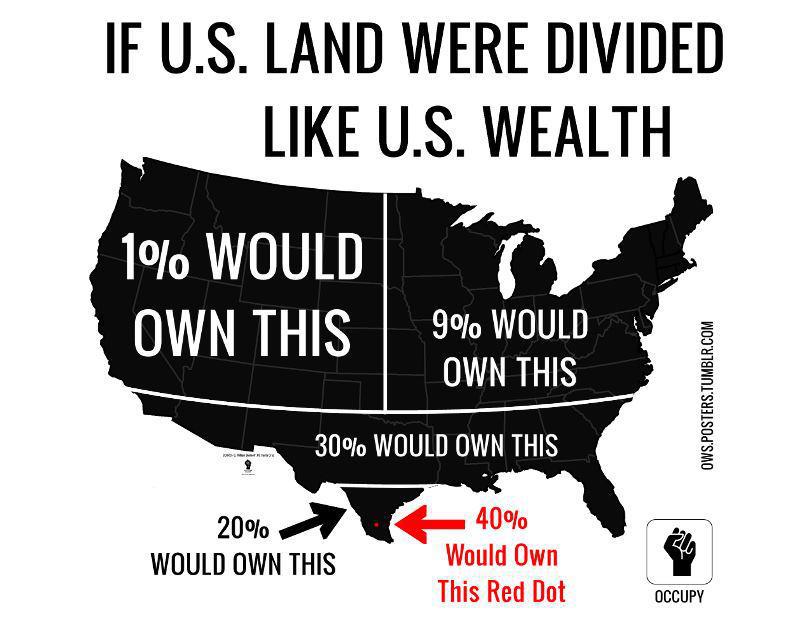
Here’s a graphic I like just in case you haven’t seen it yet:
In praise of nerd kids
I’m a bit of an unusual mother. I don’t worry that my kids don’t have a bunch of friends, that they aren’t popular. I’d actually be more worried, to tell you the truth, if they were super popular. Actually one of my kids is verging on popular, and it’s kind of an issue.
See, the thing is, I love nerd kids. I love the way they are dreamy, and spaced out, figuring out a logical internal system that could never exist except in their minds, laughing to themselves about a joke they just made up, and rewriting songs with silly lyrics a la Weird Al Yankovic, whom they’ve never heard of.
Why? Because almost all of my favorite people in the world were total nerds, or at least outsiders, when they were kids, and I don’t think that’s a coincidence. There’s something about not fitting in, about maintaining an observer’s status, that keeps you from ever being subsumed by the vicious groupthink of seventh grade (and if you can resist that kind of peer pressure, you can resist anything).
By the way, I was a huge nerd in seventh grade, and I had exactly one friend. In fact I didn’t have any friends for a couple of months, and it was miserable. So I’m not saying that I’m hoping for an easy path for my kids. In fact I’m hoping for something kind of tough for my kids, which is probably why most other parents try hard to make sure their kids have playdates with lots of other kids and have spectacular birthday parties etc.
And it’s not that I don’t want my kids to have friends- I do, and they do, just not very many. As far as I’m concerned, two or three co-nerd friends is just about perfect. If we’ve got enough for a Dungeons and Dragons game, we’re good. I’m not ever going to make my kids feel bad for the fact that they’ve only ever played with each other, the kid who lives downstairs, and the kid who lives next door, because those kids are seriously nerdy and awesome.
One thing I hate though is the concept of the child prodigy. Unlike nerds, who live in a dream world of their own making, which I think is awesome, the child prodigy lives in a dream world of their parents’ making, which is weird and not good. I’ve known some of these kids, and they get totally addicted to a certain kind of adult attention, which of course doesn’t last past childhood. They never learn to rely on themselves for feeling accomplished.
I just don’t get it either- so what that a 10 year old can do calculus? What’s the big deal, are there calculus problems that the world needs solving that only this kid can do? No. Leave the kid alone to be a nerd for a few more years, then decide what he or she wants to do. The obsession in our culture with prodigy is just weird, it’s in the same boat with beauty pageants for 3-year-olds. So weird, bordering on creepy.
There are basically two kinds of nerds, from my experience. The first kind is the nerd who vaguely understands that there are social rules that he or she doesn’t understand but that everyone else does. This nerd thinks about that every now and then with something like surprise or maybe even alarm, but then goes back to thinking about more interesting things. My mom is a nerd like this: grew up in L.A. with the children of starlets and couldn’t wait to get to MIT. Built her own telescope in the backyard. That kind of thing.
Then there’s the second kind of nerd, which I was, the excruciatingly sensitive nerd who is fully aware of how much of an outsider he or she is – always aware of the cruelty of those in power, and always feeling for the various victims (who are usually someone else). This nerd is lucky if they survive adolescence without committing suicide, but pretty much from then on it’s good stuff (although never easy). Their favorite movie is Harold and Maude (or was in the 1980’s) and they tend to listen to music really loud whenever they can. Love those nerds.
Truth Values
Just two quick things today.
First, I’m going to see Truth Values: One girl’s romp through M.I.T.’s male math maze this Saturday, with a couple of buddies of mine. It’s been recommended to me by a bunch of my math friends, and tickets are available here. It’s slightly scary how much I anticipate I have in common with the writer and performer Gioio De Cari. Also I think I may have taught a class in the classroom of this picture, maybe even with this haircut:

Second, I wanted to share a poem with you, written by Mary Oliver:
We will be known as a culture that feared death
and adored power, that tried to vanquish insecurity
for the few and cared little for the penury of the
many. We will be known as a culture that taught
and rewarded the amassing of things, that spoke
little if at all about the quality of life for
people (other people), for dogs, for rivers. All
the world, in our eyes, they will say, was a
commodity. And they will say that this structure
was held together politically, which it was, and
they will say also that our politics was no more
than an apparatus to accommodate the feelings of
the heart, and that the heart, in those days,
was small, and hard, and full of meanness.
Why I’m involved with #Occupy Wall Street
I get a lot of different responses when I tell people I’m heavily involved with the Alternative Banking group at #OWS. I find myself explaining, time after time, why it is I am doing this, even though I have a full-time job and three children (let’s just say that my once active knitting circle hasn’t met in a while).
I was not particularly activist before this. In fact I went to UC Berkeley for college and managed to never become politically involved, except for two anti-Gulf war protests in San Francisco which were practically required. While my best friend Becky was painting banners in protest of the U.S. involvement in El Salvador, I was studying tensor products and class field theory.
It’s true that I’ve been much more involved in food-based charities like Fair Foods since high school. One of the most attractive things about Fair Foods was that it acts as an outsider to the system, creating a network of gifts (of primarily food and lumber) which was on the one hand refreshingly generous, based on trust, and the other hand small enough to understand and affect personally.
I, like many people, figured that the political system was too big to affect. After all, it was enormous, did lots of very reasonable things and some unreasonable things; it didn’t solve every problem like hunger and crime, but the people running it were presumably doing their best with incomplete information. Even if those people didn’t know what they were doing, I didn’t know how to change the system. In short, I wasn’t an expert myself, so I deferred to the experts.
Same goes with the economic system. I assumed that the people in charge knew what they were doing when they set it up. I was so trusting, in fact, that I left my academic job and went to work at a hedge fund to “be in business”. I had essentially no moral judgement one way or the other about the financial system.
Once I got there, though, I had a front row seat to the unfolding crisis. As I wrote about, I got to see former Treasury Secretaries and Fed Chairman explain how shitty the securitized products are, that were currently being sold all around the world, and how they had no idea what to do about it except to tell everyone to get the hell out (which we can see has been harder for some than for others).
That meeting wasn’t the only clue I received that pointed to one thing: the experts had no idea what they are doing. The system was based on an overwhelming arrogance and network of vested interests. My conclusion as well as many other people’s.
On the other hand, it was a crisis. It was a fantastic opportunity to set up a better system. The optimist in me assumed that we would. I applied to work for the regulators to be part of the solution. When I didn’t get any offers I worked for a risk company instead.
After two years in risk, and no new system, I had to admit that there was no reason for optimism. The system is still being controlled by the same group of arrogant architects who argue that we can’t change it because then it would collapse. There’s always a problem with asking people on the inside to fix their problems. The politicians don’t understand enough about the financial system to know what to do, and the financial lobbyists telling them what to do are always protecting the banks.
Once I lost faith in fixing the problems, I felt pretty hopeless. I left finance, and considered working for a food-based charity in New York, but finally decided to stay a nerd since that’s what makes me happiest. I started this blog in a moment of hope that something as small as explaining how quants do modeling could be interesting to someone, that maybe the techniques used for so much destruction could also be used for construction.
Then something happened. It was the #OWS protest. I started going down to see if I could get people interested in talking about the financial system. Mostly people were only tepid, but sometimes people really wanted to know. I kept looking for a working group that would focus on this, and eventually I found one.
People talk about how the protesters are a bunch of lazy dirty hippies. There is certainly a group of people who don’t have access to baths, and there are people there who don’t work regularly (although that’s one reason they are there to protest). In fact there are some downright annoying people in the mix as well. But if you focus on those people, you are missing the point entirely. People also say they’re sympathetic, but that there’s no chance we could ever make a difference. I also politely disagree.
What this movement has done is to create a new opportunity for people to try to fix the system. I’m not saying I am 100% convinced it will work; in my practical-minded way, I think the best-case scenario is more like, we will influence the conversation.
But maybe influencing is enough, considering that very few people think things are working right now. At the policy level, we need to influence the conversation in the direction of showing what else could be done, rather than letting things stay the same for lack of a better plan. At the individual level we need to continue what has already begun: getting people interested and informed about the system and how it affects their everyday lives.
What’s the worst-case scenario? We have already seen it: it’s the past 4 years of doing nothing and letting the economy fall apart with no plan for improvement. The #OWS movement has already brought about a meaningful and hugely important conversation, and a sense of involvement by ordinary people, about what experts are doing with their lives.
This emerging conversation is perfectly illustrated in this Bloomberg article – not the article itself, which is strangely self-contradictory and even journalistically dishonest (it tells people to take their money out of Wall Street by investing with Vanguard in the stock market), but the comments on this article are some of the best comments I’ve ever seen on a business-oriented website. People are no longer letting themselves be spoon-fed bullshit.
The dirty hippies are a distraction, and the people who admit the system is broken but who obsess about them need to stop complaining about the embarrassing image and figure out how to help. People who think that we will never accomplish something without a few key experts should contact those experts and invite them to the meetings. Or tell me who they are and I’ll invite them. It’s time to try.
Quantitative tax modeling?
Yes, it’s true. I’m going to talk about taxes. Don’t leave! Wait! I promise I’m going to keep it sexy. Buckle up for the most titillating tax convo of your life. Or at least the most bizarre.
Think of us as Murakami characters. I am a young woman, symbol both of purity and of unearthly sexual power, and I’ve taken your hand and led you down a well. We are crawling in underground tunnels looking for an exit, or perhaps an entrance. This is where taxes live, down here, along with talking animals and Bob Dylan recordings.
Do you know what I hate? I hate it when people say stuff like, the Cain 9-9-9 tax plan is bad for rich people. Or that it’s good for rich people. I hate both, actually, because you hear both statements and they both seem to be backed up with numbers and it’s so confusing.
But then again, this stuff is pretty confusing. Even when I think about the most ridiculously stupid questions about money I get confused. Even just the question of “what is the 1%?”, which has been coming up a lot lately, is hard to answer, for the following reasons among others:
- By income? Or by wealth? This matters because most rich people have most of their wealth in savings. They may not make any salary! Living off dividends or some such.
- Measured by individual? Or household? This matters because people with good jobs tend to marry each other.
But you know what? Just give me the answer in any of the four cases above – they are all reasonable choices. And tell me exactly how you’re doing it – which reasonable choices exactly? Better yet, write an open-source program that does this computation and give it, and the data you’re using, to me so I can tweak it.
As I write about this I realize I should confess here and now: I know nothing about taxes. However, I do know something about modeling, and I think in a certain way that makes it easier for me to imagine a tax model. And to critique the way people try to talk about taxes and tax plans.
Here’s my point. Let’s separate the measurement of a tax plan from the tax plan itself- it’s too easy to find a pseudo-quantitative reason to hate a tax plan that you just happen to disagree with politically (for example, by finding a weird theoretical example of a rich person who doesn’t benefit from a given tax plan, without admitting that on average rich people benefit hugely from that tax plan). If we already agree on a model for measurement then we could try to resist the urge to spin, even to ourselves.
Of course we’ll never agree on a model for measurement, so instead we should have many different models, each with a set of “reasonable choices”.
Characteristically for Murakami characters, we do not shirk from the manual labor and repetition of creating a million mini universes of tax scenarios, like folding so many tiny origami unicorns. We write down our thoughts in English and translate back to Japanese, or python, which gives it an overall feeling of alien text, but it has internal consistency. We can represent anyone in this country, under any tax situation. We may even throw in corporate tax structure models while we wait for our spaghetti water to boil.
Once we have the measurement machine, we feed a given tax proposal to the machine and see what it spits out. Probably a lot, depending on how many “reasonable choices” we have agreed to.
Average them! Seriously, that’s what you do in your head. Right? If you hear that so-and-so’s flat tax plan is good for rich people if you consider one year but bad when you take into account retirement issues, or some such thing, then overall, in your head, you basically conclude that it’s kind of a wash.
So by average I mean a weighted average where the weights depend on how much you actually care and believe in the given model. So someone who’s about to retire is going to weight things differently than someone who’s still changing diapers.
What could the end result of such a system be? Perhaps a graph, of how taxes in 2009 (or whatever time period) would have looked like under the putative new plan, versus what they actually looked like. A graph whose x-axis is salary and whose y-axis indicates relative change in tax burden (by percent of taxable income or something like that) of the new plan compared to what actually happened.
It’s nice to use “what actually happened” models since the current tax code is impossibly difficult, so we can duck the issue of writing a script that has the same information just by pretending that nobody cheated on their taxes in 2009. Of course we may want adjust that once we have a model for how much people actually do cheat on their taxes.
If we have decided to build a corporate tax model as well, let’s draw another graph which compares “what happened” to “what would have happened” based on the size of the company. So two graphs. With code and data so we can see what the model is doing and we can argue about it. We’re at the bottom of the well looking up and we see hazy light.


 mathbabe