In memory of Sally Hale
When I was five years old my parents moved to Lexington, Massachusetts. My first friend, so my oldest friend, was my next door neighbor Sally Hale, the mom of the twin boys next door Ezra and Caleb, two years older than me and the same age as my brother. Sally, who also had two older boys, so four altogether, took me under her wing as the daughter she never had. I understand that so well now that I have three sons and the boy downstairs from us has a sister. I want to adopt her, I want her to always feel welcome in my home and part of the Sunday morning pancakes ritual (she is).
I grew up in Lexington, not moving away until college, and Sally and her family were an essential part of my life. Looking back at it now it was pretty amazing; Sally and Ken were lefties, had parties with Noam Chomsky and other activists (Ken was a linguist at M.I.T.), they were super involved with all sorts of underrepresented groups through Ken’s field work with various undocumented and mostly dying languages. I have a story about Ken, which may be a myth but gives you an idea of the values I was exposed to.
Ken was called as an expert witness in Australia on the question of whether some indigenous people had the rights to land. The court wanted documented evidence that they had been there for so many thousands of years to grant the rights, but they didn’t have any written records. Ken, being an expert on evolution of languages, argued that due to the aspects of their language compared to the languages in the area, he could confirm their location there for much longer. They got the land.
As a child, of course, I didn’t know anything about politics or even much about human rights, so my experience with them was through their everyday life. I was always invited in to Sally’s house (it was the family’s house but it was really Sally’s house), and the warmth and kindness they bestowed on each other and me made me visit often, if not every day during certain times, especially when my brother and Caleb and Ezra regularly played D&D.
Sally introduced me to music, a gift I will always thank her for, a private world of unrestrained beauty, which was particularly precious to me because outside of this world I was a chubby, nerdy misfit. She taught me to play the penny whistle when I was 5 or 6, and encouraged me to start the piano when I was 7. She taught me to sing rounds (“hey ho nobody home”) and seemed to never get tired of singing them with me. Sometimes she’d take out her guitar and sing old 60’s folk songs about peace and love and teach me to harmonize. When I started playing the violin, I would play fiddle tunes in the evenings on the porch with Ken. We even entered fiddle contests together a few times (we never won anything but we were proud to be part of it).
Sally knitted me mittens to keep my hands warm as I went sledding in her backyard with Caleb and Ezra and my brother. She knitted during movies we would all go to together downtown. For me, listening to the click click clicks coming from her knitting needles in the complete darkness of the movie was a kind of miracle. She later taught me to knit, and we spent many hours in my adulthood talking about knitting and sharing yarn and tips.
Sally was an expert seamstress and taught me to sew, and sewed me clothes when I was little and even helped me sew a dress for myself in graduate school. She loved going to house auctions and would buy beautiful little objects which came from some old lady’s sewing kits. Later when I started sewing and knitting for my kids she gave me some of her auction buttons, collections of perfect little white pearls strung together on ancient string. I still have some.
Sally baked; she’d call us in from outside to give us kids thick slabs of bread, still warm from the oven, with butter and cinnamon sugar for a snack. We’d be sitting on the kitchen stools, eager to get back to sledding, or flashlight tag, or hanging out on the tree fort, eating our delicious bread with some hot cocoa and having no idea of how lucky we all were.
I remember when Sally decided to get a degree in nursing. In fact I thought she was already qualified for absolutely anything, considering how ridiculously competent she was at everything involving nurturing and healing, but she explained to me how much she needed to study. I remember helping her quiz herself on anatomy, with a huge book with mysterious pictures of the human body.
Sally showed me the delights of creation and creativity and of nurturing them both. When I think about how to have kids, how to have a happy family, I think about her method of making sure the basic materials are there, fostering a supporting environment, fostering the desire and the know-how, and then letting go. She did all that for me, and I’m so grateful.
I am very lucky I was able to see Sally recently. I visited her after math camp ended, and I brought my two older sons with me to see her. I also got to see Ezra with his happy family. It was nice to be able to surround her with abundance, evidence of her legacy of warmth and creation. She passed away recently and I am honored to speak at her memorial service this coming weekend. I’m honored to have been so loved by her.
Zuccotti Park just now: updated
Police are keeping people out of the park.


In addition, the Atrium at 60 Wall is closed all day. They haven’t said when it will reopen.
You can register your opinion on this handy New York Times graphic.
They’re back in! Check it out live.
Hey Google, do less evil.
I recently read this article in the New York Times about a business owner’s experiences using Google Adwords.
For those of you not familiar with the advertising business, here’s a geeky explanation. As a business owner, you choose certain key words or phrases, and if and when someone searches on Google with that word or phrase, you bid a certain amount to have your business shown at the top of the return searches or along the right margin of the page. You fix the bid (say 4 cents) beforehand, and you only pay that 4 cents when someone actually clicks. The way your position in the resulting page is determined is through an auction.
Say, for example, you and your competitors have all bid different amounts for the keyword “monodromy”. Then every time someone searches for “monodromy”, all the bids are sorted after being weighted by a quality score, which is a secret sauce created by Google but can be thought of as the probability that some random person will click on your ad.
This weighting makes sense, since Google is essentially determining the expected value of showing your ad: the product of the amount of money they will get paid if someone clicks on it (again, because they only get paid when the click occurs) and the probability of that event actually happening. Quality scores are actually slightly more than this, and we will get back to this issue below.
Moreover, once the sorting by expected value is done, your actual payment is determined not precisely by your bid but by the minimum bid you’d need to still maintain your position in the auction. This is a clever idea that gets people to raise their bids in order to win first place in the auction but not need to pay too much… unless there’s another guy who is determined to win first place.
Of course, it’s not always necessary to pay Google to get clicks. Sometimes your business will show up in the “organic searches” anyway- say if the name of your company is well-chosen for your product. So if you’re selling oak tables and the name of your company is “Oak Tables” then you may not need to pay anything for the that key phrase (but you may be willing to pay for the phrase “tables oak cherry”).
Back to the business owner. He decided to experiment with turning off Adwords, in other words he decided to rely on the results of organic searching instead of paying for each click. It didn’t end well- he gave up after a week because business was bad. The thing that caught my eye in this article was the suggestion that, when he turned off the payment, Google also became stingy with showing his free results. In other words, Google seems to be juicing their results (which is likely done through the quality score function) to punish people for not being in the pay-for-clicks program:
What is surprising to me is the steep drop in organic visits, the clicks from free links. They have fallen 47 percent, from 328 to 173. Stopping the AdWords payments seems to have affected unpaid traffic as well. According to everything I’ve been told about search engine optimization, this shouldn’t have happened. But from a business standpoint, it makes sense to me. Google is in business to make money by selling searches. Why shouldn’t it boost the free listings of its paying customers — and degrade the results when they stop paying? It’s also possible that people are more inclined to click on free results when they see the same company has the top paid link. Maybe it’s conscious, maybe it’s not. I’d be interested to hear any theories readers may have as to why my organic traffic took such a fall.
One theory I have is that it’s unfortunately impossible to figure out, because Google doesn’t seem to think they need to explain anything to anyone, even though they have become the arbiter of information. It’s a scary prospect, that they have so much control over the way we see and understand the world, and between you and me their “do no evil” motto isn’t sufficiently reassuring to make me want to trust them on this completely.
A friend of mine recently had a terrible experience with Google which makes this lack of clarity especially frustrating. Namely, some nut job decided to post evil stuff about him and someone else through comments on other peoples’ blogs. There was no way for him to address this except by asking the individuals whose websites had been used to take down the posts. In particular, there was no way for my friend to address the resulting prominent Google search results through the people working at Google- they don’t answer the phone. It doesn’t matter to them that people’s lives could be ruined with false information; they decided many years ago that they are not in the client service industry and haven’t looked back. Their policy seems to be that, as long as there is no actual and real threat of violence, they have no obligation to do anything.
That would be okay for a small startup with little influence on the world, but that’s really not what Google is. Google wields tremendous powers, and their quality score algorithm is defining our world. At this point they have a moral responsibility to make sure their search result algorithms aren’t ruining people’s lives.
What if it were possible to mark a search results as “inappropriate”? And then, given enough votes, the quality score would be affected and the listing would go down to the bottom of page 19. I realize of course that this could be used for good as well as for bad – people could abuse such a system as well, by squelching information they don’t want to see. But the problem with that argument is that it’s already happening, just inside Google, where we have no view. So in other words yes, it’s a judgment call, but I’d rather have a person (or people) do that than an algorithm.
Morning poem
Every morning
the world
is created.
Under the orange
sticks of the sun
the heaped
ashes of the night
turn into leaves again
and fasten themselves to the high branches —
and the ponds appear
like black cloth
on which are painted islands
of summer lilies.
If it is your nature
to be happy
you will swim away along the soft trails
for hours, your imagination
alighting everywhere.
And if your spirit
carries within it
the thorn
that is heavier than lead —
if it’s all you can do
to keep on trudging —
there is still
somewhere deep within you
a beast shouting that the earth
is exactly what it wanted —
each pond with its blazing lilies
is a prayer heard and answered
lavishly,
every morning,
whether or not
you have ever dared to be happy,
whether or not
you have ever dared to pray.
from Dream Work (1986) by Mary Oliver
Postage paid protest
I’m glad I got a new laptop with sound, because now I can listen to and watch this awesome YouTube video with suggestions to keep Wall Street occupied.
The sin of debt
It’s fascinated me for a while how people use language to indicated the relationship between money and morality. David Graeber’s book about debt took this issue on directly, but even before reading it I had noticed the disconnect between individual debt and corporate debt.
It was clear from my experience in finance that debt is something that, at the corporate level, is considered important – you are foolish not to be in debt, because it means you’re not taking advantage of the growth opportunities that the business climate affords you. In fact you should maximize your debt within “reasonable” estimates of its risk. Notable this is called leveraging your equity, a term which if anything sounds like a power move.
That just describes the taking on of debt, which for an individual is something they are likely not going to describe with such bravado, since they’d be forced to use measly terms such as “I got a loan”. What about when you’re in trouble with too much debt?
My favorite term is debt restructuring, used exclusively at the corporate (or governmental) level. It makes defaulting on ones debt a business decision by a struggling airline or what have you, and the underlying tone is sympathy, because don’t we want our airlines (or other american companies) to succeed?
When you compare this language and its implied morality (neutral) to the moralistic preaching of late-night talk radio, it’s quite stark. It’s made clear on such shows that debt is a sin, that the reason the show is a success is that it’s entertainment to hear how messed up the callers’ finances are, and to hear the radio host drill into their most private details in the name of ferreting out that sin.
The Suzy Ormon show is another example of this, and this blog entry is a great description of the emotional and spiritual repentance required in our culture when one is in debt, bizarrely combined with her urging you to go out and consume some more.
For the individual there is no debt restructuring available – at best you can get your debt consolidated, but the people who do that are themselves considered icky. There’s no clean way to deal with out-of-control debt as an individual.
Until now! I found an interesting article the other day which somehow excludes certain people from the moral failing of being in debt – namely, if they have the help of another powerful buzzword – a moral reclamation if you will – namely, “entrepreneur.” Because we all want our entrepreneurs to succeed!
The fact that the program doesn’t apply to most of a typical person’s student debt load is only partly relevant – for me, the fascinating part is the way that, when you stick in the word “entrepreneur,” you suddenly have the vision of someone who shouldn’t be saddled with debt, who is immediately forgiven for their sins. It brings up the question, can we perform this moral cleansing for other groups of people who are currently in debt?
What if we coopted the language of the corporations for the individual? I’d love to hear people talking about large-scale restructuring of their debt. Just the phrase makes me realize its possibilities. One of the main tools of leverage for such talks is the amount of money on the table. If sufficiently many people got together to formally restructure their credit card debts, what would the banks do? What could they do except negotiate?
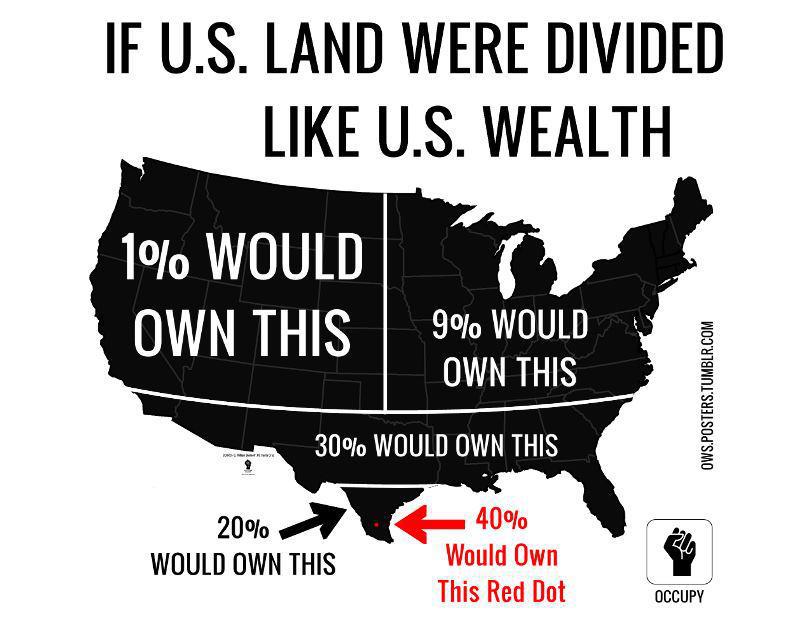
Here’s a graphic I like just in case you haven’t seen it yet:
Overfitting
I’ve been enjoying watching Andrew Ng’s video lectures on machine learning. It requires a login to see the videos, but it’s well worth the nuisance. I’ve caught up to the current lecture (although I haven’t done the homework) and it’s been really interesting to learn about the techniques Professor Ng describes to avoid overfitting models.
In particular, he talks about iterative concepts of overfitting and how to avoid them. I will first describe the methods he uses, then I’ll try to make the case that they are insufficient, especially in the case of a weak signal. By “weak signal” I mean anything you’d come across in finance that would actually make money (technically you could define it to mean that the error has the same variance as the response); almost by definition those signals are not very strong (but maybe were in the 1980’s) or they would represent a ridiculous profit opportunity. This post can be seen as a refinement of my earlier post, “Machine Learners are spoiled for data“, which I now realize should have ended “spoiled for signal”.
First I want to define “overfitting”, because I probably mean something different than most people do when they use that term. For me, this means two things. First, that you have a model that is too complex, usually with too many parameters or the wrong kind of parameters, that has been overly trained to your data but won’t have good forecasting ability with new data. This is the standard concept of overfitting- you are modeling noise instead of signal but you don’t know it. The second concept, which is in my opinion even more dangerous, is partly a psychological one, namely that you trust your model too much. It’s not only psychological though, because it also has a quantitative result, namely that the model sucks at forecasting on new data.
How do you avoid overfitting? First, Professor Ng makes the crucial observation that you can’t possibly think that the model you are training will forecast as well on new data as on the data you have trained on. Thus you need to separate “training data” from “testing data”. So far so good.
Next, Professor Ng makes the remark that, if you then train a bunch of different models on the training data, which depend on the number of variables you use for example, then if you measure each model by looking at its performance on the testing data to decide on that parameter, you can no longer expect the resulting model (with that optimized number of parameters) to actually do so extremely well on actually new data, since you’ve now trained your model to the testing data. For that reason he ends up splitting the data into three parts, namely the training data (60%), a so-called validation data set (20%) and finally the true testing set (the last 20%).
I dig it as an idea, this idea of splitting the data into three parts, although it requires you have enough data to think that testing a model on 20% of your data will give you meaningful performance results, which is already impossible when you work in finance, where you have both weak signal and too little data.
But the real problem is that, after you’ve split your data into three parts, you can’t really feel like the third part, the “true test data”, is anything like clean data. Once you’ve started using your validation set to train your data, you may feel like you’ve donated enough to the church, so to speak, and can go out on a sin bender.
Why? Because now the methods that Professor Ng suggests, for example to see how your model is doing in terms of testing for high bias or high variance (I’ll discuss this more below), looks at how the model performs on the test set. This is just one example of a larger phenomenon: training to the test set. If you’ve looked at the results on the test set at all before fixing your model, then the test set is just another part of your training set.
It’s human nature to do it, and that’s why the test set should be taken to a storage closet and locked up, by someone else, until you’ve finished your modeling. Once you have declared yourself done, and you promise you will no longer tweak the results, you should then find the person, their key, and test your model on the test set. If it doesn’t work you give up and try something else. For real.
In terms of weak signals, this is all the more important because it’s so freaking easy to convince yourself there’s signal when there isn’t, especially if there’s cash money involved. It’s super important to have the “test data set”, otherwise known as the out-of-sample data, be kept completely clean and unviolated. In fact there should even be a stipulated statute of limitations on how often you get to go out of sample on that data for any model at all. In other words, you can’t start a new model on the same data once a month until you find something that works, because then you’re essentially training your space of models to that out-of-sample data – you are learning in your head the data and how it behaves. You can’t help it.
One method that Ng suggests is to draw so-called “learning curves” which plot the loss function of the model on the test set and the validation set as a function of the number of data points under consideration. One huge problem with this for weak signals is that the noise would absolutely overwhelm such a loss estimate, and we’d end up looking at two extremely misleading plots, or information-free plots, the only result of which would be that we’ve seen way too much of the test set for comfort.
It seems to me that the method Ng suggests is the direct result of wanting to make the craft of modeling into an algorithm. While I’m not someone who wants to keep things guild-like and closed, I just don’t think that everything is as easy as an algorithm. Sometimes you just need to get used to not knowing something. You can’t test the fuck out of your model til you optimize on every single thing in site, because you will be overfitting your model, and you will have an unrealistic level of confidence in the result. As we know from experience, this could be very bad, or it could just be a huge waste of everyone’s time.
#Occupy Wall Street meeting and news
First, I wanted to mention that there will be an Alternative Banking meeting on Sunday from 3-5pm at 1401 IAB (14th floor of the International Affairs Building), Columbia University. This is on the corner of Amsterdam and 118th. Please come!
Next I wanted to mention that I’ve been hearing from other occupied cities, namely Occupy Oakland and Occupy LA. I’ve been meeting the most amazing people this way and I’m super grateful for that. I should be talking to Cheryl from Occupy LA later today, and it sound like her posse of occupiers have really been making things happen with something called the “Responsible Banking Measure” recently passed by the LA City Council. Awesome stuff, and I’ll post more as I learn it. My favorite part was the last line of her email, “let’s do this!”
Another inspiring figure is coming from Occupy Oakland, a photographer named Miles Boisen, whose trademark phrase, “struggle and snuggle,” is very close to my heart. He recently met a group of four protesters who were so fascinating that he asked them to tell a bit more about their story. First, here’s their picture:

Next, here’s one of their stories:
Dear Myles,
It was wonderful to meet you at the time and place we did. I am happy to give you some background information. Feel free to use it (or not) any way you like.
I was born in San Francisco in 1944, the year that millions of Jews were being slaughtered by Hitlers minions in Europe. My mother, Hodee Edwards, is Jewish. My father, Harvey Richards, is of Welsh ancestry. I witnessed the 1950s in the streets of Oakland, watching my mother crying over the Rosenbergs execution, and experiencing the racism of our world through the eyes of my African American step father (George Edwards) and my sister (Lou Edwards). I dodged the FBI coming to my house to harrass my family and witnessed doors being slammed in the FBI’s faces as they sought to intimidate dissidents in Oakland. I traveled to the USSR in the summer of 1961, the year I graduated from high school, to help my father and his wife, my stepmother Alice Richards, make two films on ordinary life in the USSR. See this for a clip from that movie.
I entered UC Berkeley in the fall of 1961 and immediately joined the civil rights movement. My first demonstrations were against compulsory ROTC at Berkeley, a struggle that resulted in the cancellation of compulsory ROTC in my sophmore year. I participated in the sit-ins at Mel’s drive-in restaurants (see this for a clip of my father’s film showing those demos and a shot of me on the picket line), at the Sheraton Palace Hotel (see this which includes a shot of me being dragged out of the lobby by the SFPD) and along auto row on Van Ness in San Francisco in 1963 and 1964 against racial discrimination in hiring, then rampant all around the bay area. I spent 2 months in the San Francisco County Jail in San Bruno in 1966 for my efforts.
I resisted the draft from my graduation in 1966 when I was classified 1A to 1969 when the draft board just gave up on me and never sent me another nasty letter. See this for a slide show of events that took place on the day I was drafted (but slipped out of their grasp), Oct 18,1967 during the Stop the Draft Week events on the very same street Occupy Oakland’s general strikers walked down last Tuesday.
As you can see the events of those years are still very alive for me through the work I have done archiving my father’s film collection (see this). I have kept the memories of those movements alive because I believe in them now as I did then. So, for me, the Occupy Oakland movement is a dream come true. It finally gives voice to the cry for justice and sanity that has been silenced for so long under the hegemony of the Republican and Democratic Parties ever since the election of the crook, Richard Nixon, and continuing until the present day with the election of the most recent fraud, Obama the bomber.
I rejoice at the outpouring of outrage from our youth. They have made it possible for me to switch from the tiny minority who over the past 40 years have dissented against the American empire, to the 99% who are dissenting today. What a relief. I don’t know where this movement is headed nor how long it will last. But I do know that it has my whole hearted support and that it opens the door to ten thousand possibilities. I am in awe that I lived to witness it. Since I am retired now, my future plans are to continue to manage Estuary Press and the Harvey Richards Media Archive and to make sure that we do not forget our history, even as we are making it right now.
I guess you can’t call this brief, but I tried my best.
Thanks for asking, and hoping you don’t regret it,
Paul Richards
In praise of nerd kids
I’m a bit of an unusual mother. I don’t worry that my kids don’t have a bunch of friends, that they aren’t popular. I’d actually be more worried, to tell you the truth, if they were super popular. Actually one of my kids is verging on popular, and it’s kind of an issue.
See, the thing is, I love nerd kids. I love the way they are dreamy, and spaced out, figuring out a logical internal system that could never exist except in their minds, laughing to themselves about a joke they just made up, and rewriting songs with silly lyrics a la Weird Al Yankovic, whom they’ve never heard of.
Why? Because almost all of my favorite people in the world were total nerds, or at least outsiders, when they were kids, and I don’t think that’s a coincidence. There’s something about not fitting in, about maintaining an observer’s status, that keeps you from ever being subsumed by the vicious groupthink of seventh grade (and if you can resist that kind of peer pressure, you can resist anything).
By the way, I was a huge nerd in seventh grade, and I had exactly one friend. In fact I didn’t have any friends for a couple of months, and it was miserable. So I’m not saying that I’m hoping for an easy path for my kids. In fact I’m hoping for something kind of tough for my kids, which is probably why most other parents try hard to make sure their kids have playdates with lots of other kids and have spectacular birthday parties etc.
And it’s not that I don’t want my kids to have friends- I do, and they do, just not very many. As far as I’m concerned, two or three co-nerd friends is just about perfect. If we’ve got enough for a Dungeons and Dragons game, we’re good. I’m not ever going to make my kids feel bad for the fact that they’ve only ever played with each other, the kid who lives downstairs, and the kid who lives next door, because those kids are seriously nerdy and awesome.
One thing I hate though is the concept of the child prodigy. Unlike nerds, who live in a dream world of their own making, which I think is awesome, the child prodigy lives in a dream world of their parents’ making, which is weird and not good. I’ve known some of these kids, and they get totally addicted to a certain kind of adult attention, which of course doesn’t last past childhood. They never learn to rely on themselves for feeling accomplished.
I just don’t get it either- so what that a 10 year old can do calculus? What’s the big deal, are there calculus problems that the world needs solving that only this kid can do? No. Leave the kid alone to be a nerd for a few more years, then decide what he or she wants to do. The obsession in our culture with prodigy is just weird, it’s in the same boat with beauty pageants for 3-year-olds. So weird, bordering on creepy.
There are basically two kinds of nerds, from my experience. The first kind is the nerd who vaguely understands that there are social rules that he or she doesn’t understand but that everyone else does. This nerd thinks about that every now and then with something like surprise or maybe even alarm, but then goes back to thinking about more interesting things. My mom is a nerd like this: grew up in L.A. with the children of starlets and couldn’t wait to get to MIT. Built her own telescope in the backyard. That kind of thing.
Then there’s the second kind of nerd, which I was, the excruciatingly sensitive nerd who is fully aware of how much of an outsider he or she is – always aware of the cruelty of those in power, and always feeling for the various victims (who are usually someone else). This nerd is lucky if they survive adolescence without committing suicide, but pretty much from then on it’s good stuff (although never easy). Their favorite movie is Harold and Maude (or was in the 1980’s) and they tend to listen to music really loud whenever they can. Love those nerds.
Gaming the system
It’s not easy being a European bank right now. Everyone is telling them to boost capital, otherwise known as raise money, exactly at the time that much of their investments are losing value on the market because of the European debt crisis.
If I were the person running such a bank, I’d be looking at fewer and fewer options. Among them:
- Ask China for some of their money
- Ask investors for some of their money
- Ask a middle eastern country for some of their money
- Cut bonuses or dividends
- Change the way I measure my money
Of the above possibilities, 5) is kind of attractive in a weird way.
And guess what? That’s exactly the option that the banks are choosing. According to this article from Bloomberg, the banks have suddenly noticed they have way more assets than they previously realized:
Spanish banks aren’t alone in using the practice. Unione di Banche Italiane SCPA (UBI), Italy’s fourth-biggest bank, said it will change its risk-weighting model instead of turning to investors for the 1.5 billion euros regulators say it needs. Commerzbank AG (CBK), Germany’s second-biggest lender, said it will do the same. Lloyds Banking Group Plc (LLOY), Britain’s biggest mortgage lender, and HSBC Holdings Plc (HSBA), Europe’s largest bank, both said they cut risk-weighted assets by changing the model.
“It’s probably not the highest-quality way to move to the 9 percent ratio,” said Neil Smith, a bank analyst at West LB in Dusseldorf, Germany. “Maybe a more convincing way would be to use the same models and reduce the risk of your assets.”
Ya THINK?!
European firms, governed by Basel II rules, use their own models to decide how much capital to hold based on an assessment of how likely assets are to default and the riskiness of counterparties. The riskier the asset, the heavier weighting it is assigned and the more capital a bank is required to allocate. The weighting affects the profitability of trading and investing in those assets for the bank.
One reason I couldn’t stomach any more time at the risk company I worked at is things like this. We would spend week after week setting up risk models for our clients, accepting whatever they wanted to do, because they were the client and we were working for them. Our application was flexible enough to allow them to try out lots of different things, too, so they could game the system pretty efficiently. Moreover, this idea of the “riskiness of counterparties” is misleading- I don’t think there is an actual model out there that is in use and is useful to broadly understand and incorporate counterparty risk (setting aside the question for now of gaming such a model).
For example, the amount of risk taken on by CDS contracts in a portfolio was essentially assumed to be zero, since, as long as they hadn’t written such contracts, they were only on the hook for the quarterly payments. However, as we know from the AIG experience, the real risk for such contracts is that they won’t pay out because the writers will have gone bankrupt. This is never taken into account as far as I know- the CDS contracts are allowed for hedging and never impose risk on the overall portfolio otherwise. If the entity in question is the writer of the CDS, the risk is also viciously underestimated, but for a slightly more subtle reason, which is that defaults are generally hard to predict.
Here’s not such a crappy idea coming from Vikram Pandit (it’s in fact a pretty good idea but doesn’t go far enough). Namely, standardize the risk models among banks by forcing them to assess risk on some benchmark portfolio that nobody owns, that’s an ideal portfolio, but that thereby exposes the banks’ risk models:
Pandit is championing an idea to make it easier to compare the way banks assess risk. To accomplish this, he wants to start with a standard, hypothetical portfolio of assets agreed by regulators the world over. Each financial institution would run this benchmark collection through its risk models and spit out four numbers: loan loss reserve requirements, value-at-risk, stress test results and the tally of risk-weighted assets. The findings would be made public.
Then, Pandit wants the same financial firms to run the same measures against their own balance sheets – and to publish those results, too. That way, not only can investors and regulators compare similar risk outputs across institutions for their actual portfolios, but the numbers for the benchmark portfolio would allow them to see how aggressively different firms test for risks.
I think we should do this, because it separates two issues which banks love to conflate: the issue of exposing their risk methodology (which they claim they are okay with) and the idea of exposing their portfolios (which they avoid because they don’t want people to read into their brilliant trading strategies). I don’t see this happening, although it should- in fact we should be able to see this on a series of “hypothetical” portfolios, and the updates should be daily.
As a consumer learning about yet more bank shenanigans, I am inspired to listen to George Washington:

Truth Values
Just two quick things today.
First, I’m going to see Truth Values: One girl’s romp through M.I.T.’s male math maze this Saturday, with a couple of buddies of mine. It’s been recommended to me by a bunch of my math friends, and tickets are available here. It’s slightly scary how much I anticipate I have in common with the writer and performer Gioio De Cari. Also I think I may have taught a class in the classroom of this picture, maybe even with this haircut:

Second, I wanted to share a poem with you, written by Mary Oliver:
We will be known as a culture that feared death
and adored power, that tried to vanquish insecurity
for the few and cared little for the penury of the
many. We will be known as a culture that taught
and rewarded the amassing of things, that spoke
little if at all about the quality of life for
people (other people), for dogs, for rivers. All
the world, in our eyes, they will say, was a
commodity. And they will say that this structure
was held together politically, which it was, and
they will say also that our politics was no more
than an apparatus to accommodate the feelings of
the heart, and that the heart, in those days,
was small, and hard, and full of meanness.
Why I’m involved with #Occupy Wall Street
I get a lot of different responses when I tell people I’m heavily involved with the Alternative Banking group at #OWS. I find myself explaining, time after time, why it is I am doing this, even though I have a full-time job and three children (let’s just say that my once active knitting circle hasn’t met in a while).
I was not particularly activist before this. In fact I went to UC Berkeley for college and managed to never become politically involved, except for two anti-Gulf war protests in San Francisco which were practically required. While my best friend Becky was painting banners in protest of the U.S. involvement in El Salvador, I was studying tensor products and class field theory.
It’s true that I’ve been much more involved in food-based charities like Fair Foods since high school. One of the most attractive things about Fair Foods was that it acts as an outsider to the system, creating a network of gifts (of primarily food and lumber) which was on the one hand refreshingly generous, based on trust, and the other hand small enough to understand and affect personally.
I, like many people, figured that the political system was too big to affect. After all, it was enormous, did lots of very reasonable things and some unreasonable things; it didn’t solve every problem like hunger and crime, but the people running it were presumably doing their best with incomplete information. Even if those people didn’t know what they were doing, I didn’t know how to change the system. In short, I wasn’t an expert myself, so I deferred to the experts.
Same goes with the economic system. I assumed that the people in charge knew what they were doing when they set it up. I was so trusting, in fact, that I left my academic job and went to work at a hedge fund to “be in business”. I had essentially no moral judgement one way or the other about the financial system.
Once I got there, though, I had a front row seat to the unfolding crisis. As I wrote about, I got to see former Treasury Secretaries and Fed Chairman explain how shitty the securitized products are, that were currently being sold all around the world, and how they had no idea what to do about it except to tell everyone to get the hell out (which we can see has been harder for some than for others).
That meeting wasn’t the only clue I received that pointed to one thing: the experts had no idea what they are doing. The system was based on an overwhelming arrogance and network of vested interests. My conclusion as well as many other people’s.
On the other hand, it was a crisis. It was a fantastic opportunity to set up a better system. The optimist in me assumed that we would. I applied to work for the regulators to be part of the solution. When I didn’t get any offers I worked for a risk company instead.
After two years in risk, and no new system, I had to admit that there was no reason for optimism. The system is still being controlled by the same group of arrogant architects who argue that we can’t change it because then it would collapse. There’s always a problem with asking people on the inside to fix their problems. The politicians don’t understand enough about the financial system to know what to do, and the financial lobbyists telling them what to do are always protecting the banks.
Once I lost faith in fixing the problems, I felt pretty hopeless. I left finance, and considered working for a food-based charity in New York, but finally decided to stay a nerd since that’s what makes me happiest. I started this blog in a moment of hope that something as small as explaining how quants do modeling could be interesting to someone, that maybe the techniques used for so much destruction could also be used for construction.
Then something happened. It was the #OWS protest. I started going down to see if I could get people interested in talking about the financial system. Mostly people were only tepid, but sometimes people really wanted to know. I kept looking for a working group that would focus on this, and eventually I found one.
People talk about how the protesters are a bunch of lazy dirty hippies. There is certainly a group of people who don’t have access to baths, and there are people there who don’t work regularly (although that’s one reason they are there to protest). In fact there are some downright annoying people in the mix as well. But if you focus on those people, you are missing the point entirely. People also say they’re sympathetic, but that there’s no chance we could ever make a difference. I also politely disagree.
What this movement has done is to create a new opportunity for people to try to fix the system. I’m not saying I am 100% convinced it will work; in my practical-minded way, I think the best-case scenario is more like, we will influence the conversation.
But maybe influencing is enough, considering that very few people think things are working right now. At the policy level, we need to influence the conversation in the direction of showing what else could be done, rather than letting things stay the same for lack of a better plan. At the individual level we need to continue what has already begun: getting people interested and informed about the system and how it affects their everyday lives.
What’s the worst-case scenario? We have already seen it: it’s the past 4 years of doing nothing and letting the economy fall apart with no plan for improvement. The #OWS movement has already brought about a meaningful and hugely important conversation, and a sense of involvement by ordinary people, about what experts are doing with their lives.
This emerging conversation is perfectly illustrated in this Bloomberg article – not the article itself, which is strangely self-contradictory and even journalistically dishonest (it tells people to take their money out of Wall Street by investing with Vanguard in the stock market), but the comments on this article are some of the best comments I’ve ever seen on a business-oriented website. People are no longer letting themselves be spoon-fed bullshit.
The dirty hippies are a distraction, and the people who admit the system is broken but who obsess about them need to stop complaining about the embarrassing image and figure out how to help. People who think that we will never accomplish something without a few key experts should contact those experts and invite them to the meetings. Or tell me who they are and I’ll invite them. It’s time to try.
The Numbers are in: Round 1 to #OWS
This is a guest post by FogOfWar:
CUNA (a trade industry group for credit unions) just announced that at least 650,000 customers and USD $4.5 Billion have switched from banks to credit unions in the last five weeks. I think this is a pretty impressive showing for the lead up to “Bank Transfer Day”, and, as posted before, am a supporter of the CU transfers. A few quick points on the announcement:
Are those numbers driven by “Move Your Money” or BofA’s $5 Debit Fee?
A little of both, I suspect, and there’s no hard survey data (that I know of) splitting it out. The two points aren’t completely separate, as one of the points of “move your money” (at least in my mind) is to let people know that credit unions generally have lower fees than large commercial banks & it often makes financial sense to shift your account over regardless of your political views on “Too Big To Fail (TBTF)”.
So is 4.5 Billion a lot or a little?
It isn’t a big number in the scope of overall deposits, but it’s a really big number for transfers in just one month. For scale, the total deposits in all 11,000+ CUs nationwide are somewhere around $800Bn, and that’s roughly 10% of the total deposits in the US. So $4Bn (to make the math easy) is a 0.5% increase in deposits for CUs and somewhere around a 0.05% reduction in the deposit base of US banks in the aggregate. I suspect the transfers are concentrated in the large “final four” banks (BAC, JPM, C, WFC which, if memory serves, account for somewhere around 40% of deposits), so the reduction might be closer to 0.10% for the TBTF quartet.
Wait, those seem like really small percentages—why do you think this matters?
Well, because it’s a greater increase in deposits in one month than credit unions (in aggregate) got in the entirety of last year (and last year was a good year for CUs in which they saw their market share increase). People (rightly) don’t change their checking accounts lightly (there’s a lot of “stickiness” to having direct deposit/ATM cards/etc.—in short it’s a pain in the ass to change your financial institution), so this is a pretty impressive number of people and amount of deposits in this span of time.
Also (and this will play out over time), this could be the start of a trend. Certainly there seems to be a large uptick in discussion of “move your money”, and, as the idea percolates around there’s a lag between thought an action, so this well could be a slow build.
“A Slow Deliberative Walk Away from the TBTF Banks.”
Another important point is that, in fact, you really don’t want too many people moving their accounts in a short period of time for two reasons. First, a rush of people all removing their deposits at the same time is, in fact, a “run on the bank”. This is destructive for a host of reasons—in particular it can cause the institution on which there’s been a run to go into bankruptcy (regardless of whether that bank is otherwise solvent), and, let’s not forget, we the taxpayer are ultimately on the hook for the deposits of bankrupt commercial banks through the FDIC, which is funded by bank fees but backed by the full faith and credit of the taxpayer (and a BofA bankruptcy might put that backstop to the test). So, much as I disagree with many of the decisions of the mega banks, I don’t want the “move your money” campaign to be a catalyst for their insolvency proceedings.
Instead, what I’d really like to see is a slow steady whittling down of their deposit base, and thus their overall size, until they are no longer considered “to big to fail” and thus pose no danger to the taxpayers, as they will be free to make good or bad decisions and live or die, respectively, by them. In short, I’d like to see a “slow deliberative walk away from the TBTF banks” playing out over the course of the next 2-3 years.
The other reason is that credit union’s can only take deposits at a certain pace without running into issues with their own capital buffers and operations. This is a slightly technical issue, but with a substantive point behind it. In essence, absorbing a large growth in new deposits takes some time, not just from an operational perspective (ramping up staff, at a certain point opening new branches and ATMs), but also because more capital needs to be accumulated to provide a safety buffer for the additional deposits that have been taken on. From this perspective, the $4.5 Bn in 5 weeks is a “goldilocks” level—not to much to overheat, not too little to be a rounding error, but just right (OK, actually think it could be 2-3 times the pace without overheating, but everyone else loves to use that hackneyed “goldilocks” metaphor and I just felt peer pressure to frame it that way).
I read that it won’t have an impact on the banks—is that true?
In a word, “total fucking bullshit”. The deposit base is the skeleton of a bank—it’s what holds the whole thing together. Deposits are steady (essentially) free money. Money that can be deployed wherever the bank finds interesting at the moment: loans to customers, speculative exotic derivatives, new branches, foreign investment, whatever. Moreover, if retail deposits mean so little to banks, then why in the world do they spend so much advertising coin chasing them? Generally for profit institutions advertise for products that are profitable to them, not one’s that are irrelevant. QED.
That’s true over the long term. It is worth noting, however, that at this exact moment in time the banks are flush with cash sitting idle on deposit with the fed. http://www.cnbc.com/id/44019510/Bank_of_New_York_Puts_Charge_on_Cash_Deposits Which, by the way, makes it perfect timing for the “move your money” campaign. As I said before, I really don’t want a “run” on the banks, and the fact that banks are flush with cash currently means they’re relatively safe in the immediate moment from a loss of deposits.
But the real reason you’re still seeing Chase commercials on TV even though they’re flush with cash doing nothing at the Fed, is that Chase knows that most people rarely change their primary checking accounts. The accounts that are moving over now are (statistically) gone for good. Later, when that flush cash at the Fed is no more and the banks want the easy money of a wide retail deposit base, they’ll find it very difficult to bring those people back. Not because credit unions are really awesome, just because people really don’t like switching accounts—BofA has to spend a lot of energy to bring in a new account from another institution and doesn’t actually care if it brings it in from lower east side people’s or from Citibank (money is fungible).
Lastly, and perhaps most important, the primary checking account is the primary point of entry to our financial lives. Big banks like the free money you give them on deposits, but equally much they like the chance to have your credit card business, your mortgage and car loan business, your insurance business, your investing business and possibly your retirement and college savings business. All that ancillary business can be (and very much is) statistically quantified on a per-account average basis. All those cross-sells add up over time to big numbers.
FoW
Open Forum speeches
Last night Andrew, myself and Christian gave the Open Forum at Zucotti Park, representing the Alternative Banking working group. I wanted to share a couple of the speeches we used here. Andrew wrote the first part, and I wrote the second and third parts (the third part was adapted from FogOfWar’s breakdown of the banking system). Because we used the human microphone to speak, it had to be written almost like poetry. For now I’ll only share the ones I wrote, since I haven’t asked Andrew for permission to publish his. The event was videotaped and I’ll post a link to the YouTube when I know it. Hopefully we got a few more people to come to our meeting this afternoon.
Cathy:
I want to say something
about my background
When I was a kid
I wanted to become a mathematician
I was a nerd
I loved math because
it made everything
either true or false
it made everything
feel clean and safe
and I liked to feel that way
I worked hard
I went to college
I went to grad school
I was a post-doc
I became a professor of math
at Barnard College
but when I finally got there
I realized I wanted something else
I wanted to be in the real world
I wanted to be part of this city
I decided to work in business
the only job I knew how to get
was as a quant at a hedge fund
I didn’t know anything
about finance
I went there anyway
I learned a lot
I worked with smart people
I learned how they think
I learned how the markets work
I learned how to predict the market
I started to see the system
as an enormous junkyard
and the role we played
as the scavengers
we were the junkyard dogs
we used math and computers
we skimmed off the top
of the enormous system of money
this math is not clean
this math is not safe
there was something wrong
whose money is this?
Where does this money come from?
I couldn’t understand it
I asked other people there
whose money is this?
this is the system they said
it’s just money in the system
your question doesn’t make sense
but I thought more about it
I realized this money
it comes from somewhere
it comes from people
it is their savings
it is their mortgage payments
it is their retirements
some of them are rich
they can afford to make bets
but not all of them are rich
most of the system is made
from normal people’s money
I finally decided
I had to go
it didn’t seem right
to take that money
I went to work at a risk firm
we tried to understand risk
but after some time there
I realized something
people don’t care about risk
not the way they should
I left that place too
I left finance
but I still wanted to do something
about how the financial system works
which is why I’m here
I’m very thankful to you
that you are here too
and we know something
we know the system isn’t working
let’s figure it out
let’s talk about it
let’s understand it
and why it is failing
and let’s make it work
it needs to work for us
it needs to work for everyone
Thank you
Christian:
What is banking?
there are four parts
The first is old-school
traditional banking
the institutions in this
are Banks and Thrifts,
Credit Unions, and Payday Lenders
they take deposits
they start checking accounts
they make loans
they make mortgages
they give out credit cards
they give out debit cards.
The second category of banking
is Investment Funds
the institutions here
are pension funds
mutual funds
index funds
and hedge funds
the collect money from investors
to invest in the market
this is how your 401ks
get into the system
The third kind of banking
is investment banking
here the institutions
are the investment banks
like Goldman Sachs
they give advice to companies
like when they go IPO
or need to raise money
they also make trades
that are supposed to help
their clients
The fourth kind of banking
is Insurance
the institutions are
the insurance companies
they pool risks
they make big pools of money
from lots of people
so that when bad things happen
the pool can pay
instead of one person
we use this system
for Home insurance,
for life insurance,
for car insurance,
and for medical insurance
I am telling you this
to let you know
that this system is big
but it is not infinite
it has been set up by people
and it can be understood by people
and it can improved by people
please join us
the Alternative Banking group
we are meeting tomorrow
Thank you
#OWS meeting tomorrow
I’ve been busy writing my speech for the Open Forum today. Finally finished it just now. I’m going to do it with Andrew, who’s also involved in the Alternative Banking working group. I’m very impressed with the work he and other people are doing for this group, it’s inspiring to see how much people care. I’ve been told that the Open Forum will be videotaped and put on YouTube- stay tuned for the link to that!
One outcome of all that hard work is that we found a place to meet! We’re meeting Saturday (tomorrow) from 4 to 6pm at the Community Church of New York, located at 28 East 35th Street. Hopefully we will have skype set up for people to call in. For skype details keep an eye on the Alternative Banking webpage. That webpage also has the minutes of our last meeting as well as the invitation to this one, complete with a questionnaire that we put together to make the actual meeting more productive.
It also looks like after that we have a room at Columbia reserved for a few Sundays, which is also very awesome.
Sorry for the incredibly boring post. It’s actually really exciting but I don’t imagine that’s coming through. I actually do have plenty of things to say about other stuff, specifically how crazy I’d be if I were an unemployed Greek person right now, but I’m really lacking in time and sleep so I will have to let Floyd Norris from the New York Times say those things:
There is little reason to think that Greek citizens will be more cooperative now that it has been made clear their opinions are irrelevant to the people who run Europe.
Quantitative tax modeling?
Yes, it’s true. I’m going to talk about taxes. Don’t leave! Wait! I promise I’m going to keep it sexy. Buckle up for the most titillating tax convo of your life. Or at least the most bizarre.
Think of us as Murakami characters. I am a young woman, symbol both of purity and of unearthly sexual power, and I’ve taken your hand and led you down a well. We are crawling in underground tunnels looking for an exit, or perhaps an entrance. This is where taxes live, down here, along with talking animals and Bob Dylan recordings.
Do you know what I hate? I hate it when people say stuff like, the Cain 9-9-9 tax plan is bad for rich people. Or that it’s good for rich people. I hate both, actually, because you hear both statements and they both seem to be backed up with numbers and it’s so confusing.
But then again, this stuff is pretty confusing. Even when I think about the most ridiculously stupid questions about money I get confused. Even just the question of “what is the 1%?”, which has been coming up a lot lately, is hard to answer, for the following reasons among others:
- By income? Or by wealth? This matters because most rich people have most of their wealth in savings. They may not make any salary! Living off dividends or some such.
- Measured by individual? Or household? This matters because people with good jobs tend to marry each other.
But you know what? Just give me the answer in any of the four cases above – they are all reasonable choices. And tell me exactly how you’re doing it – which reasonable choices exactly? Better yet, write an open-source program that does this computation and give it, and the data you’re using, to me so I can tweak it.
As I write about this I realize I should confess here and now: I know nothing about taxes. However, I do know something about modeling, and I think in a certain way that makes it easier for me to imagine a tax model. And to critique the way people try to talk about taxes and tax plans.
Here’s my point. Let’s separate the measurement of a tax plan from the tax plan itself- it’s too easy to find a pseudo-quantitative reason to hate a tax plan that you just happen to disagree with politically (for example, by finding a weird theoretical example of a rich person who doesn’t benefit from a given tax plan, without admitting that on average rich people benefit hugely from that tax plan). If we already agree on a model for measurement then we could try to resist the urge to spin, even to ourselves.
Of course we’ll never agree on a model for measurement, so instead we should have many different models, each with a set of “reasonable choices”.
Characteristically for Murakami characters, we do not shirk from the manual labor and repetition of creating a million mini universes of tax scenarios, like folding so many tiny origami unicorns. We write down our thoughts in English and translate back to Japanese, or python, which gives it an overall feeling of alien text, but it has internal consistency. We can represent anyone in this country, under any tax situation. We may even throw in corporate tax structure models while we wait for our spaghetti water to boil.
Once we have the measurement machine, we feed a given tax proposal to the machine and see what it spits out. Probably a lot, depending on how many “reasonable choices” we have agreed to.
Average them! Seriously, that’s what you do in your head. Right? If you hear that so-and-so’s flat tax plan is good for rich people if you consider one year but bad when you take into account retirement issues, or some such thing, then overall, in your head, you basically conclude that it’s kind of a wash.
So by average I mean a weighted average where the weights depend on how much you actually care and believe in the given model. So someone who’s about to retire is going to weight things differently than someone who’s still changing diapers.
What could the end result of such a system be? Perhaps a graph, of how taxes in 2009 (or whatever time period) would have looked like under the putative new plan, versus what they actually looked like. A graph whose x-axis is salary and whose y-axis indicates relative change in tax burden (by percent of taxable income or something like that) of the new plan compared to what actually happened.
It’s nice to use “what actually happened” models since the current tax code is impossibly difficult, so we can duck the issue of writing a script that has the same information just by pretending that nobody cheated on their taxes in 2009. Of course we may want adjust that once we have a model for how much people actually do cheat on their taxes.
If we have decided to build a corporate tax model as well, let’s draw another graph which compares “what happened” to “what would have happened” based on the size of the company. So two graphs. With code and data so we can see what the model is doing and we can argue about it. We’re at the bottom of the well looking up and we see hazy light.
Towards a better financial system
This is a guest post by H.R., a risk management quant:
First, let’s clear the ground for new ideas by questioning the myths that have justified the current system.
Myth 1: The wisdom of the free market is the answer to everything (if only we could get rid of market frictions like regulations and taxes).
Evidence against:
- Behavioral finance has empirically demonstrated a wealth of cognitive biases that distort the market.
- An Indian perspective on the effects of the liberalization of their economy.
- When it comes to their own welfare, the 1% have abandoned the free market in favor of the predator nanny state.
Myth 2: The work of the 1% is indispensable.
Evidence against:
- Empirically, pumping resources to the “job creators” does not seem to be very effective.
- Most of the 1% are not even “job creators”.
- And the marginal value of those that are is questionable.
Myth 3: The unemployed exist because they don’t have the right skills or attitude.
Evidence against:
- Bill Mitchell argues that with the current lack of jobs, “skills training” and similar efforts may shuffle around who gets the jobs, but won’t solve the unemployment problem.
- Economist DeLong concedes that maybe Kalecki had a point about unemployment as a means of lowering wage earners bargaining power.
Myth 4: The government can never compete with the private sector.
Evidence against:
US health care is ridiculously uncompetitive compared to other countries nationalized systems.
Myth 5: We have to choose efficiency over inequality.
Evidence against: Chris Dillow makes the argument that
- better managed government can’t simultaneously deliver us maximum efficiency and equality, and
- there are good arguments for choosing equality over efficiency.
Myth 6: We are constrained by budget deficits.
Some basic ideas from Modern Monetary Theory would disagree.
Myth 7:
- Dollar hegemony,
- cheap oil,
- and infinite growth will go on forever.
Next, we need to imagine the possibilities.
There will be government giveaways. Leave it up to the 1% and they will grab the giveaways for themselves. Let’s decide for ourselves what our priorities are and imagine a system that serves us all.
We can use the tools of
We can imagine the possibilities for a better system
If we aren’t happy with are national system, we can think about how to start local action.
- by switching to alternative local currencies
- which is already happening in the Bay Area.
#OWS Alternative Banking update
I’m excited about the meeting from yesterday and I’m trying to help coordinate next steps. As before, the caliber of the people and the conversation was inspiring – people from all over the place, with so many different background and perspectives. Really exciting! At the same time, we were left with a bunch of open questions and issues; we could really use your help!
The group was quite large, on the order of 55 or 60 people, and after some deliberation we split into two groups: Carne’s group went to the other side of the room to discuss a true alternative banking system, and quite a few of us stayed on the first side of the room to discuss problems with our current system and incremental (but not minor) changes to improve it.
We discussed, (not in this order) how the financial system can be divided into four parts, according to FogOfWar:
- Traditional Banking: taking deposits, checking accounts, CDs, making loans/mortgages, credit cards, debit cards, banks, Thrifts, Credit Unions, Payday Lenders
- Investment Funds: collecting money from investors and making investment in the capital markets: 401(k), 403(b), IRAs, pension funds, mutual funds, index funds, hedge funds (also money market funds with a big asterisk)
- Investment Banking: traditionally two categories: I-banking (giving advice to companies on raising money in the capital markets, M&A, etc), and broker/dealer activities (making trades on behalf of clients and market making) including derivatives
- Insurance: pooling risks amongst large statistical pools to spread large losses into smaller, manageable premiums. Home insurance, life insurance, car insurance, etc.
We also talked about the power grid, how the capital markets and the players in the capital markets control the small businesses which leads to what we see today, with people feeling disempowered from their own money and their own business. We talked about the shadow banking system, politics and the power of lobbyists, and about how we might be able to effect change on the state level by trying to influence where pensions are being invested. We also heard from a fantastic woman who helped form the Dodd-Frank bill and is an expert on the FDIC and various other regulators and understands where their vested interests lie (this line of thought makes me want to write a post on an idea my friend has of paying SEC lawyers on commission, in reaction to the Citigroup – SEC debacle).
[We will write the minutes of the meeting soon, hopefully; the above is just my recollection. Please comment if I’ve missed something.]
It was all very stimulating, and made me want to draw a bunch of visuals to help with the (very large) educational background required to really tackle these problems. Visuals like this or this would also help me prepare for my upcoming Open Forum this Friday.
At the end, Carne invited us to form a separate group from Alternative Banking, which makes sense as we are on the one hand quite large for his office and on the other hand interested in improving the current system more than a completely alternative one. That leaves us with a bunch of things to do though:
- Formally create a new working group through #OWS
- Choose a name
- Choose a representative to go to the #OWS meetings and explain our activities
- Find a place to meet
- Find a way to communicate
#OWS Alternative Banking meeting today
I’m excited to go to the second meeting today of the Alternative Banking working group, whose web page is still a work in progress. We’re meeting at 3pm at Carne Ross’s office.
Dial-in instructions:
At 3 PM Eastern Standard Time (in the US), please dial: (530) 881-1000
When you are asked to enter the conference code, enter this: 451166
Then hit the pound key (#).
Last week we set up an ambitious agenda for ourselves. After passing the “Move your Money” campaign to Alternative Economy (because they are already on it), we decided to focus on two things:
1) What are the legislative steps we think need to be made to fix the current system? To this end the discussion has been centered on commenting on the Volcker Rule, which the public can do until January 13th.
2) Reimagining our current financial system – what would it look like where our deposits, our retirements, and small businesses weren’t being held hostage by a few powerful banks and corporations? Much of this discussion will probably be centered on how things used to work in this country and how things work or worked in other countries.
In the meantime, I’ll share some great links with you:
- Credit unions are seeing a surge in new members.
- When you hear “recapitalization of banks,” what does that mean?
- How do CDS’s work, and what is going to happen in Greece if their 50% haircut counts as a default?
- My hero judge Jed Rakoff tells the SEC to do their job.
- More background on Jed Rakoff.
- A former derivatives guys explains where Wall St. went wrong and comments on #OWS.
- Trick-or-treating tips for #OWS sympathizers
Data Science and Engineering at Columbia?
Yesterday Columbia announced a proposal to build an Institutes for Data Sciences and Engineering a few blocks north of where I live. It’s part of the Bloomberg Administration’s call for proposals to add more engineering and entrepreneurship in New York City, and he’s said the city is willing to chip in up to 100 million dollars for a good plan. Columbia’s plan calls for having five centers within the institute:
- New Media Center (journalism, advertising, social media stuff)
- Smart Cities Center (urban green infrastructure including traffic pattern stuff)
- Health Analytics Center (mining electronic health records)
- Cybersecurity Center (keeping data secure and private)
- Financial Analytics Center (mining financial data)
A few comments. Currently the data involved in media 1) and finance 5) costs real money, although I guess Bloomerg can help Columbia get a good deal on Bloomberg data. On the other hand, urban traffic data 2) and health data 3) should be pretty accessible to academic researchers in New York.
There’s a reason that 1) and 5) cost money: they make money. The security center is kind of in the middle, since you can try to make any data secure, you don’t need to particularly pay for it, but on the other hand if you can find a good security system then people will pay for it.
On the other hand, even though it’s a great idea to understand urban infrastructure and health data, it’s not particularly profitable (not to say it doesn’t save alot of money potentially, but it’s hard to monetize the concept of saving money, especially if it’s the government’s or the city’s money).
So the overall cost structure of the proposed Institute would probably work like this: incubator companies from 1) and 5) and maybe 4) fund the research going on in (themselves and) 2) and 3). This is actually a pretty good system, because we really do need some serious health analytics research on an enormous scale, and it needs to be done ethically.
Speaking of ethics, I hope they formalize and follow The Modeler’s Hippocratic Oath. In fact, if they end up building this institute, I hope they have a required ethics course for all incoming students (and maybe professors).
Hmmm… I’d better get my “data science curriculum” plan together fast.


 mathbabe
