Surgery tomorrow!
I’ve been scheduled for surgery tomorrow. That means I’m super excited and somewhat nervous. We met with the surgeon last week, and he seemed very smart and good at his job by all accounts, which is to say online searches and word of mouth.
In order to prepare for surgery, I’ve been on a liquid diet except for some very low-carb raw veggies since the moment I heard I was cleared, July 13th. The drinks I’m allowed to have are all “meal replacement” high protein, low carb and low fat drinks. They’re very disgusting, being chalky and sickeningly sweet, but I’ve been extremely diligent, learning to drink them quickly and try not to gag.
Since my overall calorie intake has been less than 800 calories per day, I’ve been in ketosis since around the 15th, which means I have been burning body fat (it also means I’m not exactly starving – appetite is subdued in ketosis). This is exactly why I’m on the pre-op diet: to get rid of the extra fat hanging around on my liver and around my stomach. This will make it easier for the surgeon to get to my stomach laparoscopically tomorrow.
One thing that upset me a couple of days ago is that I was feeling very weak, confused and disoriented. I could barely walk around after waking up. I guessed that simply being on such a low calorie diet might explain such symptoms, but I also started desperately craving salt, to the point where I cheated: I ate two small pieces of grilled skinless boneless well-salted chicken. I simply couldn’t resist the saltiness. Then I looked into the salt content of the “meal replacement” drinks: they don’t have enough salt, even though they’re supposed to provide all the vitamins and minerals my body needs. What?!
When you add to that the fact that it’s extremely hot outside, so I sweat profusely every time I take a walk, I realized I was sodium deprived. This could actually be very unhealthy and possibly dangerous. It’s upsetting that I was making myself sick by following directions carefully. I modified my diet to include chicken broth and now I feel perfectly fine, but it made me wonder how the directions could be so badly off. Wouldn’t other people have noticed this defect?
Well, that brought me to a google search, with the result that I found an online bariatric pre-op diet forum which explained to me the following:
- there are lots of different pre-op diets
- some of them tell you to have chicken broth or even lean meats or even crackers
- nobody, or at least very few people, seem to actually follow these diets
- some people are hilariously bad at following their diet
- or maybe it’s really sad, but I chose to find it hilarious
- except for the crazy people who are eating sandwiches right before surgery and planning not to tell their surgeon
- that could actually kill you
- yes, I realize that the people on a forum like that are self-selected, but even so
Long story short, I think I’ve been more than sufficiently compliant on my diet, and I will tell the nutritionist at Columbia Presbyterian to add “broth” to the daily schedule.
Today it’s all liquid, I’m not even allowed to have raw veggies. Tomorrow I don’t get to eat or drink at all in preparation for the surgery.
Wish me luck, friends!
Criminal Algorithms
A piece I wrote for the Observer over in the UK just dropped, as part of my book’s softcover launch over there. Here it is:
How can we stop algorithms telling lies?
Cleared for Surgery!
Happy birthday to me, folks! I’m 45 today and my present was that I got the call I’ve been working towards for 6 months, since January: my insurance company has cleared me for the bariatric gastric sleeve surgery I’ve been talking about.
In fact, I’m likely to get the surgery in about two weeks, before the end of the month, or soon after that. In preparation I need to start a strict “pre-op” diet consisting of protein shakes and nothing else except possibly celery. That means no coffee until a couple of weeks after surgery, and no carbonated beverages for pretty much the rest of time.
Wish me luck, friends! I’m super psyched.
Going to London!
I’ll be in London next week for my WMD softcover launch with Penguin UK. They’re having me do a bunch of stuff, and they even gave me this promotion card to show you:

Please come by if you’re in London next week!
Why am I getting bariatric surgery?
I want to explain my reasoning, because it’s probably slightly deeper and more complex than most people imagine, unless they know me pretty well, in which case it might be simply baffling. A run-down:
- I love my round body. I am dreading losing a lot of weight in terms of what it will do to my body, especially because I will not be left with a perfect skinny person body, but rather a bunch of skin. I have spent months trying to come to terms with that but I haven’t yet.
- However, the dread I have about losing my round body is more than balanced by my long-term health considerations.
- I’m pre-diabetic and at extremely high risk for diabetes. My dad is diabetic and I’ve seen what it does to people long-term. People know about problems with feet, which he has, but people sometimes lose sight of the long-term effects it has on the brain. And I like my brain even more than I like my round body.
- Also, I like staying in shape. Biking is my favorite way to do that.
- Last summer, I realized that I simply couldn’t go biking in the summer heat. I felt like a prisoner all summer, cooped up inside the house and getting less and less fit. Thank goodness for swimming, but I’d really prefer to bike.
- Post-bariatric surgery patients complain about being cold, not hot. I’d rather be cold, because then I can wear one of my hand-knit sweaters outside while biking.
- Even when bariatric surgery patients don’t end up losing very much weight, which is rare, they’re almost always cured of diabetes.
- I also have arthritis and bad hips and bad knees in my family. Chances are that I’d need more surgeries, sooner, if I stay at my current weight than if I lose 100 pounds. Also, doctors don’t treat overweight people well.
- Indeed, if I didn’t have bariatric surgery now, I might find myself doing it in 20 years when I’ve had two knee replacements. Why wait?
- The surgery is laparoscopic, very safe, and I think the lifestyle changes are major but achievable.
Long story short, it’s a quality of life issue for me. I want to be one of those active grandmas that takes their grandchildren (or anyone’s grandchildren who will have me) to the zoo, and then bikes home. I don’t want to be defeated by global warming, nor do I want to be forced to move to Maine.
Now that I’ve explained myself, I’ll quickly mention what I find fascinating about the whole experience. Namely, all the reasons I’ve been given, and all the pushback in general, that this is a bad idea. They come down to three categories, which I plan to tackle in turn:
- Shaming tactics
- Financial incentives
- Bad medical information
Bariatric Surgery Update
I’m back from Ireland. It was as magical as I’d hoped. We had such a blast and I’ll always remember the trip, and also how much more mature Wolfie is than me in the context of long lines at airports, even though he’s only 8 (his words: “Of course I do get impatient, mom, but I just hold it inside and I think about positive things like that we’ll eventually be home and that we’ll be able to see our family”).
Also, after coming home yesterday, I went to a nutrition seminar for bariatric surgery with my husband. I have officially completed all the paperwork (tons of it) so right now I’m in the waiting phase, hoping that my insurance clears the surgery soon so I can get on with it. As usual, I’m impatient. I should probably try to channel Wolfie here.
I’m guessing it will be another 6 weeks before I get the surgery, so around August 9th. That’s four weeks for the insurance to clear, and then once that happens, I need to be on a very strict diet for two weeks heading into the surgery. Theoretically I could get cleared in two weeks, and I could even just start the diet early, but since it’s so intense I’m probably not going to start until I have a date.
The strict diet is essentially a protein-drink only, starvation diet meant to reduce the size of my liver in order for it to be not in the way for the actual laparoscopic surgery. It turns out that many people of my weight have “non-alcoholic fatty liver,” which just means a liver that’s bigger and contains more fat than a normal liver. It can get in the way of the surgeon’s tool, which can be a problem. The good news is that livers respond quickly to dieting, so the two week extreme diet goes pretty far in decreasing the size of the liver to a manageable obstacle.
I’ve been practicing making protein shakes lately, mostly with fruit and milk, in order to get used to them, because generally speaking they’re horrible tasting and sickly artificially sweet. I have found a pretty good one though, by which I mean it’s not too sweet, and I just tried it alone with water, and it was actually fine. The trick is: lots of ice and a really good blender. I got a “Ninja Professional Blender with single serve” and it’s perfect.
Also in last night’s seminar we went over the diet for the various stages of recovery. Here’s a cheat sheet:
- For the week after the surgery, you’re never hungry and you only drink, but the weird thing is you have to drink tiny 1 ounce cup of water or broth every 20 minutes while you’re awake.
- For a few weeks after that you eat every three hours, even though you’re probably not hungry, but it has to be the pureed like baby food or applesauce. The reason is that your stomach is still healing and is swollen, and might not be larger than the size of a straw in places, so larger chunks of food could get stuck. You also drink tiny amounts very often but you can’t drink and eat at the same time.
- After that you start introducing slightly less pureed food into your diet. You eventually eat pretty normal food but your stomach is much smaller than before, so way less of it. They suggest you eat mainly protein, and you eat that first, followed by vegetables and fruit.
- They also give you the following long-term rules: never eat and drink at the same time. Never drink carbonated beverages. Try to eat on 25% of your diet in fat, and avoid refined carbohydrates forever. Also, take vitamins every day for the rest of your life.
If that all sounds like a major behavior change, you’re right. It’s intimidating. On the other hand, the people I’ve interviewed have all told me the one thing that I think makes it possible: namely, that you’re not hungry all the time, even though you’re eating way less. That small amounts of food fill you up for hours. This sounds like a miracle to me, as a person whose hunger rages at me like someone screaming in my ears on a daily basis. So I’m taking a leap of faith, knowing that I’m pretty good at following plans I’ve set for myself, and also knowing that once you’ve developed a habit, it’s not that hard to follow it.
Random thoughts on hotels
First of all, forgive me if I’m blathering on, I’ve been hanging out with an 8-year-old for a week so I’m kind of starved for adult conversation. And even if you can’t actually answer me in real time, your comments are very welcome.
Second of all, I would like to comment on traveling in general.
- What’s with all the mirrors in hotel rooms? They’re everywhere, and, may I say, completely unnecessary. Now, I get that they make the rooms look somewhat bigger, but what’s the deal with sitting down at the toilet and seeing yourself in a mirror, sitting down at the toilet? It’s not a good look for anyone, I’d wager, and I’m not being ultra self-conscious when I say that. For that matter, I’m pretty at ease with my body, but nobody looks good at the toilet. Or rather, people who do look good at the toilet would look good in any position whatsoever. So even for them, I’d suggest fewer mirrors near toilets, are you with me? [the way I deal with the mirror problem is I walk around the room without my glasses on so I can’t see anything. It solves the problem of the mirrors but also produces its own problems]
- Also, coffee. I’m not complaining, since free coffee is always welcome (although in Las Vegas the coffee pods cost like $20 each, and I couldn’t even find them because I was on my hands and knees looking for free coffee pods without my glasses), but why oh why so little? I’m in a hotel now where they have one of those tiny pod machines, and they give me all of 2 tiny pods for an entire day’s worth of coffee. Is there any serious coffee drinker who could make do on such a small amount of caffeine? I mean, a small Starbucks black coffee would be equivalent to about 8 pods alone, and who buys small coffee anymore? I don’t get it. [the way I deal with the lack of coffee problem is I steal coffee pods off of the maid carts in the hallways whenever I get the chance. This solves the problem of too little coffee but leads to the problem of feeling somewhat guilty all the time]
- Having made those whiny complaints, let me say how much I love hotel rooms, and especially how utterly anonymous they are. They’re so comfortingly bland! And everything is designed with disgusting behavior in mind, so you don’t have to worry too hard about messing something up. It’s much better than staying in someone’s house where you might break something. In a hotel room there’s basically nothing to break because it’s all bolted onto the wall and/or stain resistant. It’s heaven.
Also, before I leave, I should mention that I did get a wonderful fiddle lesson from Leisha. I don’t have pictures but here’s a recording of her doing a tune called Cooley’s Reel:
Dublin Part 2
In my previous post, I explained how my trip to Dublin with my son Wolfie came to be. Now I want to tell you what we’ve done so far.
Day 1 – complaints
We started with the standard squished-in-the-airplane for 7 hours, then spend forever getting luggage, then find slow shuttle bus to car rental, then get charged an extra $600 for standard transmission (because you cannot imagine driving on the left side of the road in a city you don’t know AND driving manual with your left hand), then driving the wrong way away from the airport, then getting stuck in horrible Dublin morning commuting traffic, then finally making it to the hotel exhausted.
Having gotten that out of the way we proceeded to take a well-deserved nap, then we got up and found lunch and an extremely slow bus tour around the city, which gave us a broad idea of what we had available to us. Then we got back to the hotel, went swimming in the hotel pool, and crashed.
Here we are waiting for lunch. Can you guess who was more patient?


Day 2 – laziness
Really no trip would be complete without a full day of doing nothing at all. So we did nothing on this day, stayed the entire day inside the hotel except for the time I went across the alleyway to pick up food that I ordered in advance. Wolfie could see me off the balcony:

By the way, when I say we did nothing, it goes without saying that we went swimming in the hotel pool, because we believe that is a solemn duty of vacationers.
Day 3 – horses and castles
After resting up, we were ready for a day of action! We woke up early, grabbed breakfast, and drove out west to the Clare Equestrian Centre, where a very nice young woman by the name of Shavonne Siobhan gave Wolfie his very first riding lesson:

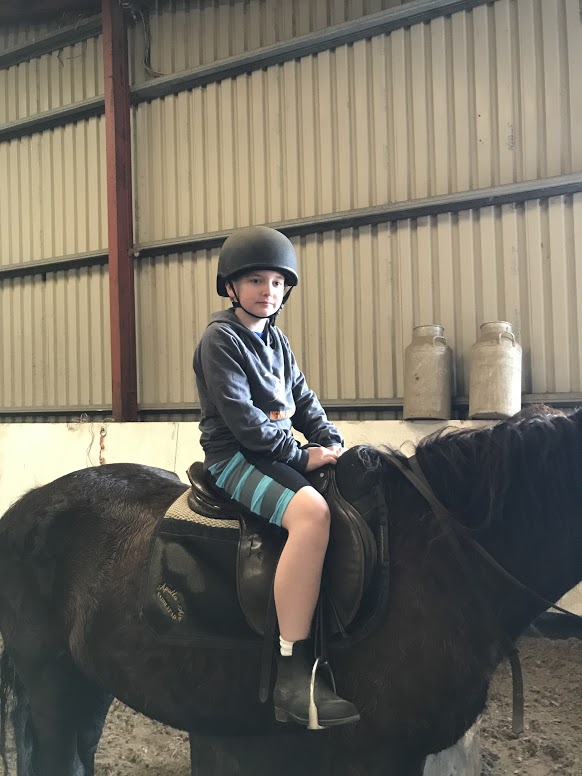
Wolfie described this experience as “both awesome and mortifying.” In this picture he’s biting his cheek to prevent himself from throwing up.
After the lesson we went to our hotel for the night, which was absolutely the nicest place we ever have or ever will stay, the Dromoland Castle Hotel. One direct consequence of the horseback riding lesson (a steal at 40 Euros) was that, every time from then on when we talk about “how Irish” something we’re doing is, say drinking Guinness and eating beef stew at a pub, we always mention that it could be just a bit more Irish if we were doing it on horseback.
We were too awed by how nice it was at the castle to take many pictures, but here we are at a fancy tea:
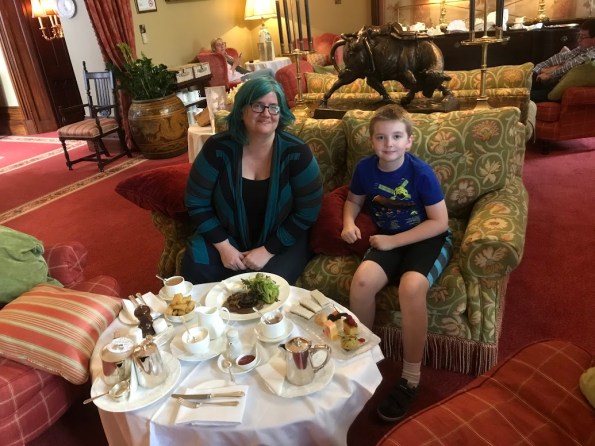
Yes, we got steak with our tea. Yum.
And here’s Wolfie doing a victory dance as he beats me at outside chess:

He’s singing too.
We also went swimming in the hotel pool for a record 90 minutes before falling asleep.
Day 4 – the coast and gay pride
We woke up at the castle, had a fancy breakfast, went swimming, and then drove to the Cliffs of Moher:


We eventually found ourselves in Doolin, where we bought a few things at the shops:

This lad couldn’t be more Irish unless he was on a horse.
After eating beef stew and Guinness at a pub, and wishing there were live music (we’d missed the Doolin Folk Festival by one week!), we went for a walk to make sure I was fit for driving, and we took some pictures:


After that we drove back to Dublin, and when we got there, everyone was walking around in Rainbow flags. It was outstanding, and we soon realized we’d missed the Pride Parade in Dublin, which was a huge deal. That made me think maybe we’d be able to find some live music if we just went to the right place. So after parking, we went on a walk to the Temple Bar. Wolfie found himself some flags:
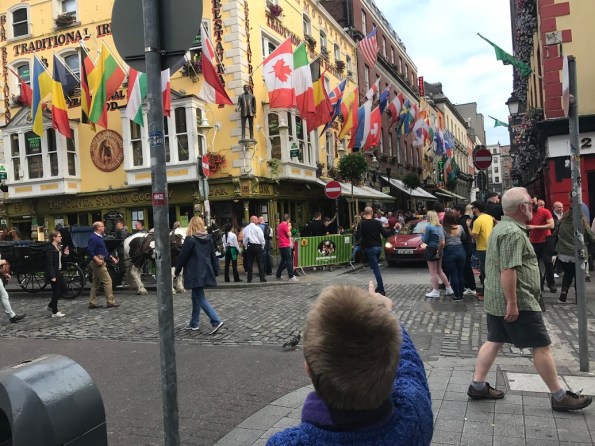
He named pretty much all of them.
Well we did find live music, but the bars were so loud and crowded we didn’t stay long.
And did I mention that there were quite a few drunken horsemen rushing their horses through the streets this way and that and generally causing confusion and mayhem? It made everything extremely Irish. We were mesmerized, especially as the drunk college students kept trying to heave themselves onto the carriages at the slightest provocation.
We ended up sitting outside at an Indian restaurant, when all of a sudden these three musicians popped up right next to us:
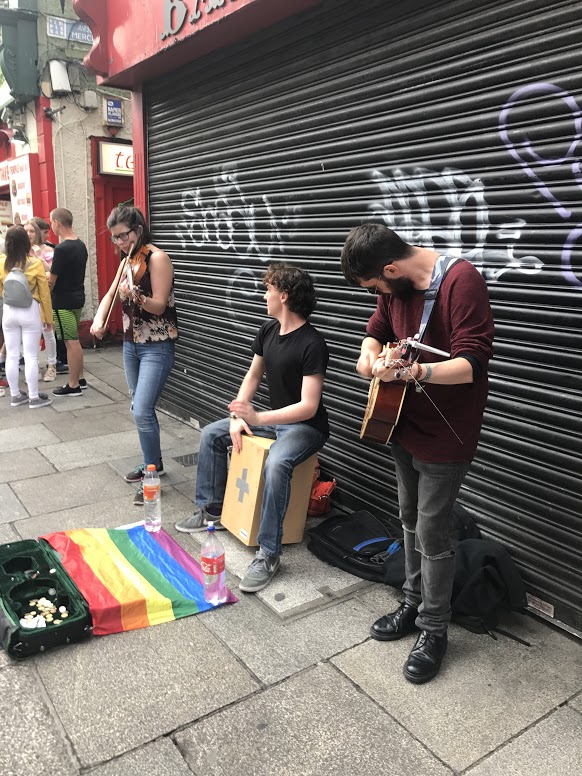
And they were fantastic!
Long story short, I’ve asked the fiddler to give me a lesson today, which is Day 5 – did I mention I brought my fiddle? – and she said yes. More soon.
In Dublin with Wolfie!
I’m here in Dublin with my son Wolfie for a week. It’s absolutely amazing. To understand why you’ll need to know how we decided to come here in the first place.
It all started on St. Patrick’s Day, which my son happened to have off, and on which I happened to be procrastinating, so we got all dressed up:
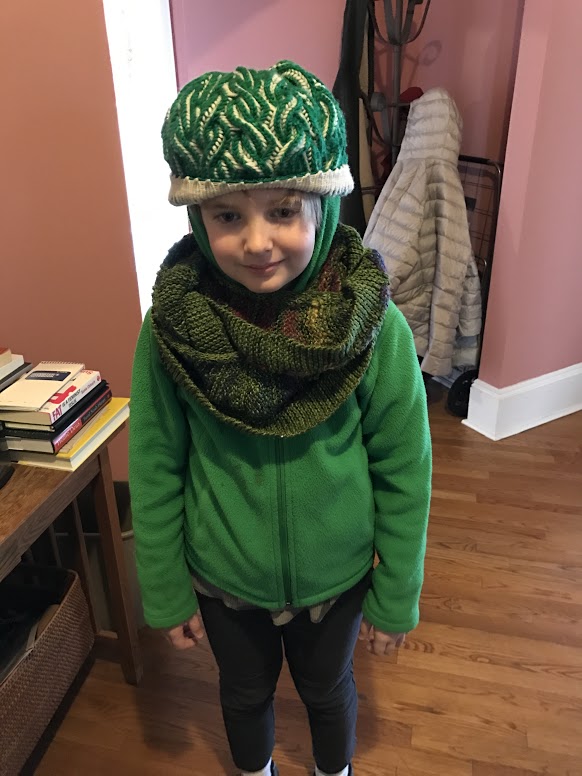
We really enjoyed the parade:
And so we talked about how, even though we’re only technically 25% and an eighth Irish, we’re actually, down deep, 100% Irish. We discussed blarney, the need for embellishment for a really good story, and he agreed that drunk people are funny and the musical tradition is friendly and fun. To celebrate we bought a flag:

And then we cemented the deal with a meal at the Brooklyn Diner:

Weeks went by. Wolfie mentioned Irish castles he’d seen on YouTube. Then he started getting really into flags, first getting the U.S., Irish, and Dutch flags on his door:

And then with his amazing “draw a country, color it in with that country’s flag” project:

You might notice he forgot Northern Ireland here. Oh well.
Long story short, Ireland became a small obsession for me and Wolfie. And, soon enough, when I walked him to school in the morning, at some point he’d ask me, ‘Mom, when can we go to Ireland and see the castles?’ and I’d say, ‘Yeah we should do that.’ Until one day, he asked me for maybe the fourth time that week and I said, ‘OK shit, I’ll go home and buy tickets.’ And I did.
So that’s the story of how we got here. Tomorrow I’ll tell you what we’ve done here so far. Spoiler: it’s been amazing.
Guest post: Quatama Elementary
This is a guest post, converted from a letter to me, by Derek Osborne, a father of four and active participant in his community with a strong belief that real change happens at the local level. Derek is a data scientist at Intel where he works on a team that utilizes machine learning techniques to optimize the workforce at Intel. Prior to working at Intel, he earned his Ph.D. from the University of Michigan in Biophysics.
I moved to Hillsboro, Oregon four years ago with my wife and three kids after finishing my Ph.D. at the University of Michigan. Like many parents when choosing a home, I checked on the school scores of the nearby elementary schools and there was a large variance in the Zillow school scores that are taken from greatschools.org. After house hunting for a long time, we finally found a home that was perfect for our family but it was in the school boundaries of Quatama Elementary that was ranked a 5 out of 10 and red. Asking around, other parents told us the reason was because there was low income housing in the area which was driving down the score. We felt that if the only issue with the school was that the school boundaries included low income housing, it shouldn’t stop us from buying the home. We could always transfer to a better school if we didn’t like the experience.
Over the following years we have loved all of our teachers, the principal, and our kid’s classmates and were baffled that it was scoring so low. During this time, we’ve met people that avoided the school when they moved in because of the score they saw on Zillow when they moved to the area. We also have had multiple friends move away because of the school’s ranking. When they would move, we’d ask what in the school do you dislike and they would acknowledge their personal experience was positive but they wanted to move to a “better” school. It was sad to see people trust a single digit score more than a personal experience.
Over this time, I’d check the same single digit ranking every year or so to see if it has gone up but it would remain the same. I felt that our school was a quality school and I was confused why the score never changed. What was even more baffling is that I started to dig into the scores published by the state that go into more detail and Quatama scored nearly the same or higher as its nearby high performing schools. After hearing some other parents say they wouldn’t let their kids go to Quatama, I felt that I needed to figure out why it was “rated low”.
I emailed greatschools.org and explained the situation and I got back a standard cut and paste answer but after a few emails insisting something was wrong they realized there was an error in their publishing system for Quatama. They have now updated the rankings and Quatama is now an 8 out of 10 and “green” which is comparable to its high performing peers. The perception that Quatama is a low performing school was completely erroneous and based off a math system gone wrong.
I’m now working with the principal to see if there is a way for us to measure how this rating has impacted the school. My thought that the same way there are bandwagon fans, there are bandwagon parents. Now that the school is rated higher, will the parents view of the school change? Will the parental support change over the next few years? If it does change, this will open up a large question about the morality of publishing overly simplified data.
What’s Wrong With Letting Tech Run Our Schools
My newest Bloomberg View column is out!
What’s Wrong With Letting Tech Run Our Schools
You can see all my Bloomberg columns here.
The Unhelpful Myth of Genius
I’ve got a new Bloomberg View column out:
A Mathematician’s Secret: We’re Not All Geniuses
See all my Bloomberg View columns here.
Stacks Project Hoodies For Sale!
Nerds, you’re in luck!

We’ve designed Stacks Project Hoodies and they’re for sale. Please tell all your nerd friends to sign up by June 16th so we’ll have them printed in time for the Stack Project Workshop taking place in Michigan at the end of July.
Here’s the Google form, have at it!
Thanks to Wei Ho and Pieter Belmans for their help in organizing!
Don’t Expect Tech to Care About Your Problems
I ranted against Silicon Valley “entrepreneurs” in my latest Bloomberg View column:
Don’t Expect Tech to Care About Your Problems:
Interplanetary travel is way more fun than accountability.
See all my Bloomberg View columns here.
What If Robots Did the Hiring at Fox News?
My newest Bloomberg View column is out:
What If Robots Did the Hiring at Fox News?
See all my Bloomberg View columns here.
Period Equity (tampon) Hat!
I’ve gone and done it, folks: I’ve designed a “Period Equity (tampon) Hat” for my friend Laura Strausfeld, who is speaking later today at a cool rally in D.C.:
Rally for Safe Feminine Care Products in Washington, DC!

Anyway, here’s the hat, tell me what you think:
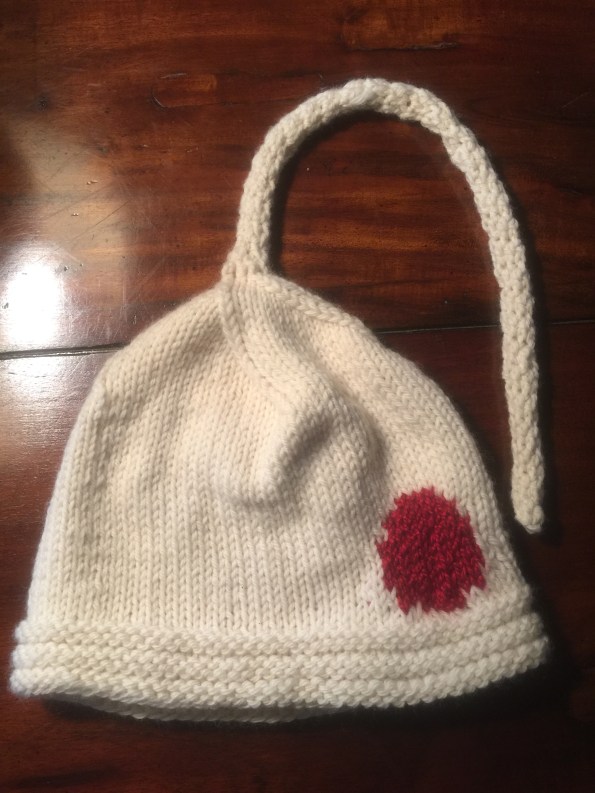
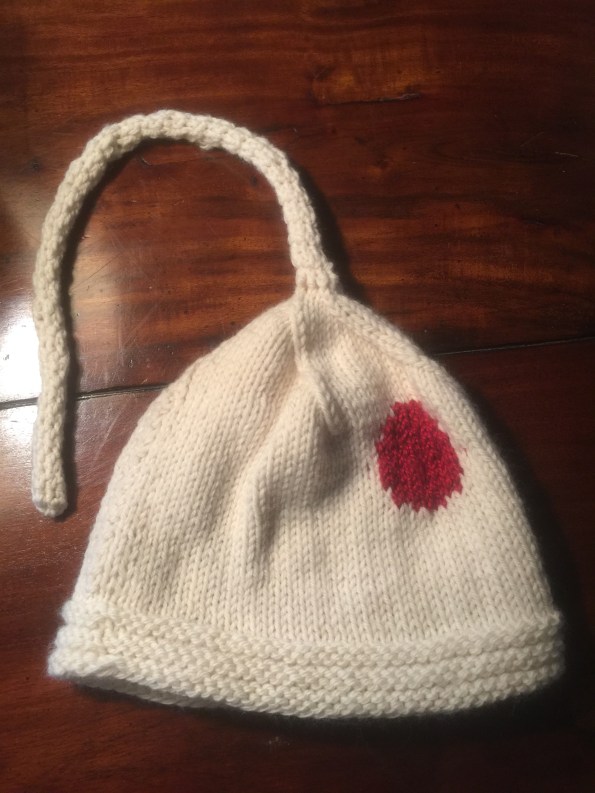
I had to learn a new technique called “intarsia in the round” in order to knit this hat. Also, I plan to put the design up on ravelry soon, so look for me there if you’re interested in knitting your own Period Equity (tampon) Hat! My Ravelry username is cathyoneil.
Also, if you’re wondering why I’m interested in this particular issue, and why Laura is speaking there, please read this post, as well as this one, about how I was a plaintiff on the New York State tampon tax case, which we won, and Laura was the legal brain behind it.
Laura has recently started an organization called Period Equity to further the cause. And if you look at their site, you’ll see my hat design was pretty much a total rip-off of their website design.
Eugene Stern: How Value Added Models are Like Turds
This is a guest post by Eugene Stern, originally posted on his blog sensemadehere.wordpress.com.
“Why am I surrounded by statistical illiterates?” — Roger Mexico in Gravity’s Rainbow
Oops, they did it again. This weekend, the New York Times put out this profile of William Sanders, the originator of evaluating teachers using value-added models based on student standardized test results. It is statistically illiterate, uses math to mislead and intimidate, and is utterly infuriating.
Here’s the worst part:
When he began calculating value-added scores en masse, he immediately saw that the ratings fell into a “normal” distribution, or bell curve. A small number of teachers had unusually bad results, a small number had unusually good results, and most were somewhere in the middle.
And later:
Up until his death, Mr. Sanders never tired of pointing out that none of the critiques refuted the central insight of the value-added bell curve: Some teachers are much better than others, for reasons that conventional measures can’t explain.
The implication here is that value added models have scientific credibility because they look like math — they give you a bell curve, you know. That sounds sort of impressive until you remember that the bell curve is also the world’s most common model of random noise. Which is what value added models happen to be.
Just to replace the Times’s name dropping with some actual math, bell curves are ubiquitous because of the Central Limit Theorem, which says that any variable that depends on many similar-looking but independent factors looks like a bell curve, no matter what the unrelated factors are. For example, the number of heads you get in 100 coin flips. Each single flip is binary, but when you flip a coin over and over, one flip doesn’t affect the next, and out comes a bell curve. Or how about height? It depends on lots of factors: heredity, diet, environment, and so on, and you get a bell curve again. The central limit theorem is wonderful because it helps explain the world: it tells you why you see bell curves everywhere. It also tells you that random fluctuations that don’t mean anything tend to look like bell curves too.
So, just to take another example, if I decided to rate teachers by the size of the turds that come out of their ass, I could wave around a lovely bell-shaped distribution of teacher ratings, sit back, and wait for the Times article about how statistically insightful this is. Because back in the bad old days, we didn’t know how to distinguish between good and bad teachers, but the Turd Size Model™ produces a shiny, mathy-looking distribution — so it must be correct! — and shows us that teacher quality varies for reasons that conventional measures can’t explain.
Or maybe we should just rate news articles based on turd size, so this one could get a Pulitzer.
Trump’s Path-Independent Theory of Mind
My newest Bloomberg View Column:
Donald Trump’s Path-Independent Theory of Mind: How the U.S. president is like a Google ad test
You can see all of my Bloomberg View columns here.
Unreliable Data Can Threaten Democracy
My newest Bloomberg Column about politically driven data finagling:
Unreliable Data Can Threaten Democracy
Also, you can see all my Bloomberg columns here.
100 Day Blanket
I’m a bit behind with posting my latest gargantuan knitting project. I call it the 100 Day Blanket because I bought the yarn on the day after the election in an effort to counterbalance my wildly unbalanced thoughts and emotions, and I finished it 100 days after the inauguration. It was a very successful coping mechanism for anxiety.
Given that it has 144 squares in it, and that there were about 10 weeks in between the election and inauguration, that means I knitted nearly one square on average. Actually it took me a couple of weeks to gather the courage to put it all together so I’d say I really did just continuously knit for a while there.
Because, dude, that’s a lot of nervous energy. I should also mention that I knitted numerous pussy hats and other smaller projects during that same period. Serious question, what do non-knitters do to deal with their anxiety?
Without further ado, the 100 Day Blanket:

Please don’t look too carefully at our messy side tables.
Here’s a glamour shot:

And a couple of shots of putting it together:

This took place at our friends’ ‘Happy House’ upstate.

One quarter at a time!


 mathbabe