Archive
Shame Versus the Free Market
One of the ways I want to understand the power and dynamics of shame as a social mechanism is by comparing and contrasting how shame works with the other forces that play similar roles but that we are much more aware of. Today I’ll start thinking about that with respect to market forces, and more generally the viewpoint of the individual as an economic free agent (hat tip to Josh Snodgrass for this prompt).
Shame is often inconsistent with rational free agency.
The first thing to note is that shame is not rational at the individual level. That is, when we are acting under the power of shame, we often act in direct conflict with our immediate “economic best interest.” Here are some examples:
- If we’re shamed into being a good daughter or son in some way, we’re probably spending more time than we’d theoretically like helping out or spending time with our family.
- If we’re shamed into being a “good mom,” that might translate into baking cookies for a bake sale that we know is ridiculous.
- If we’re feeling spurned from normal society for being weird, it’s often an enormous amount of effort to either pretend to be normal or to accept the role of the social outcast.
- Even if we’re the target of punching up shame, where we’re the the CEO of a chemical company that’s polluting the river, the point of the shame is to get us to stop it not because it’s in our interest to stop it – it clearly is in our interest to continue to do it – but because it’s against a larger public interest.
Indeed, shame often works really well to get individuals to act against their self interest in relatively small ways so that the group as a whole works more smoothly and is better off, at least ideally. The idea is, if the norms are reasonable and achievable, then people are shamed into following them for the sake of society.
When norms are unreasonable or unachievable, things can go wrong, and the free market ideology we have been indoctrinated with can make things worse.
So, when young men are informed that, in order to achieve social success they have to demonstrate sexual prowess, this is a huge burden on lots of shy, awkward, inexperienced youths. They feel an enormous amount of pressure to conform to this concept of “success,” and an enormous amount of shame when they continue to fail in this way.
My theory is that, in part because of our weirdly religious belief in free markets, coupled with the explicitly market-flavored nature of dating apps and other technological intermediations on the sex and dating fronts, we end up with bizarre pseudo-scientific theories of attractions and attractiveness that purport to “explain” everything about sex and dating but are fundamentally efforts to blunt the power of shame.
I’m thinking in general of the “PUA” culture, where women are scored from 1 to 10 and men learn strategies to land them in bed that have nothing to do with human connections. The flip side of that bizarre artificial market structure is that, at the extreme end, we have incels undergoing drastic plastic surgeries in order to look like sexually successful men which they refer to as “Chads.”
Of course we’ve seen women go under the knife for decades, and it’s become somewhat normalized, even though it’s of course due to the same thing: pressure to conform to some norm, and shame that one’s body isn’t a perfect 10.
Shame and Scoring Systems
Speaking of being a perfect 10, I think the easiest way to access how shame works vis-à-vis free markets is to think about how easily scores and scoring systems evoke in people a deep sense of shame.
Whether it’s an SAT score, a GPA, the ranking of the college you went to or your kid got into, your weight, your BMI, your IQ, or your Twitter followers, people have gotten used to – and to a large extent embraced – the concept of being measured by externally defined, maintained, and verified scoring systems. They have profound effects on society, at least to the extent they people care about them.
And, for me at least, that’s the weirdest part. People really do care about rankings and scores, far beyond what I’d consider reasonable.
I think I see the unreasonableness in such systems in large part because I often understand the flaws in the systems, and I’ve worked out the exceptional people who are measured as unexceptional, or the unexceptional people who look amazing to a scoring system. It’s not so easy to think through this kind of thing, and when you do, you lose admiration for the system itself, which on the one hand helps you distance yourself from your score and any associated shame you might have for a “bad score,” and on the other hand allows you to see just how much blind faith and undue grief we as a society project onto such systems.
Push and Pull
Stepping back, I think I’m ready to say that there’s been a massive and largely undescribed conflict between the two systems of powers represented by the informal social mechanism of shame and more formal market mechanisms. They are not consistent with each other, and as individuals and groups, we’re being pushed one way by shame and another way altogether by market incentives.
On the other hand, the proliferation of “markets,” whether represented by dating apps or college rankings, have given us new ways of determining our intrinsic worth, which is what shame is all about. And to the extent that we have embraced these systems, which I think is far reaching, we’ve got a whole new set of things to be ashamed of. You could almost say that we’ve come to replace some of our old-fashioned notion of self-worth as family members, as citizens, and definitely as consumers by the scores that we’ve achieved. In that sense we’ve externalized and even privatized the dominant shaming mechanisms.
How could we possibly keep up with all of these ways of evaluating ourselves and being evaluated?
How Technology Comes Into Shame
Next time I’ll talk further about the reason I’m writing this book now. It has to do with the way technology is intermediating shame mechanisms: how it works, how it’s been changing us, and how I believe it’s going wrong.
Shame is Power
Dear Readers,
You’ve been killing it with the amazing comments and I don’t know why it took me so long to get back to blogging. I love you all.
So what I realized soon after posting my last blog is that I didn’t sufficiently set the table for a discussion about group shame. I’m going to write today about how I see shame as a form of soft power, and next time I have time to write – I’m hoping it’s tomorrow – I’ll write about this kind of soft power that shame inhabits versus other kinds of power structures, especially free market incentives. Then after that I’ll circle back to group shame and address many of the excellent suggestions and comments you guys have made. Thanks again.
Cathy
Shame is power. It’s a specific kind of informal, soft power, that I believe is overlooked but is incredibly influential. It explains unexplained, important trends that we are so familiar with we can barely see them, even when we look.
I have plenty of examples of this, of course, because shame is also omnipresent.
So, for example, take a look at this recent article about Japanese hikikomori, the (almost entirely male) adult, jobless recluses that typically spend their lives on the internet and live with their parents or other family members. They are highly stigmatized – shamed into staying reclusive, in other words – and even their families are so ashamed of them that they rarely discuss the problem.
They’re coming up right now as a topic for two reasons: first, because there’s a lot of them, and they’re getting older, and their parents won’t be here forever to look after them, so it’s unclear what will happen to them, and second because one of them went berserk and stabbed some kids a couple of weeks ago and, even though they as a group are not violent criminals, it’s the nature of a stigmatized and shamed group to be also criminalized.
These two things: an undue burden on their family, and on society, and a potential violent threat, will no doubt both deepen their shame – and thus the power that keeps these unfortunate individuals apart from the rest of society.
To see the power of shame as it is exerted on the hikikomori, and to test it, imagine if there were other similarly sized (estimated at 1 in 60 of working age, or 1.2 million in Japan) subpopulations of people whose lives were so disconnected and impoverished. Imagine, in particular, that otherwise perfectly “normal” people suddenly found themselves suddenly unable to leave their room and behave effectively and go to their jobs, but this time for physical rather than mental and psychological reasons. That would be a national health crisis, and my guess is we’d get to work trying to solve the problem. We’d talk about it a lot, and we wouldn’t blame the victims. We’d establish programs to help their families.
I gave a couple of examples last time of shame. One of them was sexual assault in the military. Take a look at this article about Senator Martha McSally, who described her sexual assault in the Air Force:
She said she did not immediately report the attacks because she “didn’t trust the system at the time.” Later, when she began talking about them, she said she was so horrified about how her account was handled that she thought about quitting the Air Force. “Like many victims, I felt like the system was raping me all over again,” Ms. McSally said.
That is power. The system itself perpetrated shame on the victims of sexual assault, keeping them in line and silent about their suffering and trauma.
Not all suffering and trauma is shaming. We celebrate members of the military who are wounded in combat. What’s the difference? It’s shame that keeps abuse victims quiet. Shame has an amazing power of coercive silence, and it works systematically in certain specific ways on certain specific people.
Two last comments.
First, power is easier to identify when it’s measurable and formal. Shame is impossible to measure directly, except in oneself and even then it’s accompanied by a form of amnesia that makes us want to think about something else. Shame is also inherently informal. As soon as it’s written down and formalized as rules, it’s no longer exactly shame but instead takes on a form of institutionalized power. That’s not to say that institutionalized power cannot be shaming, because we already saw it can with sexual assault in the military.
Second, power is easier to identify when it forces us to do something that we otherwise wouldn’t do. Shame isn’t always like that. Instead, shame often forces us not to do something we otherwise would do. We would complain, cry out that we are suffering or traumatized, but instead we are shamed into thinking it’s our fault that we are suffering, and we should constrain ourselves by any means necessary, and stay silent. How do you measure what’s not happening because of shame?
Group Shame
Dear Blog readers,
I’m kind of stuck in my new book about shame, so at the advice of my BFF Laura I’m writing a good old fashioned blog post – or perhaps many! – to try to get through some sticky topics.
I hope it helps! And I know you all are rooting for me, and that definitely helps.
I’ll start with the reasons this is a hard question, then an example of when it happens, and I’ll finish with why it matters to me.
Love,
Cathy
When we think about shame, we almost always consider the individual experience. I want to know how to talk about the group experience instead. I’m stuck on how exactly to do it.
So the question of today is, how does one make the transition between the language of the individual experience to the language of a group experience?
I’ll first list the reasons that we’re more comfortable talking about the individual experience:
- We each experience shame individually, so we can talk about that as our own experience. We are therefore less willing, out of modesty or just a sense of being factual, to talk about what “people like us” have experienced.
- Psychology and psychiatry as fields focus on shame of the individual, often in extreme cases involving childhood abuse or neglect, so they become idiosyncratic narratives that couldn’t possibly be what everyone experiences.
- We are just used to hearing individual narratives, often about tragic heroes and their journey. Those stories obviously become archetypes for something that we can aspire to, but they don’t seem ever to become truly shared, in part because they’re so epic.
Next, the reasons we absolutely must have a concept of group shame:
- Shame is social. There’s no such thing as shame outside the group experience. Shame is experienced with respect to a norm, and a norm is something that exists in the framework of a group.
- In some sense, I can restate the above by saying, the individual experience of shame, for each person in a group that shares such a norm, is just a variation on a larger theme. Each person in the group will experience the shame associated to a group norm somewhat differently, but all of their experiences together will comprise the group experience of shame, and we cannot understand the norm without understanding the individual experiences as a group.
When norms change, this concept of group shame is particularly interesting. Consider the #MeToo movement. It’s an example of a shifting norm, where certain types of behaviors, which were kept quiet even though they were technically unacceptable, have become something that we discuss openly.
The discussion is a mess, obviously, because we haven’t yet come to any sort of agreement on what the border of acceptability really is yet (I have way more to say on this but I’ll put it that way for now to avoid changing the entire point of this blogpost).
And yet it’s pretty clear that there’s an associated group shame that is a direct consequence of the rise of #MeToo, namely the group shame being felt by men who feel newly scrutinized by the shifting norm. And to be clear, I’m seeing very different reactions by different men who have had different kinds of experiences. It’s fair to say that the men who should be feeling the most amount of shame probably aren’t the ones who are, for example.
But the reason I brought up this example is that, as a group, it’s really happening. There are reactions, and they run the gamut from deep, abiding shame to defensive outrage to non-defensive activism, which probably most of you wouldn’t recognize as shame at all.
Why bother talking about group shame? I’m convinced that, depending on the type of shame, we can more or less predict what will happen with that shame at the level of social experience.
I’ll go into my taxonomy of shame in another blog post, but for now I’ll just present my list of types: punching down, punching up, and punching nowhere.
In the case of punching down shame, which you can think of as bullying shame, the result of group shame will be exploitative, whether it’s getting fat people to join Weight Watchers (i.e. profiting) or silencing rape victims in the military (i.e. maintaining power).
Maybe the most important thing about group shame is that, statistically at least, it works really well. Fat people keep feeling shamed about their bodies and they keep diligently signing up to pay for a solution that won’t work. Assault victims know they will not be heard.
The question then becomes, what has to change for that dynamic to change? Or to make things really explicit, what would need to change to make the weight loss industry unprofitable? For the military to actually address the problem of rape and sexual assault?
In some sense I already know the answer: the underlying norm itself needs to change. But that’s too abstract. I want to talk about it as the group dynamic itself changing, which of course ends up being the individuals in the group experiencing changes.
Comments/ questions welcome!
Shame Machine: an owner’s manual
Friends, I’m writing today to announce that I’m hard at work on a new book, called:
Shame Machine
an owner’s manual
It’s once again being written with my editor Amanda Cook at the publisher Crown Random House, just like Weapons of Math Destruction. The tentative release date is January 2021, after the next presidential election.
The idea of the book is to understand shame as a social mechanism. When, why, and how do we shame each other? Who profits from shame? Who maintains power or gains power through shame? When is shame valid, and when is it simply mean and cruel? How is shame delivered in the age of big data?
I come to these questions because of the proliferation shame-based interactions and strategies in politics but also interpersonally; from my experience of getting my insurance company to pay for bariatric surgery, to observing people interacting viciously on Twitter, to hearing how teachers were unfairly scored with the value-added model, it seems like shame is the informal glue that holds our system together. So naturally I started nerding out bigtime.
Shame Machine is a culmination of quite a bit of thinking and writing, research and personal development that I’ve been busy with for the last couple of years. Readers of my blog will have noticed that I’ve been posting a lot less, and this is why. Where I tried out a bunch of ideas for Weapons on this blog, and heard back from you guys (thanks again!), this time it’s quite a bit more personal, so I’ve been hesitant to write about it openly while I was still thinking it through. Suffice it to say I’m sure you readers would have had lots of great advice, and hopefully I’ll be able to ask you for thoughts in the future.
Anyway, I’m out of the hibernation/ideas/planning phase and into the writing phase, and it’s both amazing and scary.
Sex Robots!
Guys I’m super proud of this Sex Robots essay I wrote for Boston Review:
A History of Cyborg Sex, 2018–73
Bloomberg Opinion piece on Facial Recognition
My newest Bloomberg Opinion piece just came out:
Amazon Can’t Fix Facial Recognition
Companies lack incentives to stop the creepiness.
See the rest of my Bloomberg Opinion pieces here.
At JMM 2019!
I registered for this year’s Joint Math Meeting by claiming to be Press so I think it’s only fair that I blog from the conference.
I got here Wednesday, met up with my BFF Aaron Abrams, and we promptly dashed to a fancypants reception to meet up with my buddy Ken Ribet. And yes, both of these wonderful men were wearing knitted hats that I knitted for them in the blistering Baltimore weather. Ken happens to be the outgoing AMS President so has lots of fancypants receptions to go to, and he was kind enough to let us in. The highlight, besides reminiscences with him and others, was when I got to write on a board about how Ken has been a great mentor to me since I was 18, welcoming me with open arms into the warm and wonderful community of mathematics. I also got to (re)meet Francis Su, who is awesome.
Then, yesterday I was honored to receive the MAA Euler Book Prize along with a bunch of adorable nerds receiving all kinds of mathematical honors onstage. It was fun, and afterwards there was a reception, which I went to. Then after that I ran over to a Budapest Semesters in Math reunion, and then the MAA dinner for prize winners. So that’s pretty much three more parties, bringing my total to hour as of last night. If you’re wondering what else I did besides party, the answer is I totally checked out the Exhibitor Hall and went to lunch with an editor from Cambridge University Press and a friend of mine who might write a book. Yes, we went to a pub.
This morning so far I’ve been to the HCSSiM reunion breakfast, I’m having drinks with Ina Mette, AMS editor, and I’m looking for receptions to crash later (please leave a comment if you know of any good ones!).
Finally, tomorrow I’ll be giving the Gerald and Judith Porter Lecture, which will be great in part because I got to meet Gerald and Judith Porter last night and they’ve very cool. Also, the title of my talk is “Big Data, Inequality, and Democracy”, which are three topics I love talking about. I’m considering inviting the entire audience to the aforementioned pub afterwards.
Besides my alcohol consumption, I have a few comments to make.
First, math nerds are and always will be unbelievably adorable.
Second, unlike many past years when I’ve visited JMM, I am less pessimistic of the future of mathematics. I was quite worried, for many years, that MOOCs and other “flipped classroom” type scenarios would take over calculus teaching. I’m no longer so worried about that, because I simply haven’t heard of it working on a broad scale.
Third, on the other hand, from the little I’ve understood talking to people, the other effect I’ve been worrying about, namely the slow replacement of tenured faculty by adjunct staff, doesn’t seem to be abating. So I will say that the profession of academic mathematics is not a growing or improving field in terms of quality of life for the median Ph.D. grad.
Fourth, I’m kind of surprised how slowly the world of publishing in math has changed, and its flip side, the world of credentialing. It seems like there’s just as much gaming, counting, and other kind of dumb metric stuff going on as ever. I guess it’s because I’m on the outside now looking in, but I’m wondering when people will start seriously contributing to things like the Stack Project – and figure out a way of giving credit to people for those contributions – because it seems like the obvious future of mathematical contributions. Tell me if I’m wrong.
Our Dystopian Future and the Next Cold War
My newest Bloomberg Opinion column just came out, about the international competition for AI dominance:
Want To See Your Dystopian Future? Look at China
See the rest of my columns here.
Karaoke is even better in French
As I found out on my last night in Paris. I dare you to tell me I’m wrong.
Guest post: How I Voted and Why
This is a guest post by Aise O’Neil, a freshman at American University.
1. How I Voted:
NYC Ballot Proposals:
#1: Yes
#2: No
#3: No
NYS General Election:
Governor and Lieutenant Governor: Howie Hawkins (Green)
Attorney General: Michael Sussman (Green)
Comptroller: Mark Dunlea (Green)
NYS Senate District 30: Brian Benjamin (WFP)
NYS Assembly District 69: Daniel O’donnell (Democrat)
Some Judicial elections:
The Democratic nominees will win anyway. They are running unopposed. Just write in some names for the hell of it.
Federal General Election:
NYS Senate: Kirsten Gillibrand (WFP)
US Congress (NY’s 10th district): Jerrold Nadler
2. Why:
NYC Ballot Proposals:
#1 (references: here and here):
Currently, candidates are given the option to receive funds from the government proportional to the amount of money donated to them by individuals. However, they may not be compensated for any money they receive in donations in excesses of $175. Hence, when a candidate receives $100 from 10 people, the candidate get a contribution proportional to the full $1000 in donations that candidate received. Meanwhile a candidate only gets government contributions proportional to the first $175 dollars from a $1000 donor. This program strengthens the effect of an individual (non-business, non-union, non-pac) donation, especially a “small-money” one.
This ballot measure strengthens the program by offering additional money: governments will give money proportional to eight times the individual donation, instead of six times which is the current number. The government will match the first $250 worth of contributions instead of the old $175.
Additionally, the proposal would loosen requirement to qualify for public contribution matching and would hand out public funds earlier.
The proposal would also lower contribution limits. The contribution limits for NYC campaigns are currently $2850 for city council campaigns, $3950 for borough presidents campaign and $5100 for other campaigns. The proposal would set the limits for $1000 for city council campaigns receiving public money, $1500 for city council campaigns not receiving public money, $1500 for borough president campaigns receiving public money, $2500 for borough presidents not, $2000 for city-wide campaigns receiving public money, and $3500 for city-wide campaigns not receiving public money.
Furthermore, the amount of public money a candidate receives is limited. This proposal would raise the limits. Mayoral campaign limits would go from $4007300 to $5464500. City council campaign limits would go from $104500 to $142500. Borough President campaign limits would go from $902000 to $1230000. Other campaign limits would go from $2505250 to $3416250.
The proposal would be fazed in in 2021 and fully implemented in 2022.
I think this proposal is a good step towards a campaign system which promotes candidates and behaviours that can attract popular support instead of the support of moneyed interests. It is unseemly for candidates to be calling people and asking for thousand dollar sums of money. It is always good to find a fair and non-partisan way to put money into campaigns. When campaigns have the resources to maximize exposure, things become less about getting noticed and getting the money to be noticed and more about having the right ideas. While one could certainly think of ways to improve upon the system that this reform would leave, the reform is no less an improvement in itself.
Exact text can be found here.
#2:
This would amend the city charter to create a 15 member commission. The mayor would appoint 8 members of the commission and make one of them the chair. The mayor can hire and fire the chair at his discretion. The remaining seven members will serve terms of either four and two years. Besides the fact that each of the two largest parties in the city by membership must have a member in the council serving four terms, the Mayor can appoint any New Yorker City residents not currently holding office he wants to the other seven seats Effectively, once the mayor has served for 4 years, he will have stacked the commission with an eight-person majority of sycophants.
The commission will have three primary purposes. The first is to ensure adequate access to translators at poll sites. The second is to allow local communities to have more of an active role in budgeting public money used in their area. This will happen through participatory committees with purely advisory authority which will take input from any resident (documented or otherwise) of an area above the age of 16. The third is public-private partnerships with youth groups and other institutions to promote civic engagement.
The purposes of the committee seem undefined. A program to ensure access to translators at polling sites already exists. What ought to happen is the NYC board of elections should be given more funding to provide adequate translators at polling sites. The city charter should not be amended to create a bizarre committee with undefined legal authority. There’s a very good chance that the committee does nothing of note: In which case it is unnecessary. Their is also a slight chance that this unelected 15-person committee takes an active role in the budgeting process or other political processes. If this were the case, it would work counter to the goals of increased democratic and civic participation and would exist mainly as a vehicle for mayoral influence. It is also an issue that those members appointed to the commission to serve four years (four by the mayor and one by the city council speaker) as well as the five appointed by borough presidents to serve three year terms could serve for years after those who appointed them have been voted out of office.
#3:
Requires the borough presidents to provide on their website: the names of people who serve on community boards along with their specific community, their nominating party, positions in their council and dates of service. Statistical, anonymous and self-reported demographic information would also be provided about members of the community boards on borough websites. The websites will also be provided with information about open community board seats, online applications for these boards and a run down on how the search and vetting process of the new member is being handled. Borough presidents are also supposed to publicize “The particular methods used to seek out candidates for membership from diverse backgrounds, including with regard to race, ethnicity, gender, age, disability status, sexual orientation, language, geographic residence, and other characteristics the borough president deems relevant to promoting diversity and inclusion of under-represented groups and communities within community boards;”
“The borough president shall seek out persons of diverse backgrounds, including with regard to race, ethnicity, gender, age, disability status, sexual orientation, language, and other characteristics the borough president deems relevant to promoting diversity and inclusion of under-represented groups and communities within community boards, to apply for appointment.”
There is some language about how the commission in ballot proposal #2 will create reports about the overall state of community boards.
The central focus of the proposal is to place pressure upon borough presidents to engage in corrective discrimination on lines of race, sex, religion, nationality etc… when hiring board members. This is achieved by ordering borough presidents to do so, to write on their websites how they are doing so and to publish statistical evidence so that the people can judge for themselves if they really are doing so. Additionally the rules explicitly limit the amount of civil servant and young people on community boards. I find generally any form of demographic discrimination, objectionable. This is especially the case when it comes to political office. I want the borough president to appoint people who can get the president’s policies implemented as competently as possible. The last thing one should want is that the person who sets zoning laws determining how many houses get built (or how many people get housed) only has their job because of their race or religion.
While this proposal will do a good job of increasing transparency in community boards, I do not think that the increased transparency is worth the cost of mandated racial discrimination.
NYS General Election:
Governor and Lieutenant Governor:
There are five people on the ballot running for governor: Andrew Cuomo, Marc Molinaro, Howie Hawkins, Larry Sharpe, Stephanie Miner.
Andrew Cuomo (incumbent, Democrat, WFP, Independence and Women’s Equality nominee) is well known to be corrupt. He started the Moreland commision to investigate corruption in the government, did not let in investigate his own office and shut it down suspiciously. He also vetoed legislation to legalize gravity knives.
Marc Molinaro (Republican, Conservative and Reform nominee) is very concerned about upstate New York. He runs primarily on the promise of “cleaning up Albany” and cutting property taxes by at least 30% he’ll do this partly by having the state pay more for medicaid, which lessens fiscal constraints on poorer upstate counties.
Larry Sharpe (Libertarian nominee) writes very favorable things about criminal justice reform (promising to decriminalize marijuana and homelessness) and about fighting against restrictive zoning rules and community boards. However he is also strongly in favor of “overhauling labor laws” (he was against the raising of the tipped minimum wage for instance), promoting crypto-currencies and removing licenses for various occupations. He has proposals to make jail more humane and bail more affordable (while not promising to eliminate it for non-violent offenders). He also talks about his plan to end public education at the 10th grade. He is against environmental protections, promoting the benefits of fracking. These reasons and many others including a promise to end the State’s income tax are why I cannot support this man.
Stephanie Miner (Serving America Movement nominee) is the mayor of Syracuse. She was referred to by Cynthia Nixon as “kind of a moderate.” The Serving America Movements website emphasizes that they care little about policy and care about “principles” instead. The party emphasizes the need for cutting the deficit, and her website makes constant reference to taxpayer money being “wasted.” Hence we can assume she plans to engage in spending cuts to various programs. However she has proposed the state paying a larger share of medicaid spending, and makes a lot of “good-governance” anti-corruption promises.
Howie Hawkins (Green nominee) describes himself as an eco-socialist and promises to make New York State’s energy usage 100% renewable by 2030. He endorses various other proposals including public banks, promoting cooperatives, providing everyone with a home through public housing projects, legalizing marijuana, releasing all non-violent drug offenders, providing reparations to those most hurt by the drug war, require housing in a neighborhood to be mixed-income, have the state fully fund medicaid, cut state income taxes on the poor and raise them on the rich, allow local governments to implement income taxes, taxing undeveloped land, banning plastic bags, etc…. I agree with a great many of his proposals while thinking he goes to far on environmental issues. Fortunately, I think the legislature would be in a position to hold him back on those issues. I think he is the most adamant in reforming the criminal justice system and ending homelessness. Hence I voted for him.
Attorney General:
There are five people on the ballot running for this office: Letitia James, Keith Wofford, Nancy Silwa, Christopher Garvey and Michael Sussman.
Letitia James (Democrat nominee) was backed strongly by Governor Cuomo who effectively pushed her through the primaries (not a good thing for someone who is supposed to impeach the governor if need-be). Furthermore, she said in an interview she was worried about being thought of as the “Sheriff of Wall Street.” However, I want the Attorney General to be the sheriff of Wall Street.
Keith Wofford (Republican and Conservative nominee) lists three issues on his campaign website: Economic Growth, corruption and opioids. He promises to work with DA’s to hunt down opioid-dealing gangs (favoring a traditional “lock them up approach”) and to sue the manufacturers of prescription drugs (a popular promise but one that probably wouldn’t be workable). He promises to investigate corruption in the Governor’s office or the legislature even without the governor’s endorsement. His economic growth section of his website delivers general talking points about how New Yorkers face too much taxation and regulation. Ultimately he would be a right wing attorney general, but one more willing to challenge Cuomo the Letitia James.
Christopher Garvey (Libertarian nominee) writes in his website, “As a Libertarian, my priorities would be to prosecute crimes where force, threat of force, or fraud were used against persons or property.” This means he wouldn’t prioritize any labor law violation, such as paying someone below the minimum wage, so long as both parties knowingly agree to an illicit contract. However he does promise, “ I would not enforce a law that violates the US Constitution.”
Nancy Sliwa (Independent nominee) is running a campaign primarily focused on animal rights.
Michael Sussman (Green nominee) has announced he does not intend to defend blatantly unconstitutional state legislation. I view this as good. Some argue that the state lawyer ought to defend the state whenever it is sued, that’s the job. My response is this: insofar as doing one’s job leads to immoral outcomes, one should not do one’s job. He would not be afraid of challenging the governor when he feels the need to. Furthermore, a core message of his campaign is challenging election bribery and implementing a public campaign financing system. I support him as the candidate most likely to weed out corruption.
Comptroller:
There are four candidates running for State Comptroller: Thomas Dinapoli (Incumbent, Democrat, Independent and WFP nominee), Jonathan Trichter (Republican, Conservative and Reform nominee), Mark Dunlea (Green nominee) and Cruger Gallaudet (Libertarian Nominee). Thomas Dinapoli and Cruger Gallaudet both don’t seem to be promising much reforms. Jonathan Trichter wants to stop risky public pension-fund investments into hedge funds and ensure greater oversight over the cash flows in the SUNY system.
Mark Dunlea wants to divest pension fund investment from fossil fuel companies. He also has a series of legislative reforms, which as a comptroller, he won’t be able to implement:
reform economic development programs so that the function more as cash transfers to local community bodies rather than tax cuts for corporations; make it illegal for government contractors to make campaign contributions; create a public bank, etc…. I support Mark Dunlea, because general promises to catch people illegally using government funds are made by all campaigns. Only he and Trichter offered something substantial and quite frankly I don’t trust a major party candidate to be good on anti-corruption issues.
NYS Senate District 30:
Brian Benjamin is running unopposed.
NYS Assembly District 69:
This is a two person race between Daniel O’donnell a Democrat and Corina Cotenescu, a Republican. Corina says she is running because she grew up in a communist country and does not want socialist to take power here in America. While I don’t like Mr. O’donnell and encouraged people to vote against him in the primary for his passing of zero-tolerance anti bullying bills and objection to mixed mma legalization, I’m gonna have to vote for him over Ms. Cotenescu.
Federal Election:
Both my house and senate elections were two way races with a democrat on one side and a republican on the other. Due to my opinions of the national parties, I voted for the democrats in both races. However, on my ballot I voted for them under the Working Families Party ticket. This is because I prefer the WFP to the Democrats most of the time and wished to support them in this small way relative to the Democrats
Mathbabe’s Guide to Overtravel
Friends, I travel a lot. Too much, if you ask me, or my youngest son, or my husband. It’s all for work, because nowadays I make money giving talks, and also I give book tours in foreign countries where publishers are kind enough to buy, translate, and publish my book, or sometimes I even travel for business related reasons for my company ORCAA.
Long story short, I travel way. too. fucking. much.
But I think I might have just figured something out about traveling, and I wanted to share it with all of you. In fact it’s not one thing, it’s a whole bunch of little things that might just add up to one medium sized thing. It’s also possible that I simply feel that way because of next dimension jetlag, but whatever, I’m in the mood to share.
And in case you’re wondering if I travel enough to feel like an expert, I’m traveling right now, and I started out in Lexington, Virginia, and then Barcelona, and then Madrid, and most recently Seoul South Korea, and now I’m in Paris, which to be honest is the best stop of all in terms of environment.
So yeah, I kind of have some idea or ideas about overtravel, and I’ll list them in random order of things that come to mind:
- People who don’t travel too much, I have some very very good advice: please don’t hate people who travel business class. They’re only doing that because they’d rather be home with their family, and yet they’re on yet another fucking airplane, and they tried to get out of it by explaining that their kids and spouses have threatened to never talk to them again and that they cannot face another trip in coach squeezed like a lemon in between smelly farty people including themselves and so whoever pays them offered to bump them up to biz class and they reluctantly – reluctantly! – said ok because they need the money.
- Said another way, business class is only disgusting and righteous-anger-generating for people when they compare it directly to coach class. In other words, they are assuming that the person had to fly, and they got to fly business class, whereas everyone else had to fly and they ended up flying coach, and that sucks. And while I’ll agree that sucks, we should instead be comparing all of this to *not flying at all*, in which you’ll have to admit flying business class is actually way suckier than being at home, or literally anywhere else besides flying coach.
- Same goes with lounges in airports. Nice compared to the smelly fucking mall atmosphere of the rest of the airport, way worse than being home with wifi and your actual favorite people in your actual favorite time zone. Also the food is generally speaking terrible, and they never, ever offer you peanut butter crackers that you can eat later in your hotel that maddeningly doesn’t have a minibar even though everyone knows minibars are everywhere extremely profitable because of jetlagged people running out of peanut butter crackers in the middle of the night.
- To conclude, lounges in airports have terrible food and offer you absolutely nothing that you can carry with you by design, not even oyster crackers in those little bags. They might – if you’re lucky – have oyster crackers, but it will be in a huge bowl and you’ll have one of those tiny plastic tongs to retrieve them, again literally designed so you can’t stand doing it for more than five minutes, resulting in about 4 oyster crackers.
- The one thing you can count on, both in lounges and while flying business class, is a shit ton of free drinks. If I wanted to hide an alcoholism problem, then business traveling would be The. Way. To. Do. It.
- As it is I have a “I’ll try not to drink more than I should” attitude and I still always end up drinking about a drink more than I should, resulting in mild regret mixed with mild hangover mixed with jetlag mixed with righteous anger about having to be, once again, not near my family. So once again you end up with righteous anger whether you’re traveling business class or you’re traveling coach.
- That leads to the important traveling question, what should one do with righteous travel anger? But first let’s talk about an even more urgent question, namely what to pack.
- Always, always pack lots of peanut butter crackers. And by that I really mean pack something that you can consistently eat in the middle of the night when you’re in a weird time zone relative to your internal brain time zone, and which won’t gross you out, but will also not tempt you whatsoever when you’re relatively satisfied, including when you’re in an airport lounge, which is a low fucking bar and hard to get much lower without being truly disgusting.
- So it’s kind of tricky to find that VERY middle of the road kind of food, especially that comes in super packs and is cheap and portable, but for me peanut butter crackers are perfect. I have a special pocket in each of my carry-on bags specifically devoted to peanut butter crackers.
- Before I get to all the different carry-on bags I own, and why, I’d like to list all of the other things you absolutely must pack on every trip. Here goes:
- Lots of advil. I bring tons of these little travel size packs of advil, two per package. Good for hangovers, good for aches and pains of uncomfortable travel, and good to fall asleep when combined with alcohol. And before you judge me, know that I’m the only person that travels a lot who doesn’t take actual sleeping pills. Nothing else can explain how, on trips over oceans, everyone around me is asleep the instant the meal is over, even if it’s 3pm local time. Not that sleeping pills are bad, because I don’t know if they are, but I’m afraid of them becoming addictive, so I avoid them, and instead I drink one too many drinks and take advil and that works out pretty ok, as in just about terrible on average. One or two packs per day of travel.
- Lots of dry coffee. I bring these, at least two per day of travel, because the above plan for sleeping while flying is actually terrible and I’m always tired, and the hotel’s dry coffee is always like brown uncaffeinated water compared to actual coffee. So I actually use both per cup.
- Did I mention peanut butter crackers? Can’t travel without them. One per day of travel, maybe two.
- Travel toothbrush (the kind that folds) and travel size toothpaste. Never bring a large bathroom bag, it wastes space. bring a bathroom bag (or what I use is technically a cosmetics case) that is too small for a real toothbrush, and limit yourself to filling that bag with mini sized everything, then top it off with as many advil and dry coffee packs as you can squeeze in there. You might need to bring deodorant separately. Also you’ll get more free tiny toothpastes if you travel business class, so don’t bother to bring more than one.
- I separately bring my travel-size pill box, because I need to take multivitamins and thyroid meds daily. I actually have three different travel size pill boxes depending on how long my trip is, and I always bring the smallest one that can fit all my pills.
- A knitting project that’s not too large. I mean, if you don’t knit, replace this with some hobby thing you can do when you’re drunk in an airport lounge and there’s no baseball on TV and the wifi sucks and you’re fighting off existential angst (more on this below).
- Laptop, chargers, phone, and wallet, passport and adapters if you’re traveling to another country.
- Paper printouts of basic details of where you’re going in case there’s no wifi or phone signal when you land. To tell you the truth there’s always wifi and phone signal, so I think this is just me being old and you don’t actually need paper anything anymore.
- Clothes, but I’ll delay saying more about this because…
- OK and here’s where I’ll talk about all the things you should NOT pack:
- Don’t pack more clothes than you need. Just one outfit per day of travel, no more, and one blazer or sweater that goes with all of the outfits, or at most two if the trip is long, and one coat. Don’t bring an umbrella, ever. Easiest thing is to choose outfits that all go together, or better yet multiple versions of the same exact outfit. This is easy for me because everything I own is black.
- Some unsmelly people can even get away with less than one outfit per day. Not me, I’m super smelly.
- Most importantly, don’t bring more clothes than can fit in an international sized carry-on. If your trip is longer than a few days you’ll end up doing laundry or paying outrageous prices for the hotel to. It’s worth it.
- Don’t pack books. Bring your laptop with stuff to read, or better yet audiobooks on your phone. Business class seats have USB chargers so you don’t need to worry about losing juice on your phone, and if you’re in coach then bring a portable battery. As long as you’re not lighting up the screen, your phone can run many hours with an audiobook and not use up too much battery.
- If my trip is short, I might be able to pack everything into my luggage carry-on, but I’ll still bring a very small “personal” carry-on, kind of like an actual purse but I hate purses so actually a drawstring bag, to hold my ticket, phone, wallet, headphones, and obviously peanut butter crackers.
- If my trip is long, I’ll take a larger personal carry-on which will include my knitting project and possibly my bathroom bag and pills.
- If my trip is very short, sometimes I’ll fit everything into one large backpack.
- You’ll never regret having less to carry.
- Unless you forget peanut butter crackers.
- OK now that we know what to pack, let’s talk about the real issues, which are existential angst and righteous anger, the twin menaces of overtravel.
- Because, and here’s the thing, traveling means having multiple shallow interactions with multiple people on a daily basis. It’s enough to make you think there’s no such thing as love, or meaningful connection, or even meaningful conversation, especially because it’s always in relief of a backdrop of “the news,” which is typically the only thing available on TV in English, which is always bad and quite possibly horrifying.
- The short answer to this problem is to remain “open and connected,” which is a squishy concept but basically means, assume that the person you’re about to meet is interesting, deep, thoughtful, and is about to expose something unexpectedly important and meaningful to you. But also, don’t hold it against them at all if they don’t. They just weren’t at the right place for that, but you are.
- Remaining open and connected is hard work, but it’s important, and is the single best piece of advice I can give to people who overtravel.
- It also likely comes across most of the time as simply being nice. That’s ok. Being nice is a good thing.
- But also, being nice is an invitation to conversation as well as a signal that you won’t judge, which is even more important.
- Of course, being open and connected is more than being nice, and it’s easy to start a conversation with the intention of being nice but not of being open and connected. That’s kind of lame.
- You gotta push yourself to actually be open and connected, which is to say finding out, without prying, something about the person, or exposing something about yourself that you didn’t even know about (ew, not in a gross way), or at least being willing for the conversation to go in unexpected ways and to find a universal truth or commonality with this person even though they’re coming from a totally unique place.
- Righteous anger is an impediment to remaining open and connected.
- That means righteous anger is something you need to acknowledge and deal with immediately, even if it’s embarrassing. It’s especially embarrassing to feel righteous anger when you’re flying business class to an amazing city to give a talk about your book that a bunch of people read and loved, because for god’s sake it’s a fucking dream come true.
- But then again there it is, sometimes you’re just feeling petty and small and wishing you could be home with your goddamned family and not eating any more goddamned peanut butter crackers, and that resentment makes you not only sad and shitty and embarrassed but also incapable of remaining open and connected whatsoever.
- To get over the embarrassing righteous anger, I suggest meditating on gratitude while knitting.
- Remaining open and connected is hard, but it’s totally worth it, and you’ll make friends you never thought you’d make.
- Also, sometimes you hit an open and connected wall, because at some point you hit the existential angst wall, which is to say the moment when you realize that interactions between humans, even when they’re meaningful and kind, cannot heal one’s wounds, and that it’s only a person’s own sense of worthiness that can ever do that. And maintaining a sense of worthiness is even harder than maintaining a sense of openness and connection.
- I’m working on that last thing. The great thing about traveling is that it gives me lots of time to work on that last thing, but friends, it’s really hard, maybe the hardest thing of all.
- Which is really all you can ask about something like travel, that it lets you work on the hardest thing of all, because honestly who has time in their normal lives to work on the hard stuff?
The Era of Plausible Deniability in Big Data Continues
Today I published a new Bloomberg Opinion piece on how Amazon’s sexist recruiting algorithm is not a surprise to anyone, but is framed as one because the tech bros are trying to maintain plausible deniability:
Amazon’s Gender-Biased Algorithm Is Not Alone
For my other Bloomberg pieces, go here.
TomTown Ramblers performing next Saturday, October 13th at The Rockwood!
My amazing, fantastic, and lovable band the TomTown Ramblers is performing at The Rockwood Music Hall next weekend! Buy tickets here, they’re only ten bucks each.

.
We’re performing mostly original songs thanks to our hugely talented singer songwriting members Blair Bodine and Jamie Kingston (with a new song by Jake Appel!). I’m kind of just amazed I’m allowed to be in this band, they’re so freaking talented.
I hope you can come! We will be selling Ramblers merch, including t-shirts and shakers.

Guest post: China’s Social Credit System
This is a guest post by Jianyin Roachell, Social Innovation, SAS-certified Data Intelligence Developer, US-China-EU relations.
My name is Jianyin Roachell, Chinese American and I have been researching how digital innovation and big data can impact socio-economics and political economy in China. In this guest blog, I hope to enlighten you with instances of how big data and AI may change the role of firms and governments, what is China’s National Social Credit System, and perhaps collaborations between business and governments to increase upward social mobility using big data. Allow me to make it clear, I am not promoting or degrading any Chinese social policies in this blog.
Background
To understand why I do what I do, allow me to introduce my background. I am a Chinese-born-American and grew up in Memphis, TN, the city where Martin Luther King Jr’s died and known for our civil rights movements. Memphis is notorious for the dysfunctional education system and gun-violence (two of my friends were killed). With lingering residual discriminations from Jim-Crow South and police brutality anxiety, the city of Memphis where I grew up suffered social distrust between the at-risk communities and the rest of the middle class. I really witness some of the stark contrast between upper and lower class while growing up in social the social circles. After reading Cathy’s book, “Weapons of Math Destruction”, I was inspired to pursue my passion in social innovation and digital social justice. I am currently a Master’s student studying Economics and Computer science. My background is in statistics and data analytics. My interests lie in the center of Entrepreneurship-Innovation, Socially Responsible Algorithmic Design, and data ethics.
I always wanted to travel the world, Why not go to China… I asked myself. That’s where lots of things are happening, and after all, I am Chinese. My China experience has led me through some amazing self-discoveries and also discover a few glimpses of what the future may hold within socio-economics and policy.
China’s AI
I predict that China’s AI systems and technology will surpass that of the West for two reason. Namely, the sheer size of China’s population and very ambiguous data privacy laws. Companies are building machine learning models that train on 1.3 Billion people’s personal data points. I predict that China’s AI technologies will be more accurate and more scalable than that of the West in the near future. The data privacy laws are not very established, giving companies and local governments opportunities to exploit them for unethical profit-seeking and political agendas.
The penetration of big data and algorithms.
In China, where the government plays the role of ‘parent’ culturally, it is comparable to our own upbringing: “do you not eat your vegetables properly? Then no television tonight!”
With the arrival of AI and big data, in the consumer market, firms are beginning to play the role of Mother, figuratively, while the Government is playing the role of the Father. Mothers on average give you treats to incentivize you to do something good, while dads are there to give your butt a good beating when you misbehave.
In China, consumers are sucking on the tit of business discounts and freemium products, while the government is monitoring bad behavior through a very data-driven censorship system. By 2020, China will roll out a national social credit system to quantify every citizen’s social worth in society through what they buy and how they behave. This is the socialism engineering at its finest.
Role of Firms in relations to Big data
In the US, tech companies like Google and Facebook own the user data; whereas, in China not only do the Tech Giants (Baidu Alibaba Tencent or BAT) but also The Government can access the consumer data. China is currently in transition from a manufacturing manual labor-based economy into a skilled-labor and high-tech consumption economy.
What China needs now is to really develop its credit system and open up the credit market. Inevitably, the BAT’s shopping-spree for start-ups and mergers have led to the construction China’s first social credit system. How? When BAT companies purchase smaller companies, they also buy their data access. With the huge amount of data gathered from multiple child-companies, BAT giants are able to use big-data to gamify China’s consumer market and hype up demands for products, goods, and services. This is the narrative that will define the 21st century as China finds the next chapter for sustainable growth. The construction of a national social credit system will engineer new social behavior and public ethics in an entirely different way we understand in the West.
There are different attitudes that East and West perceive AI tech. The East tend to apply AI for the common good and thinks AI can be a virtual partner or a quasi-member in society (example: Japan Society for AI book of ethics present that AI should be a quasi-member of society); whereas in the West, AI is perceived as a tool to generate more value, save more money, and increase further productivity. Because of this difference in outlook, the future of AI development may also shape how we live our daily lives in each of the West-East spheres.
Social Credit Score: Big Brother?
To understand why China is doing this, first we must understand China’s culture. With Confucianism as the nucleus of familial code of conduct, dating back thousands years of Chinese Culture, there lies the value of “the natural order between Authority and the People.” This means that it has always been in China’s DNA to trust and obey the authorities even in the ancient chinese imperial times. The western media describes:
“The worst-case scenario is a form of high-tech Stalinism for our brave new world.” But actually there are two different systems that makes up the National Social Credit Score:
1) the commercial credit system (similar to US’s FICO and German Schuffa) and
2) social management system (big-brother-like mechanism).
The commercial credit system: is suppose to measure your financial credit and how likely you’re likely to pay back your loans. Scores range from [350-950]. Loans, credit markets, and mortgage markets will be heavily dependent on this score. This score will reflect all the accumulation of all your digital purchases and how trustworthy are you. China is filled with business con-men, and this system can actually hold those bad business accountable and financially punish them before they produce bad products into the market.
Social management system: put miscreants and offenders on a blacklist, where the government will extract data from the judicial and law enforcement data-base and pass the data to Ant Financial to decrease the offenders’ commercial credit scores. The lower the credit score, the less benefits you will get from commercial digital vendors.
Socio-economic Implications and Going Forward
Dating: Because financial capacity is an important aspect when looking for a partner, Sesame Credit is also integrated into various dating sites, so that users can see the scores of their potential partner. This is not a new idea. Matchmakers in ancient times have matched couples heavily on their socioeconomic background. However, in our modern society, over time this may further solidify the classes and may even amplify the effects, where the lower-class will stay poor, and upper class will stay wealthy. This will more likely exacerbate wealth inequality as their children progress forward into their lives; thus upward social mobility will be limited. The current literature has been focusing on the “big brother” side of the Chinese Social credit system; instead the argument should be asking how big data can offer a different solution to this problem. There are so many opportunities for firms and government to work together to increase the value of the people, bring them out of poverty, and give policyholders the intelligence to redistribute wealth to the groups are most at-risk of unequal opportunity. I call this the era of “Digital Social Mobility.”
Technology can help us even up the playing field and bring equal opportunities. Please see my research poster here to learn more about this topic. I believe truly that if we put out resources together we can sparking a new movement that can redefine and reimagine the human experience in this 21st century.
New Politics and Philosophy Podcast: The Badlands
This is a guest post by Toby Napoletano, a philosophy PhD who is working on a politics and philosophy podcast that is the subject of this post.

I’ve taught quite a few introductory ethics courses to undergraduates over the past five years or so. During that time, I’ve had the good fortune of having lots of really good, thoughtful students who were fairly politically engaged—enough to at least be aware of some of the major moral and political issues that dominate political discussion.
But I’ve noticed a bit of a trend with these students that I think should be worrying to those who identify themselves as being broadly on the political left. Namely, for lots of the students who identify themselves as being generally “liberal”, the most salient political commentators for them tend to be quasi-intellectual right-wing libertarian types like Ben Shapiro. While they might disagree with him, they respect him as someone who uses “facts” and “logic”—i.e. who at least gives the appearance of trying to reason with them.
I don’t think this is an accident. What is distinctive about libertarians—even those like Ben Shapiro—is that they keep their deep philosophical commitments right out in the open, and they don’t hesitate to appeal to them. Why are minimum wage laws unjustified, according to the libertarian? Well, at bottom, because doing so would prevent people from entering into certain voluntary economic agreements with each other—i.e. ones where labor is exchanged for less than minimum wage. Such laws would infringe on the liberty of individuals to enter into those agreements, and government, as a rule, cannot do this. Government is meant to protect this sort of liberty, in addition to individuals’ basic rights to property and physical security.
There are plenty of ways to resist this argument, but doing so requires engaging with the underlying philosophical commitments. For instance, under what conditions is labor exchanged for a wage voluntarily in the relevant sense? Is it voluntary in the sense that counts if the alternatives are to work for a pittance or to starve, or to forego medical treatment, etc.? And further, what’s special about rights to physical security, property, and freedom of contract? Might there be other basic rights which governments have obligations to protect like a right to subsistence or essential medical care?
But my thoughtful students (and presumably plenty of thoughtful non-students) don’t see anybody on the left raising these questions or engaging with the issues on this level. Consequently, they don’t have good answers to the deeper philosophical challenges that might be raised against leftist positions, and some of them will conclude that there just aren’t good underlying justifications for those positions and abandon them altogether.
Consider the case of economic inequality. For folks on the left, the bulk of the conversation has been spent on the statistics illustrating the state of inequality in the U.S. And this is for good reason—the numbers are staggering. They then conclude that there is something basically immoral and unjust about this inequality. But then the response from those who are less concerned with inequality is just that the great inequalities in wealth and income simply reflect differences in merit, and so they do not reflect any basic injustice. The progressive left, they charge, is obsessed with the idea of everyone being economically equal. What justice requires (as they often put it) is not equality of outcome, but equality of opportunity, citing the ideals espoused in the American Dream.
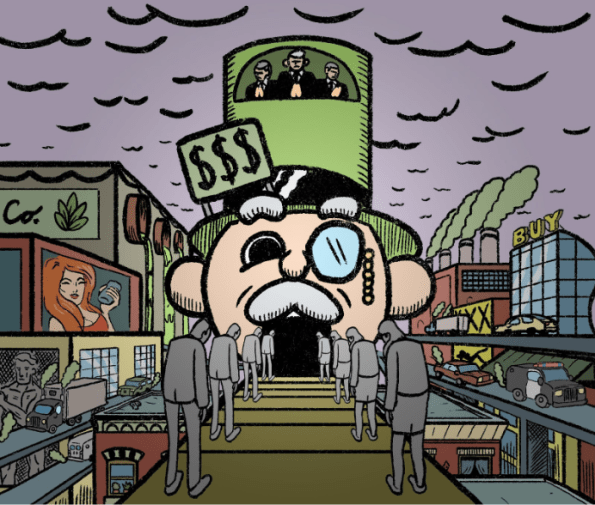
Interesting—an argument invoking the ideas of merit, opportunity, and justice. Of course, it happens to be a strawman—I don’t know of anyone who could charitably be interpreted as advocating for a completely equal distribution of wealth. Nevertheless, the argument suggests that we need to go a bit deeper, and wrestle with potentially difficult, philosophical questions. For instance: What’s the relation between opportunity and justice? What is the relation between economic inequality and opportunity? What is merit and how does it relate to economic outcome? Would meritocracy even be a good thing?
One of the reasons progressives care so much about economic inequality is that they agree that justice requires some semblance of equality of opportunity, but recognize the myriad ways in which extreme economic inequality undermines equal access to opportunity—both economic and educational. These disparities in access to opportunity then further entrench the economic inequalities (and expose the idea that the distribution of wealth in the U.S. is merit-based as being clearly false).
Putting the issue of opportunity aside, there is a basic human rights issue that the extreme inequality in the U.S. makes pressing. Namely, it’s not just that there are large gaps between the rich and poor, but that the poor are actually deeply impoverished, struggling and often unable to lead a decent life. The presence of extraordinary wealth amid this deprivation suggests a failure to protect basic rights, and a failure which could be easily prevented. Even if those who end up poor, by and large, did have the same opportunities as the wealthy (which they clearly do not), it still wouldn’t follow that the situation is a justifiable one.
Arguments like these are the kind that need to be made and understood with some clarity if one is going to be justified in believing that economic inequality (to take just one example) is, in fact, a serious problem. These arguments are what fill in the gap between the statistics demonstrating the inequality and the moral conclusion that the inequality is unjust.
This is all a long-winded way of saying that there is real value to engaging with the philosophical dimensions of political issues. Not only is such engagement necessary to really understand some of the underlying disagreements, but there is strategic value to doing so as well. Commentators on the left do themselves and their positions a disservice by not engaging with the issues at greater depth, because there are plenty of good arguments in favor of those positions.
The aim of The Badlands Politics and Philosophy Podcast is to try to help fill this gap. On the podcast, a group of fellow philosophers (Michael Hughes, Hanna Gunn, Jared Henderson) and myself explore the philosophical dimensions of contemporary political issues. Along the way, we give a philosophical sketch and defense of a broadly “progressive” political outlook. If nothing else, we hope to help raise the standard of political discourse in some small way.
The podcast is aimed at a general audience and so isn’t meant to require any specialization in philosophy to enjoy. Early topics include money in politics, economic inequality and the myth of the American Dream, inequality of opportunity, the idea of American meritocracy, and issues concerning political discourse and political coverage in the media. In the near future, we plan to do episodes on the meaning of “capitalism”, the relationship between Milton Friedman and progressivism, the ethical implications of AI, the ethics of immigration, and lots more.
New episodes are released every Friday, and written pieces are posted regularly on BadlandsPhilosophy.com.
We are on Twitter at @TheBadlandsPod.
Maybe This Financial System Can’t Be Fixed
Hey my newest Bloomberg Opinion column is out:
Maybe This Financial System Can’t Be Fixed
Better risk management isn’t enough. We need a different paradigm.
For my other columns, go here.
Tech Companies Need To Admit They Have A Problem
My newest Bloomberg Opinion piece is out:
In a Way, Trump Is Right About Google’s Bias
For a list of all of my columns, go here.
Reputation Scores and Free Tampons
My newest Bloomberg Opinion column on creepy but useful reputation scores is out:
Reputation Scores on Facebook? Bring Them On
For others I wrote, look here.
ALSO! My buddy Laura Strausfeld wrote a Bloomberg Opinion piece on access to tampons and what they’re made of:
Making Tampons Free Can Make Them Safer, Too
Go Laura!!
Zuckerberg Is Totally Out Of His Depth
Hey my newest snarky Bloomberg Opinion piece is out!
Mark Zuckerberg Is Totally Out of His Depth
For a longer list of all my Bloomberg columns, go here.


 mathbabe