Archive
We Should Extend Chapter 9 to Puerto Rico
This is a guest post by Marc Joffe, a former Senior Director at Moody’s Analytics, who founded Public Sector Credit Solutions in 2011 to educate the public about the risk – or lack of risk – in government securities. Marc published an open source government bond rating tool in 2012 and launched a transparent credit scoring platform for California cities in 2013. Currently, Marc does municipal finance policy research for the Haas Institute for a Fair and Inclusive Society at UC Berkeley.
Last week, Congressional Republicans blocked legislation that would have allowed Puerto Rico public sector entities to file municipal bankruptcy petitions. Among their arguments against extending Chapter 9 to the Commonwealth are that bond investors – who purchased Puerto Rico obligations with the knowledge that issuers could not file bankruptcy – would be unfairly punished and that the island’s government has not implemented sufficient austerity measures.
While buyers of Puerto Rico bonds may have known that issuers did not have access to Chapter 9, they were aware that default was a distinct possibility – and that is all that really counts. We can confirm that investors knew of the existence of default risk by comparing Puerto Rico bond yields to risk free interest rates.
In November 2009, Puerto issued 30-year bonds at a yield of 6%. At the time, 30-year US Treasury bonds were yielding under 4.5%. While differences in liquidity might explain some difference in yields – this effect cannot possibly account for a 150bp gap. Further, interest on Puerto Rico bonds is exempt from federal income tax whereas Treasury bond interest is not (interest on both types of bonds is exempt from state and local income taxes. This tax effect should easily overwhelm any liquidity effect.
I use a 2009 example to show that investors have been pricing Puerto Rico default risk for a long time. Those who bought Puerto Rico bonds more recently demanded and received much higher default risk premia. The Commonwealth’s 2014 issue yielded 500 basis points above 30-year Treasuries and the gap has widened further in secondary trading.
Thus anyone who purchased Puerto Rico bonds over the last several years was compensated for default risk. Indeed, depending upon the type of restructuring Puerto Rico implements, many secondary market investors could still see positive returns.
During the Depression era, sub-sovereigns in the US, Canada and Australia (operating under similar legal systems) extended maturities and/or unilaterally reduced coupon rates. In all these cases (Arkansas, South Carolina, Alberta, Australia and New Zealand), investors eventually received their full principal. These older cases may be more relevant to Puerto Rico than the oft-cited cases of Detroit, Stockton and Greece in which investors suffered significant principal losses. Puerto Rico is more analogous to a US state than either Stockton or Detroit, and it is not a serial defaulter operating outside Anglo-Saxon law like Greece. In her recent government-commissioned report, former IMF Managing Director Ann Krueger argues that the Commonwealth can obtain debt relief “through a voluntary exchange of old bonds for new ones with a later/lower debt service profile.”
Why Chapter 9 Is Needed
Puerto Rico’s headline debt number – $72 billion of par representing a 104% debt/GNP ratio – includes a lot of moving parts. Some of this complexity is captured by the Commonwealth’s debt statement shown below.

These obligors have widely varying levels of credit quality. As I reported in the Bond Buyerearlier this year, the Commonwealth’s third largest city, Carolina, was running a balanced budget and reported significant reserves in its 2013 financial statement. By contrast, the small municipio of Maunabo, was flat broke – with a large negative general fund balance, bank overdrafts and defaulting on a US Department of Agriculture loan. The Chapter 9 process would provide an essentially bankrupt community like Maunabo with the ability to reorganize its finances in a more sustainable manner. Fiscally healthy communities like Carolina can signal their strength to investors by avoiding Chapter 9 and continuing to perform on their obligations.
Inconvenient Truths about the Austerity Argument
Almost half of Puerto Rico’s debt was issued by entities other than the Commonwealth government. The Commonwealth’s $38 billion of debt represents just under 70% of Gross National Product. If we use Puerto Rico’s less widely reported (bur more internationally comparable) Gross Domestic Product as the denominator, the ratio falls to around 37%. All this compares favorably to the US federal government’s debt-to-GDP ratio of 74%.
The accompanying chart and this Google sheet show the evolution of Puerto Rico’s debt ratios over the last 40 years. The main takeaways are that the Commonwealth has had a heavy public sector debt burden for a long time, but it rose steadily 2000 to 2014.

Puerto Rico had a Republican Governor for a significant part of this period: Luis Fortuño. Not only was he a Republican, but he was a darling of the Party establishment: invited to address the 2012 Republican Presidential convention and receiving consideration as a Vice-Presidential nominee. During Fortuño’s last full fiscal year, 2011-2012, total governmental revenues were $15.8 billion and total expenditures were $21.0 billion. The $5.2 billion deficit was the worst in ten years. Since the Democratically-aligned Alejandro Padilla administration took control, deficits have fallen. According to the most recent Commonwealth financial report, the general fund deficit fell from $2.4 billion in fiscal 2012 to $1.3 billion in fiscal 2013 and $0.9 billion in fiscal 2014.
This progression toward budgetary balance and the Commonwealth’s loss of market access have produced a flattening of Puerto Rico’s debt ratios. In the nine months ended March 2015, total public sector debt actually declined slightly in nominal terms.
Puerto Rico’s fiscal policy has thus been more austere under the current left-of-center government than under the prior Republican administration. Moreover, the Puerto Rican government is accumulating debt at a slower rate than the US federal government – which is now mostly under Republican control.
Thus, Congressional Republicans seem poorly positioned to lecture Puerto Rico about fiscal responsibility. A better alternative would be to approve Chapter 9 legislation, so that Commonwealth entities can get on with the process of restructuring their diverse debt burdens.
The $heriff tool: detect price discrimination while you shop
Today I want to tell you about $heriff, an awesome new tool I learned about recently. It’s currently an add-on to the Firefox and IE browsers, but it will be compatible with Chrome soon. I mention this because I think you will want to use it, partly for the good of scientific discovery, but partly for your own good.
Because here’s what $heriff does for you. It allows you to see how prices for goods you’re interested in buying would change depending on where the request is coming from. And sometimes the answer is “a lot,” even on Staples.com or Amazon.com.
I talked to one of the creators, Nikolaos Laoutaris, who works as a computer science researcher in Barcelona. Nikos described how he came across the idea of creating $heriff. Namely, he and a friend were discussing their upcoming vacation to a town in Austria, and they were both looking into booking the same type of room at the same hotel (at the same time, since they were doing it over Skype) and they were seeing very different prices.
The way it actually works is that there’s a way to “check” prices when you come across one, and the results pop up in a separate window. Here’s a screenshot of what happened with Nikos showed me $heriff checking on the price of a fancy camera at digitalrev.com:

The list corresponds to what price showed up when a bunch of servers at academic institutions were asked to send a price request that $heriff extracted from the local webpage. To be clear, your personal request for price, coming from your browser, might depend on location as well as your cookies and referral url, among other things, but these other prices correspond to “clean browsers,” with no browsing history, and no login history, making a request from a specific location. So those price variants correspond to location changes only.
There’s also a space below for “Results from local users,” and this is where you come in. If there’s a person with a $heriff add-on in your local area, the idea would be to use the information your browser collects to allow someone to compare their price with your price. In this way we would (slowly) also learn how prices change depending on browsing history. The more people who use $heriff and donate their data to the project (third party cookies, some browsing history, and prices), the faster we will learn about how prices vary.
Among other things, this could be a way of figuring out how to intentionally set your input data so that you get the best price for a given product.
A few notes:
- Local sales tax and shipping costs are valid reasons for prices to depend on location of the buyer, but they are typically added later, after the prices are shown.
- It’s possible that tariffs come into play, but they don’t seem consistent. Also, the prices vary too much to be accounted for by tariffs.
- Nikolaos Laoutaris and his colleagues have also been doing great work looking into how people are tracked, and how such information is used to steer them into environments of “search discrimination,” which means that which products or offers they are shown changes, rather than the prices themselves.
- Also, he’s part of a cool project called the Data Transparency Lab.
Get started with $heriff or learn more about Nikos’s work, by going here.
What are prisons for?
Yesterday i had the good fortune to interview Sonja Starr, who has been researching evidence-based sentencing models and wrote this New York Times op-ed on the subject.
If you haven’t heard about them, they are “recidivism risk” models being widely used by judges – in 20 states at least – to help determine sentencing lengths. Different judges will use them differently, but think of them as one factor in deciding how long someone convicted of a crime goes to jail. Recidivism refers to the concept of returning to jail, so high recidivism risk means someone is deemed by this model to be likely to return to jail, and when a judge sees that, they typically put them in jail for longer.
Moreover, the attributes which go into recidivism models are often proxies for race and class, which means that, hidden underneath the computer code, a given judge is essentially putting someone away for longer because they are poor.
So, there are lots of issues, but one thing I asked her to talk to me about was whether recidivism is the right question in the first place. After all, when we consider recidivism we are judging someone more harshly if “people like them,” however that is defined, have recommitted crimes after being in jail. In other words, we are judging them more harshly because we suspect they might commit a crime in the future. This is Minority Report type stuff.
The other side of the argument is that judges are explicitly told to decide on sentencing based on multiple factors, and always have been. Namely:
- Punishment for the crime that was committed (“just deserts”)
- deterrence for others who will want to avoid prison,
- the public good – we want to protect people from criminal acts, and
- rehabilitation, where we prepare the prisoner to be a well-functioning member of society after they leave prison.
The third goal, that of protecting the public, is where recidivism comes in. If we have good reason to believe the person will commit yet another crime, we want to keep them away from doing so, or even better decrease their recidivism risk with various methods. A few problems, however:
- The models don’t measure the effect of prison on recidivism risk.
- In fact they don’t measure how recidivism risk changes at all.
- The recidivism risk models are probably amplifying that third factor in judges’ sentencing opinions.
- Drug offenders have higher recidivism risks than people who commit violent crime, but we really only care about the latter in terms of the public good.
After thinking this through, I’m pretty convinced that, aside from using problematic inputs in recidivism models, we need to carefully examine how we want to weight those four factors.
Leather stains on light colored hosiery
Occupy Summer School is going great! Hopefully today we’ll start a blog of some sort to document the goings on. And, as promised, I don’t have a lot of time.
However, I did want to share this with you, keeping in mind I have no idea how representative it is:
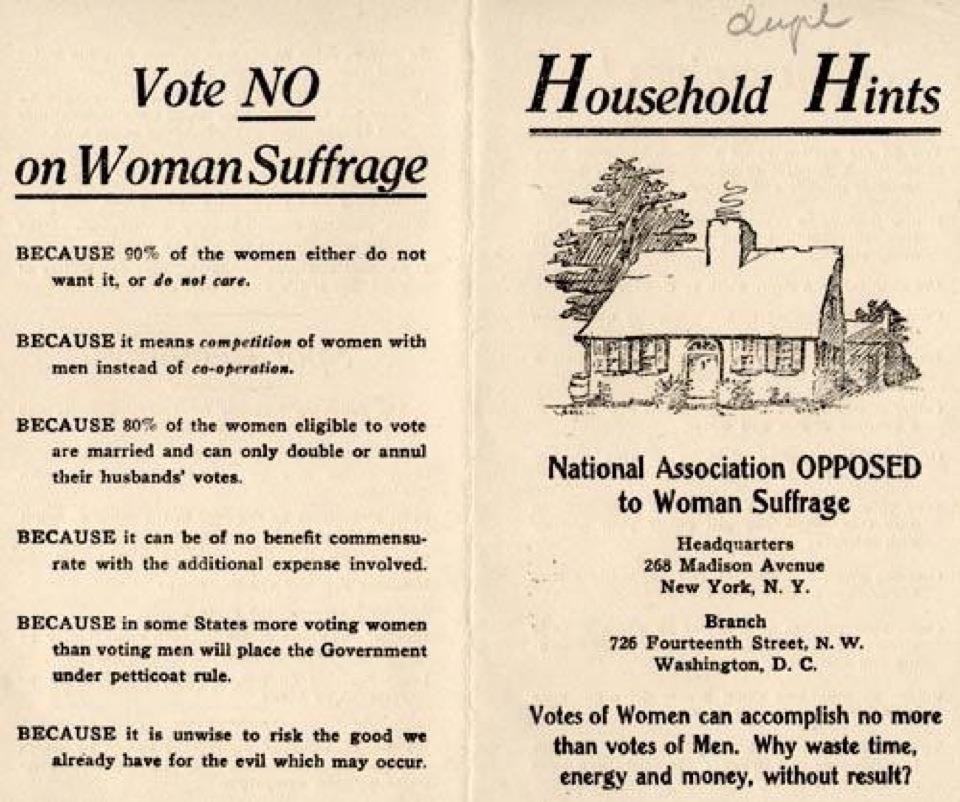
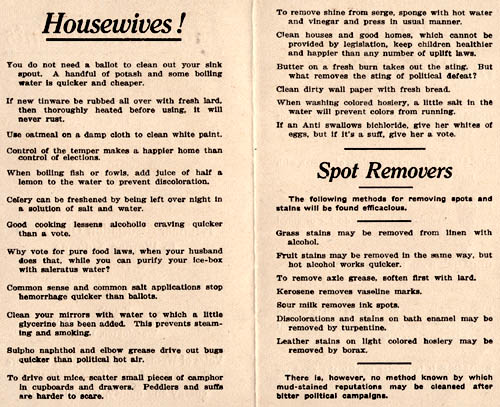
Quick question: how often did women of yore get leather stains on their light colored hosiery? Is that really a thing?
Occupy Summer School starts today
I’m very excited for the first day of Occupy Summer School. It will run for three weeks, every morning, in downtown Brooklyn, so I’m not sure how much blogging I’ll be doing. Hopefully I’ll find time to document some of what’s happening. We’re very excited about the line-up, and we have high hopes for the final event.
Today we introduce the kids to ourselves and Occupy, we talk about the next three weeks, we ask them to introduce themselves to us, we ask what they are planning to get out of the experience, and of course we eat donuts.
Aunt Pythia’s Advice
Readers!! Dear friends! Aunt Pythia is overwhelmed with happiness. She is currently sitting in the middle of the woods scribbling away inefficiently on an android tablet, doing her best to deliver a knock-out advice column for your reading pleasure. It’s absolutely nuts that she can accomplish this fear considering her environment, but that’s just how much she loves you.

Definitely not as hot as Manhattan.
Please enjoy being rustic with Aunt Pythia!
Oh, and before you leave,
ask Aunt Pythia any question at all at the bottom of the page!
By the way, if you don’t know what the hell Aunt Pythia is talking about, go here for past advice columns and here for an explanation of the name Pythia.
——
Dear Aunt Pythia,
Do you dream of composing the perfect Aunt Pythia question, complete with awesome sign-off? I guess you don’t, but maybe you have the same issue with Dan Savage?
That’s my problem. I just can’t stop obsessing and find myself so jealous of the problems of others. Why can’t I be “an intellectual property lawyer, who is launching a big data business with a former colleague/lover, who has just given up lesbianism and decided to become a man, and who can’t quite decide on how to deal with her residual feelings of attraction for said business partner”?
Or, what about wanting to be able to write “I’m completing my junior year majoring in Clown and, while I would love to go to graduate school, just feel I don’t measure up against my classmates who are so ahead they’re already working on Advanced Buffoonery and researching theoretical foundations integrating hijinks, pratfalls, and farce. I feel like a Paul Reubens amidst all these future Lucys. Can I make it?”
With awesome problems like those, how can my mundane life make it onto the hallowed pixels of an AP page? I’m afraid I’m going to start creating a mini-crisis in my life, just to have some entertaining material for you. Help!
Lousy Sign-off Doesn’t Trump Really Interesting Person
Dear LSDTRIP,
I just can’t believe I figured out how to copy and paste on a tablet. Very excited over here.
Great sign off by the way. I get the impression it’s accurate as well.
Here’s the thing. You don’t need complicated problems. Asking how to feel happy or even non suicidal in the midst of everyday life is already hard and interesting. And I would prefer genuine kindness over being entertained any day.
As for the question of whether I dream of asking question, no. I have always wanted to give advice more than ask it. Probably a personality defect but there it is.
Aunt Pythia
Aunt Pythia,
I have a math question. I am writing a series of short stories, based the Many-worlds theory of Quantum Mechanics. The stories postulate (in contrast to current theory, science fiction, you know) that there is a way to pass information between universes. Naturally in an infinite number of universes, some, an infinite number, use this technology, like painting, photography, writing, mosaics, film, TV, and the Internet, for porn.
My questions is, if the resolution of every quantum event creates at least two new universes, what is the cardinality of that infinity? It seems like aleph-null but it’s been a long time since my last legitimate use of infinities.
No cats were harmed in the forming of this question.
Slim Odds And Possible
Dear SOAP,
Is this the day for weird questions? I mean don’t you need to tell me what a quantum event is and how often to expect a quantum event? Does it happen every time someone passes porn between universes? Even if that is the case I would need to know there are a positive number of horny people in existence.
Unless I am being dumb, I don’t have sufficient information here.
Aunt Pythia
——
Aunt Pythia,
I think I’m in love with my best friend. She told me about a year ago that she wasn’t interested in romantic relationships because her ex-boyfriend hurt her / she hurt him / they had a bad breakup. I haven’t told her my feelings, because of a variety of reasons, including I wanted to tell her in person (we live on opposite coasts of the US), I don’t want to hurt her (she is going through some serious stuff right now, and I don’t want to add to that), I have literally zero romantic experience and I don’t want to fuck things up with her (I kind of feel like I’m going to fuck up my first few relationships), and last but not least I’m bad at talking. We’re going to college together next fall. I want to tell her at some point in the future, because of some kind of honesty idea and also it seems unfair to try and get rid of these feelings without asking her. What do you think I should do?
Having Equanimous Love Problem
Dear HELP,
First of all thanks for the perfect sign off and straight forward letter. Although not sure you are equanimous.
Next, believe me, you are in love. No need to say you think maybe you are. Babe, you got it bad.
Third, you want to tell her because love demands it of us. It has nothing to do with a sense of honesty or fairness. Love has its own logic, or illogic, and we are slaves to it. That’s OK.
Seeing as you asked, I say go for it. Make it happen my friend. Which is to say: tell her you love her in a dramatic and romantic and absolutely unmistakable way. Be that guy who really spills out his guts and lays it on the table.
You know what there isn’t enough of nowadays? I’ll tell you what. Gut spilling. We are all so careful not to offend or appear vulnerable we forget that none of that really matters. What really matters is living life fully and taking chances and going out on a limb and being the person you always wanted to be.
And here’s the thing about it. It’s not really a risk. If she says no you will be crushed, to be sure, but in fact you will be crushed if you say nothing. It will just take longer and feel less courageous. Also she’s your best friend so I imagine we can trust her not to be cruel.
Tell me how it goes, and good luck!
Aunty P
P.s. nobody has experience at your age.
P.P.s. if you’re worried about talking then write a letter of a song or a poem.
P.P.P.s. ignore her bad ex. Everyone gets over their bad exes eventually. Plus it’s been a year. Don’t ignore her current problems though. Just tell her how much you want to be there for her.
——
Aunt Pythia,
We clearly have a long way to go still for getting more girls and women into STEM careers, but there has been a lot of progress as well. For example, my department has a pretty M/F balanced group of faculty and grad students. I also notice there are various programs and events for women and minorities in mathematics, which appear to build some lasting professional relationships and you know, like, friendships.
My gripe is that many of these programs are *exclusively* intended for women, leaving minority men, especially black men, out in the cold while universities are patting themselves on the back for publicly fulfilling their diversity initiatives. I don’t think there’s a great conspiracy behind this, just that there aren’t very man black men in STEM fields, particularly math, to let everyone know- Hey! We’re here too!!
Comparatively, women, black women, uh literally any other group you could reasonably get higher education statistics on, is doing better than we are. Most of these programs aren’t helping us, and I know of none specifically designed for us. You probably know the statistics better than I do, but according to this article [http://chronicle.com/article/Black-Man-in-the-Lab/149565/] from 1992-2012 there were only 203 black men that got math PhDs. Wait, in 20 FUCKING YEARS?? Please be a typo. One black guy per year in the ENTIRE COUNTRY has been getting a math PhD for two decades…? JESUS CHRIST ON A STICK, THAT’S SOME FUCKERY, PLAIN AND SIMPLE. No really, I have to be making some kind of error somewhere.
Of course, these are just averages; the actual count probably is trending upward and probably increasingly so from 2012-2015. JUST NO, VOICE OF STEADINESS AND REASON, TODAY YOU CAN STFU, YOUR SERVICES ARE NOT NEEDED. Why? For one, these numbers include graduates of historically black colleges and universities, which are disproportionately represented. I’m not saying that’s a bad thing, but if a sizeable chunk of the 203 PhDs are concentrated in these schools, then of course the rest have fewer than expected PhDs produced, and the baseline was already at WTF.
There’s nothing wrong with that, but as black guy interested in math, I don’t want to go to the black school I want to go to the math school; no offense to Howard, but I’m aiming for Harvard. The article then says, for all STEM degrees combined, there was an upward trend from black men making up 1% of all PhDs awarded in ’92 to 2% in ’12. If you have no soul, you can convince people of improvement by saying it doubled, but it’s still really, really fucked. So (finally) my question is: Given the obvious need, why isn’t there a program similar to Edge for men in math from underrepresented groups?
P.S. Who lets the mathematicians of the African diaspora website remain on the internet? It’s hella embarrassing.
Randomblackdude
Dear Randomblackdude,
I’m with you. Those are some outrageously low numbers. And I don’t know what resources there are out there but clearly not enough. Maybe my readers will fill us in. Also agreed about people who deliberately mislead with statistics having no soul.
Aunt Pythia
——
People, people! Aunt Pythia loves you so much. And she knows that you love her. She feels the love. She really really does.
Well, here’s your chance to spread your Aunt Pythia love to the world! Please ask her a question. She will take it seriously and answer it if she can.
Click here for a form or just do it now:
What kind of happiness should we strive for?
Some of you may have stumbled across the New York Times’ recent Room For Debate, addressing the pursuit of happiness. Short and insufficient summary:
- William Davies: Once you focus on optimizing happiness, you will be asking for trouble. At the individual level, optimizing for happiness will be used against us at work. At a higher level, it will be a form of social control.
- Bina Agarwal: We need both objective (GDP, health) indicators and subjective (happiness, satisfaction polls) to measure the progress of nations.
- Barbara Ehrenreich: Happiness scores can be easily tampered with, and rarely gets at the concept of accomplishment of goals.
- Sonja Lyubomirsky: Don’t measure happiness too much, but don’t forget to measure happiness, because it’s good for you.
I found the conversation frustrating. I’ve been thinking about happiness a bit lately, and it strikes me that the above conversation is entirely muddled because of its lack of precision. There are different kinds of happiness, and only the third debater, Barbara Ehrenreich, really touches on that.
So, at the very least, there’s hedonic pleasure, and then there’s eudaimonic pleasure, which basically correspond to short-term versus long-term. Hedonic joy comes when you see a naked body or you eat doritos. It can also happen when you see your child laugh or enjoy the smell of garlic. In other words, it doesn’t have to be bad for you, but it is a form of short-term sensation.
Eudaimonic joy happens when you feel the pleasure of some kind of longer-term accomplishment. Aristotle invented this concept, deeming happiness vulgar, and stressing that not all desires are worth pursuing as, even though some of them may yield pleasure, they would not produce wellness. We experience eudaimonic joy when we clean our house, when we gain understanding of something that was elusive, or when we spend “quality time” with our friends and loved ones. It’s anything that gives us pleasure and contributes to our goals.
Now that we are equipped with these terms, the above debate is easier to parse. And of course the debaters weren’t given very much space for their arguments, so I’m not suggesting they don’t know this stuff, but it’s still helpful for us readers.
Barbara Ehrenreich’s point is that hedonic pleasure, being fleeting, is also easy to manipulate; at the same time, when we are asked whether we’re happy, we often interpret it to be some combination of those two kinds of happiness, with possibly random weights assigned to each. Right after I get off a roller coaster I’m more likely to be thinking hedonic pleasure, right after I listen to a poetry reading, or take a nap, maybe I’ll be more interested in the eudaimonic kind.
William Davies, on the other hand, is mostly discussing hedonic happiness, because in terms of brain chemicals, we can measure the stimulation of the pleasure centers of our brains, and we can manipulate people based on those measurements. Davies imagines a world where our corporate masters have a perfect view into our brains and have figured out how to stimulate our pleasure centers so that we are maximally “productive.” This approach is deliberately unrelated to our eudaimonic pleasure, because it’s not focused on our long-term goals, but rather the goals of our employer.
Bina Agarwal seems to want to understand eudaimonic happiness but is making do with the random mix, and Sonja Lyubomirsky seems to confuse “trying too hard to be happy” with focusing on hedonic happiness.
We could get better data and better debates around “happiness as a thing to strive for or not” if we distinguished between short-term happiness and long-term happiness. It’s not that hard to do, and it obviously matters.
What is Sidewalks Labs’ business model?
You might have heard about Sidewalk Labs, which is backed by Google and plans to repurpose phone booths all over New York City as wifi hubs. They are also planning to install large advertising screens on the sides of the phone booths to display dynamic advertising to passersby. A few comments and questions.
- When you use that wifi, they can track what you do.
- Even if you don’t use it, if you walk by with a wifi-enabled device (smart phone), the phone booth will sense your device and tag you.
- Presumably this is not charity. They will expect to make ad revenue with their screens.
- Best guess: they will tailor the advertisements depending on who is walking by and what they’re doing.
- The overall negotiation then is that we are willing to exchange free wifi for having our experience in a public space tracked by a private company. I’m not sure we are all thinking that’s a good deal.
- They plan to do it in other cities, using street lamps and bus shelters as well.
- Prepare to enter into a realm of existence one step closer to Blade Runner.
Advertisement or… negotiation?
Last Sunday I had the pleasure of meeting Anna Bernasek and Dan Mongan, who came to the Alt Banking group meeting to tell us about their book All You Can Pay: How Companies Use Our Data To Empty Our Wallets.
While they were discussing their book, the topic of online advertisement naturally came up. Dan and Anna made an interesting point in that discussion which I’ve been chewing on ever since. Namely, they provocatively suggested that we should never use the word “advertising” to describe the complicated and sophisticated process of tailored and targeted offers to an individual internet browser. Instead, we should call it a “negotiation.” Let me explain their reasoning.
They started by introducing the concept of a “consumer surplus.” This is the difference between what a given consumer would be willing to pay for a product versus what the price actually is for that product. If the difference is positive, the consumer buys the product and has a theoretical bit of “extra” money in their wallet, which corresponds to the happy fact that the price was lower than their maximum price. If the difference is negative, the consumer doesn’t buy the product because it’s too expensive for them.
Does that make sense? For me it only kind of makes sense. I mean, it makes quite a bit of sense for certain situations, like when I’m buying something I don’t actually need, out of funds I consider limited but discretionary. So, for example, after my soggy experience a couple of weeks ago I threw away my faulty tent, so I’m looking at buying a new tent, but then again I’m not going camping any time soon, so the price has to be right.
Here’s an important example where it doesn’t make as much sense. If I’m poor and I need a car to go to work, and I know I have to borrow money to buy the car, then the amount of the loan is less important than the fact that I can get a loan in the first place. The “consumer surplus” is less obvious when it’s a matter of debt rather than cash, and when it’s a desperately needed purchase rather than discretionary.
Anyhoo, let’s imagine consumer surplus to be a thing that people consider useful. The point Is, big data companies are getting better and better and determining or at least approximating what a given consumer’s surplus is, and making offers accordingly.
So, if you’re on a platform where there are advertisements, the algorithms behind those offers might infer that you have a certain amount of money to spend on a car or hotel, and might offer you certain models of cars with or without leather seats, or hotels in certain neighborhoods priced in a certain range, to squeeze out your consumer surplus. Yes, there might be cheaper versions of these things that you’d be happy with, and that would save you money, but the algorithm has determined your spending power, which is all they care about.
Thus, instead of an advertisement, which sounds like something we imagine many many people see, this is a personalized negotiation, just to you personally, and crucially, you don’t see what other people are being offered. So it’s a one-sided negotiation with enormous information asymmetries.
Note this is the opposite of what we’d expect in the “free market,” where all the offers are on the table and you get to choose the one with the lowest price. Partly we ignore that vision because many of the platforms we now spend time on are more or less monopolistic in nature, and partly it’s because of the nature of the auction system of advertising: the “ad” for a more expensive hotel room, that’s still in your price range, will win an auction because it is worth more to the seller.
I think it’s a pretty good distinction, although I’m not sure “online sale negotiations” is a catchy enough phrase to replace “online ads” any time soon.
When does an interview become free consulting?
I recently had a weird and negative experience applying for a job.
I went for standard the day-long interview, and answered a bunch of questions, and met a bunch of people, maybe 9. In one of the interviews, they asked me how I would approach some of the data questions they were working on, and I gave them some spur-of-the-moment advice. In one case I exactly outlined the approach they were actually taking. All this is fine, and to be expected. In fact I felt like the interview had gone well, and I had liked and been liked by most of the people I’d met.
Then, when I was about to leave for the day, they told me they wanted to send me “homework.” This is not something they had mentioned to me beforehand, but I was exhausted from the long day and I responded in a vague way, something like, “um, OK, well, I’ll take a look.”
When I eventually got it, the homework was very open-ended and very very hard. In fact I was guessing that it was probably an NP-complete problem, although I didn’t look it up (although I’m sure I could have, which is also weird). Moreover, it was directly relevant to the company’s business.
I felt like it was a fair question for them to have me work on if I had been hired, but it seemed too much to ask for me to work on it before then. Moreover, I was (and still am!) working very hard on my book, and I’d already given them a full day of my time. It seemed like they wanted me to give them free consulting in addition to applying for a job. I decided to write back to them and tell them I was very busy, and that I’d rather not do this homework “unless it was a dealbreaker.”
Here’s what happened next. First, the person who had sent me the homework told me it wasn’t a dealbreaker, and that I’d hear back soon. Then, nothing happened. Nothing at all. I didn’t hear from them for weeks, so I figured that was all the news I needed to know.
I finally wrote to a friend of mine who worked there just to say, hey, no hard feelings, I hope you’re well. By then I had totally given up on the job, but he was curious as to why. After telling him the story, the next day I got an email from his boss’s boss explaining that he had been waiting for me to go ahead and do the homework, and that he was disappointed I hadn’t been willing to. So it had been a dealbreaker after all.
So my question to you kind folks is this: when does an interview, and homework afterwards, become free consulting? What are the standards? Do you think I should have done the homework? Do you think it was unreasonable for them to ask of me? Or do you think it was OK for them to ask me but not OK for them to mislead me about whether it was a requirement?
Data mining children’s data
I was interviewed for an article entitled No Child Left Un-Mined? Student Privacy At Risk In The Age Of Big Data by journalist Farai Chideya, who writes for The Intercept along with Glenn Greenwald and other impressive people.
Here’s the article, I think it came out pretty well and I’d be grateful for your thoughts.
Aunt Pythia’s advice: the camgirls edition
Readers! Dear readers!
Today is such a wonderful day for lovers everywhere. We are celebrating love in all its forms. As part of the that celebration, Aunt Pythia has decided to knit up something appropriate:

Actually, she just loves rainbows. Always has. She finished this recently though.
Many apologies for missing last week’s column! Aunt Pythia was busy getting stung by mosquitos and dripped on by a soggy tent at the Clearwater Festival. Next time she’s definitely taking the Aunt Pythia tour bus:

Most likely waterproof.
Are you all ready?! Let’s do this thing! We’ve got some doozies this week, folks.
Oh, and before you leave,
ask Aunt Pythia any question at all at the bottom of the page!
By the way, if you don’t know what the hell Aunt Pythia is talking about, go here for past advice columns and here for an explanation of the name Pythia.
——
Dear Aunt Pythia,
My kid is a math whiz, and we will soon be doing college tours. I would love to find a program that teaches him to use quantitative skills in an applied, team environment. Any suggestions?
Mom Asking Math Advice
Dear MAMA,
First, who wants him to be applied? Who wants him to work as part of a team? Is this something you want, or he wants? I hesitate to give advice to parents about their child’s goals when their child is embarking on adulthood. And, being a mom myself, I completely understand that you want them to go to a college that suits them, but at the same time, let’s make sure they have agency as well.
OK, now I will assume that yes, your son wants very much to find such a place. In that case, I would suggest at least looking into Worcester Polytechnic Institute. I have a friend named Suzanne Weekes who is a professor there and also directs the Center for Industrial Mathematics and Statistics. Whenever talk to her about her job she mentions various team projects on applied subjects that she has her students working on. They sound great, and fascinating, and it makes me want to go back in time and go to WPI.
And even if that isn’t the right place for your son, take a look at the kinds of things that the CIMS does. And good luck to your son!
Aunt Pythia
——
Dear Aunt Pythia,
After reading the article you referred to in your answer to PORN NOT SCORN, I am somewhat suspicious of the first item. It seems self-serving for big-name porn actresses to recommend sticking with the big labels such as those that they themselves work for. My own feelings about porn mirror yours: the vast majority of it turns me off even when I don’t think about how it was made. And I share your concern that sexuality as depicted in porn, as opposed to desire and pleasure, would drive expectations of inexperienced lovers. I have a question about a porn-related phenomenon you seem to have either missed or chosen not to comment on in your answer.
There is a huge and fast-growing “camgirl” segment of the industry, using the internet and webcams for real-time conversations and interaction between sex workers and their customers. The article you referred to actually mentions “camgirls” briefly, and some of the points about subscription websites are similar. There’s an older article in the New York Times taking an in-depth view at this phenomenon. There is also a response from the camgirl interviewed for that article and more recently an indie documentary interviewed lots of them.
As someone who strongly dislikes porn, I have been surprised that interacting with camgirls has become a significant part of my sex life. My wife and I both value how it alleviates stress in our relationship, caused by a discrepancy between how frequently she and I want sex, while avoiding some of the concerns we both have about open relationships. The interaction with these camgirls isn’t just about sex and money, though. Over time, I have gotten to know a few of them very well indeed. I could call it an extreme form of the advice about porn to “stick with performers you know”, but that misses how well they get to know me in return.
I am curious how you feel about the potential for developing a biased view of female sexuality resulting from that kind of interaction. The women choosing this work are not at all a representative sample of women, and there are strong incentives for them to try to please their customers. But they are real women, and in my experience many of them do really seem to love their jobs and to take seriously that they have an educational role in helping their customers explore female sexuality.
Curious About Masturbating Females’ Autoerotic Needs
Dear CAMFAN,
Wow, lots of thoughts, and I don’t know where to start.
As for the camgirl industry, I read the first two things, but I don’t have time for a movie, so I’m going to have a pretty narrow perspective. That said, it’s interesting, and obviously complex. I also think the articles do a good job of pushing back against the assumptions that anyone doing stuff like this must be unhappy and desperate. Obviously not true.
As for your letter, I’ll take it on in no particular order.
First, it seems a tad arbitrary to me that you and your wife are comfortable with you getting to know camgirls but are uncomfortable with an open relationship. If I read your letter correctly, it’s the intimacy between you and the camgirls that makes it feel to you like it’s not yucky, but that intimacy is the very thing I’d expect your wife to be threatened by. Is it because you feel like, due to the payer-payee nature of the relationship, this could never become serious? Do you actually think it’s true? From my experience, actual physical sex is not the threat to marriage, intimacy and feelings are.
Next, let’s talk about the act of being a camgirl. From your sign-off, I’m interpreting most of these acts as being more or less shows where girls masturbate live on camera for a single man or a crowd of men. My reaction to that set-up is, wow, what if you don’t feel like masturbating? You still need to put on a show to earn the money. It’s your job. So right away I imagine that sometimes, even in the ideal situation where a camgirl likes her job, she’s not always authentically horny, because that would be just very unlikely. That makes me unattracted to the whole business as far as the female sexuality that it exhibits.
Finally, to your question of whether it creates a biased view of female sexuality, I think I’ve kind of answered that. Imagine if a camgirl got on camera and said,
Hey guys I’m actually not horny right now, and even though I often really enjoy being an exhibitionist, and it really turns me on, tonight I’m just not in the mood. OK if we just make popcorn and watch a movie?
That’s not going to happen, because what you’re seeing isn’t reality, it’s a performance. These women don’t want to ruin their brands by admitting they aren’t horny, and why would they. It’s not a criticism of camgirls, it’s a statement of fact. But the other side of that coin is, if the men (and I assume, some women) who watch camgirls think they are interacting with the camgirls in an authentic way, they will of course have very biased views of what women and their sexualities are actually like.
Having said all that, let’s assume that you understand that not only is there a selection bias for the kinds of girls that do cam, but also that even a girl who does cam is sometimes just performing and isn’t actually genuinely turned on. That doesn’t mean you can’t learn something about what women actually like sexually. That of course will depend on how much a given camgirl explains to her audience, and of course such information might be quite biased as well, depending on what brings in more tips. After all, it’s a business!
Aunt Pythia
——
Dear Aunt Pythia,
Just curious about your thoughts on the Columbia sexual assault story involving the student carrying around the mattress (I’m not involved in it, I’m not even at Columbia). If you were Columbia (or Lee Bollinger, in particular), what would you do? Would you allow her to carry the mattress around, or at graduation? Do you think it is creating a hostile environment, especially for the accused guy? Your thoughts on the guy’s lawsuit?
And what about Kirsten Gillibrand bringing the mattress lady to the state of the union address…do you think that was a mistake on Kirsten’s part?
Lee (not really)
Dear Lee,
I haven’t followed the story closely enough to have a very nuanced opinion, but I’ll say a few related things.
- It’s absolutely true that campuses, at least historically, have tried to put the hush-hush on sexual assault. I know this from being at Harvard in the late 1990’s. The problem is that there’s an obvious conflict of interest for campuses. They want to preserve their image, and seen that way it seems dumb that they are in control of such issues at all.
- The reason they are in control is multi-faceted but includes the fact that towns often don’t want to pay for policing of campuses, and because campuses often don’t think town do a good enough job so they take over. Let’s focus on the second point, although the first point is sometimes important.
- So, instead of focusing on how college students are treated after they are sexually assaulted, and how the accused is treated, I want to raise the issue of how we deal with rape and sexual assault as a society. What are the standards of proof and evidence for sexual assault and rape for the police? Why are so few rapes reported? How do we spot sexual assault? How do we protect children? How do we make this a priority for the nation? RIght now the general statistics are terrible.
- I guess another way of saying that is when the police are good at this outside of college campuses, then we won’t need to rely on college administrators to do this. We’ve got a long way to go.
Aunt Pythia
——
Dear Aunt Pythia,
I’ll be attending a math conference this summer in Utah. According to a blurb they sent out, it says:
“Participants who request residence hall accommodations will be housed in dormitories on the University of Utah campus. The rooms are suite-style rooms where a bedroom and a bathroom will be shared. Each person is reserving one bed for one person, and will be paired with roommates within his or her gender.”
I feel this is so old-fashioned. Why do roommates have to be of the same gender? I think everyone should have their own room and have some privacy. A part of me also wants to stick up for transgendered people and make a point that there are not just two distinct genders, but that there is a continuum. What should transgendered people register as? I am biologically male, but have feminine traits both emotionally and physically (although the plumbing is male) (and btw I’m attracted to females) and much rather prefer hanging around women than men although I can’t figure out whether it’s because I’m attracted to women or because I can relate better to them on an emotional level. Since gender is a social construct, I want to register as a woman. If anyone asks or objects, I’ll say I’m confused about my gender, consider my brain to be feminine, and I am transgendered. This is going to be super awkward, but that will stir up controversy and discussion. What do you think of this?
And what about all these conferences or clubs for women (like the Harvard Women in Computer Science)? I love women, and think of myself as a woman, but am biologically unquestionably male. Are transgendered people allowed to go to these conferences/events if they self-identify as feminine? If I’m a male and show up, what are they going to do? Arrest me? Check my plumbing and then disqualify me? And if I claim my brain is feminine (which I actually kind of believe) how are they going to check that?
My main point is that for administrative purposes people introduce categories like race and gender, as if these are well-defined categories, but they are not (this idea I think is pretty well known).
(Algebro) Geometric Isomers
Dear GI,
Hey, great questions! I’ll take them in order.
First, I think you totally should tell them that you identify as a woman and want to share a room with a woman, even though biologically speaking you’re male. I know that when I was attending math conferences I would have preferred to share a suite with you than with some random person: you sound interesting! And yes, the math community should be shaken up a bit, it’s old-fashioned for sure.
Second, about the women’s groups. I think it depends. For example, Barnard College recently announced it would accept transgender women. That’s cool!
On the other hand, a given STEM group for women might – at times – be discussing the exact issues that you wouldn’t relate to directly, since you present as male. Such as being told you got into grad school because you’re a girl and standards are lower for girls, to name one. That doesn’t mean you wouldn’t be able to relate to such issues at all, nor does it imply that such groups wouldn’t want you, but I think you should understand that it’s a tricky issue, because they want a community that understands such issues and has a safe place to discuss it and create strategies.
Anyhoo, the world is changing quickly, and these issues are being discussed quite deeply right now, and I’m looking forward to all of us sorting through them. And I’m very much hoping that you will be one person who helps drag the math community into this new era. Good luck!
Aunt Pythia
——
People, people! Aunt Pythia loves you so much. And she knows that you love her. She feels the love. She really really does.
Well, here’s your chance to spread your Aunt Pythia love to the world! Please ask her a question. She will take it seriously and answer it if she can.
Click here for a form or just do it now:
Autobiography In Five Short Chapters by Portia Nelson
Chapter I
I walk down the street.
There is a deep hole in the sidewalk.
I fall in.
I am lost… I am hopeless.
It isn’t my fault.
It takes forever to find a way out.
Chapter II
I walk down the same street.
There is a deep hole in the sidewalk.
I pretend I don’t see it.
I fall in again.
I can’t believe I am in this same place.
But it isn’t my fault.
It still takes a long time to get out.
Chapter III
I walk down the same street.
There is a deep hole in the sidewalk.
I see it there.
I still fall in… it’s a habit… but,
my eyes are open.
I know where I am.
It is my fault.
I get out immediately.
Chapter IV
I walk down the same street.
There is a deep hole in the sidewalk.
I walk around it.
Chapter V
I walk down another street.
I play chicken with men on the street
Lately you’ve seen a string of articles about how women say sorry too much. We’ve got yesterday’s New York Times opinion piece entitled Why Women Apologize and Should Stop, we’ve got Amy Schumer’s amazing-as-always skit on accomplished women apologizing for everything including existing, and even academics are weighing in.
This is not my problem. I don’t apologize as an automatic response. I learned that early on, when I got my first teaching evaluation; I had apologized exactly once to my (all female) class about not being prepared, in a summer semester where I met with them daily for 10 weeks, and at the end of the summer they all mentioned that I came to class unprepared. I had never come unprepared a second time, nor had I ever mentioned being unprepared a second time. That experience cured me of apologies more generally.
But I remain curious about how men and women perceive things differently, in terms of politeness. That’s why I play chicken with men on the street. I’ve been doing it for years, and I’ve collected a LOT of data.
It’s actually not fair to say that I do it “with men,” since I do the same thing with women. But it ends up being something that only actually comes to something with men. Let me explain.
I live in New York City, and I don’t own a car, so I’m always walking on the sidewalks. I’ve been here for 10 years, and after a couple of them, I thought I noticed a pattern. Namely, that I found myself moving out of the way for men far more often than I found myself moving out of the way for women. Now, it needs to be said that there is a certain amount of ballet-level choreography that one learns when one lives in a busy place, and it mostly happens at an unconscious level. Which is to say, most of the time you make a kind of tacit agreement with someone who is walking towards you, that you’ll move slightly to the right, and so will they, and there will be no bumping. That’s something we do so often and so thoughtlessly. We hardly notice such things.
In fact, it’s only when that unspoken agreement doesn’t happen that we notice. And it’s often unclear why the agreement failed. Did I come out of nowhere? Was the other person checking their phone? Were they lost in thoughts?
Anyhoo, after some thought, I decided to start an experiment. I would choose a moment when I am walking in broad daylight (no visibility problems) and when someone else is walking directly towards me, by all accounts looking around themselves (no distractions by cell phones or the like), and moreover where there was plenty of room to do the “silent tacit agreement” thing which we all learn to do as New Yorkers.
Once that scene was set, which actually happens multiple times every day as a New Yorker, here’s what I’d do next: I’d mimic the person coming at me. If they moved to the right, I would too, as soon as I could react to their movement. It was nearly simultaneous. I’ve become very good at reading body language and knowing when they would swerve, and swerving myself. It’s almost always like that, and those are valuable data points. Let’s call those successful games of chicken, where nobody gets bumped.
But sometimes there are unsuccessful games of chicken. This is when I am fully prepared to move out of the person’s way, but it never happens. I never see their body acknowledging mine, and getting prepared to move out of the way. And, as part of my data-collecting experiment, whereby I mimic that person, I also never move. What ends up happening is a bump. I’ve never gotten hurt, and neither have I ever hurt anyone, because that’s not the point. The point is to see who is ignoring common courtesy.
And, as you might have anticipated, it’s predominantly men. White men. Women, all women, and black and Hispanic men all get out of my way, especially Hispanic men, as do most white men for that matter. But there is a certain subcategory of white men that just don’t seem to know the rule about mutual accommodation, and the result is I’ve bumped into hundreds of white men on the streets of New York over the years. Some of them even turn around and say things like, why didn’t you get out of my way?
Just to be clear, this is similar but not the same as a phenomenon known as manslamming, whereby one refuses to move out of the way for anyone. That’s much more rude, and I don’t do it. To be clear, I move out of the way in almost all interactions.
I’ve told people about my experiment, and they are sometimes offended by it (other times they find it hilarious, or want to try it themselves). They often suggest that certain people are simply lost in their own thoughts, and shouldn’t be bumped because of that. But I think the question is, who gets to get lost in their thoughts on a busy street? Getting lost in one’s thoughts is a form of carefree behavior that only certain people have regular access to.
Also, mitigating factors: I’m a white woman. I have no idea how this experiment would play out for other people. Also, I’m a large person. I’m also not sure if small people would have the same experience. I’d love to hear from other people.
Fuck trigonometry
I meet a lot of people, at airports and music festivals. I’m a friendly, talkative kind of person (at least when I haven’t slept in a wet tent for two nights straight). When they ask me what I do for a living, I often say I’m a mathematician. Then they pretty much always tell me how much they hate math. When I ask why, they often suggest it was trigonometry that killed any interest they might have had for the subject.
I agree, trigonometry sucks. Fuck trigonometry. It’s a terribly unmotivated subject, and as a student you are expected to memorize double angle formulas with no proofs. It’s never clear why you’re learning it, except for the possibility of later memorizing the integrals and derivatives of said functions. It’s almost a case study in how to make someone feel like math is meant to be mysterious. A few comments before you decide I’m being unfair.
First, yes, trigonometric functions are needed in Fourier Analysis, which is hugely important nowadays for the sake of music files and information compression. But by the time you’re working with Fourier Analysis, you have more mathematical technology, and in particular you know the magic formula which makes all mysterious double and half angle formulas super easy, namely Euler’s Formula:

Understanding this formula, the Fourier Analyst is equipped to work with trig functions without all the mystery, and absolutely no memorization. In fact my mom did me the favor of explaining the above formula to me when I was in high school so I could avoid all the memorization. It helped, but even then I had memorized it, and it wasn’t until college that I understood it.
Next, this isn’t the first time I have pooped on trig. I wrote a post about statistics and algebra teaching in high schools a while ago, and in that post I suggested chucking trig from the curriculum. A few people stood up for trig in the comments. Here’s what they said.
- Someone mentioned it’s needed in “shop class.” But then they went on to explain the shop classes no longer exist.
- Someone mentioned that trig functions are great examples of periodic functions. While that’s true, we don’t need to go deeply into the subject – never mind double angle formulas – to explain that. Even just talking about an ant walking around the unit circle would be sufficient, especially if we asked for the x- and y- coordinates of the ant at a given time. Enough said. We could end the lesson with a historical remark along the lines of, by the way these functions have names, they’re called the sine and cosine functions, and you’ll learn more about them when you learn about the complex plane and Fourier Analysis.
- Someone mentioned that they use trig functions every day at work in the physical sciences. Again, I’m willing to bet they also know about the complex plane.
- Nobody mentioned that ship captains needed trig, but again we have GPS now.
When I mentioned my hatred of trigonometry to my husband, he countered with an argument that wasn’t mentioned so far. Namely, that we have really no reason to teach high school kids any given thing, so we just choose a bunch of things kind of at random. Moreover, he suggested, if we remove trig, then meeting people at an airport would just elicit some other reason for hating math. We’d be simply replacing trig with some other crappy topic choice.
I disagree. Although it’s not obvious that everyone needs higher level algebra in their daily lives (although they most definitely do need to solve systems of linear equations), it’s still more defensible to teach them to factor quadratic polynomials than it is to introduce arctan. And even though most people end up memorizing the quadratic formula, it is at least derivable using a simple completion of the square. In other words, it’s at least clear that there is an explanation, even if you don’t have it at your fingertips.
College metrics of success
There’s a really interesting article over at the Wall Street Journal today, written by Andrea Fuller and entitled The Watchdogs of College Education Rarely Bite. The article discusses the accreditation system for colleges, and how it is more or less dysfunctional. Here’s an example from the article of how they are failing to do a good job:
At Bluefield State College in West Virginia, accreditors from the Higher Learning Commission suggested in 2011 that new electronic signs on campus might be difficult for students to read while driving, according to a copy of the report. The report didn’t mention the college’s graduation rate of 25% or less since 2006.
There is troubling evidence presented in the article that we should definitely pay attention to. It’s quite possible that the accreditors are being paid off, or at least have insufficient reason to come down hard on terribly performing schools. I hope we spend time rethinking the whole system.
However, I think it’s interesting to think about the metrics of success that were used in the article. It’s also an important step towards designing a more “data-driven” accreditation approach.
So, for the most part, the article described things in terms of graduation rates and student loan defaults. Not a bad start if you wanted to measure a school: you want high graduate rates, and you want low student loan default rates. Also, they did a good thing, namely compared these numbers to a baseline. In this case their baseline was the average for the schools that have lost accreditation since 2000. Here’s their plot:

Again, these are important metrics, but the logic of the above chart seems to be, if there is a school with a lower graduation rate or a higher default rate than these baseline numbers, or both, then you should also lose your accreditation.
And by the way, I’m not really disagreeing – there are too many bad schools out there, and this seems like a pretty good way of finding truly terrible outliers. Even so, as a data nerd, I need to make the argument that these statistics are highly misleading, or can be.
Say you are trying to compare two school, and one has a higher graduation rate than the other. Do you conclude that the one with a higher graduation rate is better? Well, no. It could just graduate people because it pushes people through the classes without really teaching them anything. Or, the other one could be lower because it takes a chance on more students. In other words, a graduation rate can be lower or higher for good or bad reasons, and taken alone is not a great indicator. Lots of community colleges, moreover, are set up to be transfer schools, and the students deliberately start at that school, then transfer to 4-year colleges, thus lowering the overall graduation rate. It’s a good thing that such schools exist, and we wouldn’t want to close them all down.
Similarly, higher default rates on student loans could be an artifact of a school taking chances on students that otherwise have fewer options, or a bad economy, or even just the type of education that is offered. Engineering schools tend to graduate students who find jobs quickly and easily, but that doesn’t mean every school should become an engineering school. So I wouldn’t compare default rates of two colleges and conclude that the college with a low default rate is necessarily better.
What I’m coming to is that deciding whether a given college has become a failure is actually pretty tricky, and we can complain – and should complain, apparently – about the current system of accreditation, but we can’t claim that it’s as simple as looking at two metrics and deciding what the cut-off is. Choosing a perfect threshold would be tricky.
Or rather, we could do something like that, but then it might have weird effects. If we closed all the schools that don’t keep graduation rates high and default rates low, we might see non-engineering students pushed out of the system, or we might see schools create partnerships with corporations and become federal aid-funded corporate training centers, we might just see (even more) widespread fraud in terms of reporting such things.
Greece should default, refuse to leave the Euro
There’s a game of chicken going on in Europe, whereby the moneylenders (the European Central Bank, the IMF, and the European Commission) are trying to get Greece to pay back money they previously borrowed, but Greece doesn’t have any extra cash to do it. Clive Crook gave a good summary of the situation at Bloomberg View yesterday.
I sometimes like to imagine that Europe is a family, and Greece is a member of that family who really isn’t doing well. Greece owes the other family members money, but is also really ill and spends most of its time on the couch, coughing and feverish. The other family members want their money back, of course, but seeing how sick Greece is, are reluctant to actually kick a family member out on the street.
It’s not a perfect metaphor, since Greece is actually a country, and the people making big decisions about how debt payments will work in Greece are not the same people that suffer when they run out of jobs, medicine, and pension payments. But it’s gotten a bit more like that recently with the actual election of its Prime Minister, whereas before it was being run by an appointed technocrat from the central bank.
On the other hand, it is a pretty good metaphor, mostly because the grand European vision is very much one of a family, and pushing Greece out because of failure to pay money it doesn’t really have would be shameful to many who still believe in that vision.
So, going with the metaphor for the moment, I’d like to suggest an idea that came up in my Occupy meeting last Sunday when we were talking about how actual families would solve this problem. Namely, they wouldn’t. The sick person would be allowed to stay, even though they didn’t pay back the money. And everyone would be annoyed, but family is family.
The definition of “opting in” has become strained
It strikes me that the concept of “opting in” to some service or society has become strained, even more than usual.
We have become more or less used to the idea that we’ll check on agreement boxes, written in inscrutable legalese, in order to get free stuff. We will do that without ever reading the box or understanding what we’ve gotten ourselves into. That’s a form of passive opting in, which depends on us barely noticing things.
But there’s a new, even more ridiculous usage of the term “opt in” that has been popping up. It’s gone beyond passive action to what you could only describe as inaction. Two examples.
The first one comes from Belgium, where they’ve decided that people have not, in fact, opted in to Facebook’s tracking and surveillance mechanism by clicking on a link that brings them to Facebook. They want people to actually click the legalese box before being tracked. Of course, their concepts of privacy are much stronger than ours, but they have an important point: opting in requires doing something, and it doesn’t count if the “doing something,” which is in this case clicking on an innocuous link, has nothing to do with terms of service.
Second example. When I was getting prepared to give my Personal Democracy Forum talk the other day (the link for the talk is here), the speaker before me, who was talking about microtargeting in politics, mentioned to me that what they do isn’t so bad. She suggested that, when they send specific political messages to certain people and not others, they only even have that information about those voters because, after all, they provided it.
I was confused, so I asked her, “Are you saying that you only send messages to people that have somehow opted in to political messaging?”
“Yes,” she responded, “they opted in by registering to vote.”
Again, that’s a severe misuse of the term “opting in.” Registering to vote is simply a part of being a citizen, and does not even indirectly imply a willingness to be tracked. We should all be automatically registered anyway, although now I’m worried about what that might mean we’re signing up for.
Clearwater Festival this weekend!
I know it’s almost summer, not because of the sticky heat but because it’s almost time to go to Clearwater, the music festival started by Pete Seeger in 1969 to organize around cleaning up the Hudson River. It takes place in the beautiful Croton Point Park, outside the town of Croton-on-Hudson.
I’m going to be a volunteer this weekend, along with three other members of my band, and my first shift is serving dinner in the volunteers’ kitchen on Friday from 5 to 9pm. That means I have to pitch my tent in the volunteer’s camping area before I start, because it will be dark and confusing after that. But that means I have to get there super early, and I’m likely traveling on the train with my tent, sleeping bag, sleeping roll, pillow, clothes, bathroom bag, and of course my fiddle. That a lot of stuff to haul so I’m hoping it’s not 90 degrees or something on Friday.
But of course the really exciting thing, besides jamming with my bandmates in the evenings, is the music itself. The performers are listed here, and I’m super excited about The Lone Bellow and The Felice Brothers, but of course learning about new talent is what summer music festivals is all about.
Growler Shops
I’m visiting my good friend Aaron in Atlanta, Georgia, this week, with my youngest son. So far we’ve gone swimming twice in an incredibly large pool (100 meter lanes), had ridiculously delicious barbeque (Daddy D’z), and checked out the local “growler shop” to prepare for last night’s NBA finals game.
Don’t know what a growler shop is? Neither did I, but if you like beer, you’re going to want to learn. It’s basically a take-away bar, with an enormous number of beers that you can sample and of course purchase, at great prices. The growler shop we went to is called My Friend’s Growler Shop, and two very adorable and friendly sommeliers named Camric and John:

Can you see all those beers in the background? Yum. Camric is wearing the light blue shirt.
We ended up tasting a bunch of beers but taking home Eventide Kölsh, which comes from a local brewery and is a variation of Grolsh, and Left Hand Milk Stout, which is as close to a meal in a drink as you can get if you’ve been weaned.
Why doesn’t New York have growler shops? As Camric and John explained to me, each state has different interpretations of a federal law that prohibits reselling of beers in anything other than their original containers. Law is weird, but what it means is that New York State laws would only allow a shop to sell beer from a single brewery, which is super disappointing.
Also, if you don’t love beer, there are also such things as growler wine shops, but also in Georgia and not New York.


